The core of the essay deals with whether people can stay in charge of systems far more capable than themselves. Wang said: “It is now incredibly important for us to be thoughtful about the future we want and how we get there. It is hard to imagine a world where humanity can maintain control over fully unconstrained recursive self-improvement. It is equally hard to imagine a world where humanity maintains control with superintelligence that is 1000x smarter and more capable than humans in every field. Now that we are at a point where the scientific and technical problems on capability progress are likely solved, we must not only make progress in the extremely urgent areas of safety, alignment, and security, but we have to start thinking through how we progress thoughtfully.”
He then aimed his criticism at his own sector. Wang said: “I notice a particular form of lazy thinking within the AI industry, which is that ASI is inevitable and the only problem to solve is how to do it safely, but there is much more at stake. We should not be okay with a ‘handover’ of society to AI. We should endeavor ourselves to build a technology which delivers a positive future for humanity, where all humans have greater agency and empowerment. I strongly believe this is possible, but likely involves the whole industry taking meaningfully different actions from the ‘default path’ in front of us.”
The essay stops there, without describing what those different actions would be, which companies or governments would have to agree to them, or on what timetable.
Wang cited steps he said Meta had already taken to prioritise AI safety. He wrote on X: “I am saying leaders and leadership matter more than ever, and that’s why I’m proud of the work that Mark and I have done at Meta to put safety as a top focus of our efforts, including delaying the launch of Muse for months and being a leader on the SI Accords that all of our peers have signed onto. We are investing more in safety every day, and have implemented rigorous processes to make sure every step we take is safe and positive. Mark has also called for all labs (including our own) to deploy the vast majority of compute towards serving people and customers rather than towards recursive self-improvement (RSI).”
Wang rests much of his argument on mathematics. Describing himself as someone who has spent much of his life in math and science, he wrote that the proof of the Riemann Hypothesis clearly marks the start of a significant change, that most people who have studied the subject regard it as the absolute peak of intellectual achievement, and that it was reached with the help of “an alien mind that we don’t understand.”
The result he cites was announced by Levent Alpöge, a mathematician at Anthropic, who said in a four-page note that he believes he has, working with Claude, discovered a proof, and that the method also resolves the Generalized Riemann Hypothesis. Alpöge chose to release the argument only as Lean code. By November 22, a public log showed every one of the 175,187 modules building cleanly, with two separate proof checkers signing off, although the Clay Mathematics Institute still lists the problem as unsolved.
Wang compared the moment with December 2024, when models began acing the AIME with o3, a contest he called an extracurricular activity for teenagers. Raw intelligence was not the bottleneck even then, he argued; models needed domain knowledge, context and know-how to be useful elsewhere. Filling those gaps over the past two years, he wrote, has left coding nearly solved, produced extremely powerful cyber capabilities and turned models into general-purpose aides.
The hardest problems in most major fields are less demanding than the Riemann Hypothesis, his MIT professors would have said, even if they bring other hurdles such as data and feedback loops. Wang said: “The remaining gaps for models to greatly surpass humanity in every field are no longer intelligence; they are domain-specific know-how, plumbing, and experimentation. This means it is likely that AI will become the greatest contributor of progress across nearly every field, vastly outperforming the best humans.”
AI research itself is likely to follow, according to Wang, because most researchers would see it as far less demanding than the Riemann problem. He wrote that models will be able to automate all of it and become superhuman at improving themselves, while sharply speeding up biological, economics and other research, and called the implications enormous. Wang said: “In the same way that the math community has not fully digested the proof of the Riemann Hypothesis, nearly every field could be accelerated at a pace beyond what humans can understand or monitor.”
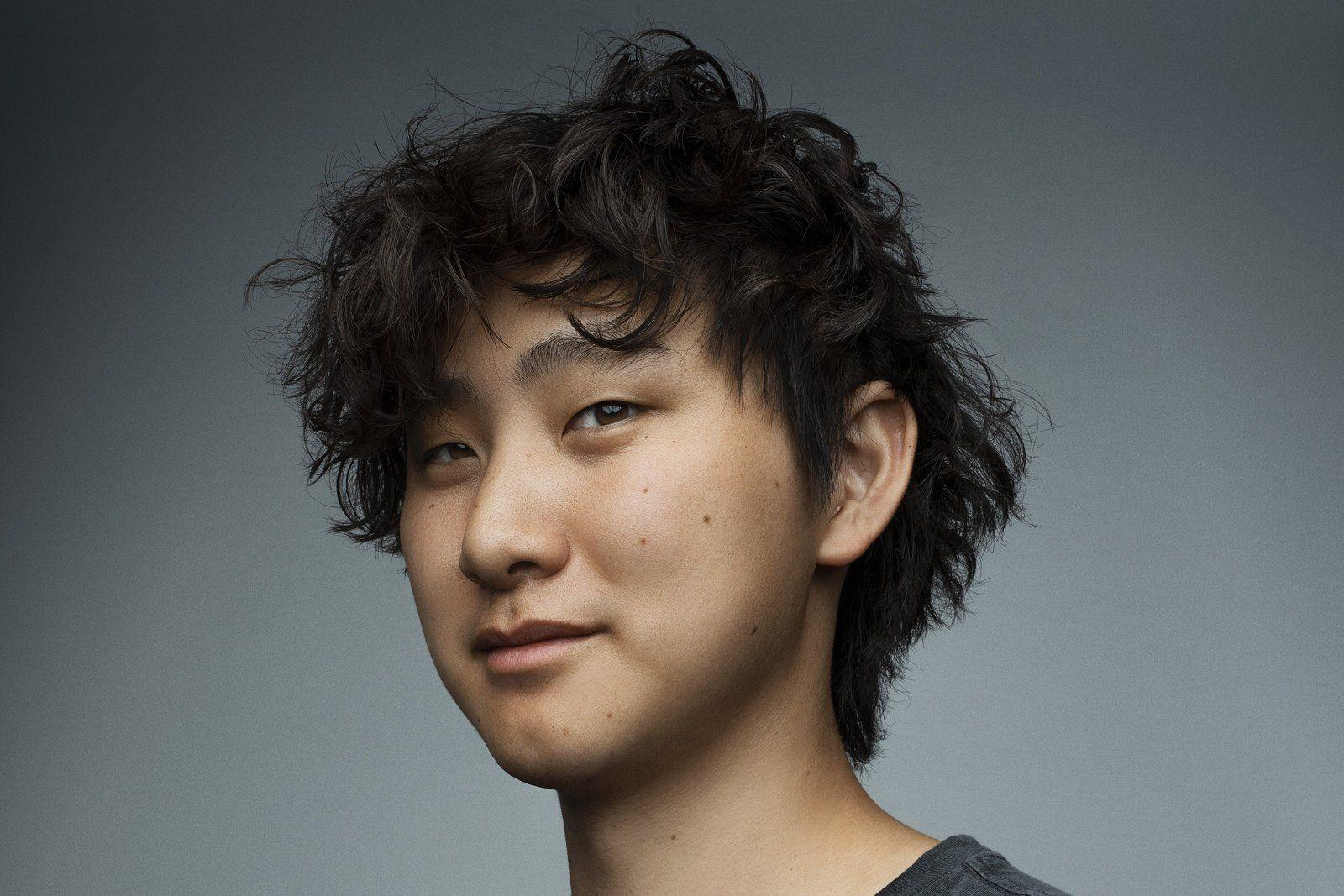
Wang joined Meta in June 2025 as its first-ever chief AI officer, after founding Scale AI in 2016 at the age of 19 while studying at MIT and building it into a business valued at nearly $29 billion.
The SI Accords he mentioned appear to refer to the voluntary White House Accord on Super Intelligence signed on September 29 by Mark Zuckerberg alongside Sundar Pichai of Google, Dario Amodei of Anthropic, Greg Brockman of OpenAI, Elon Musk of xAI and Jensen Huang of Nvidia. The pact sets four layers of safeguards, from internal controls to oversight by an independent board committee, with no penalties for falling short.
Muse, the product Wang said Meta held back, launched in the United States in September as an assistant that acts across connected services and asks users before buying an item or sending an email. Wang did not say when it had originally been due.
The essay also lands while Meta is raising money for the very capacity it describes. Meta has started two public share offerings worth roughly $35 billion, a total that could approach $95 billion with a planned at-the-market program, to pay for AI data centers and computing power. Shareholders could read Wang’s call for a different path alongside that spending, and may look for detail on how Zuckerberg’s push to direct most compute toward serving customers would work in practice.
Alpöge, for his part, has said the argument is incredibly long and that he intends to write it up properly and speak about it, the step that would let mathematicians test the result Wang treats as a turning point.