A New Vocabulary for Federal Communications
The White House presented the change as a response to advances in computing. In its accompanying fact sheet, the administration argued that the familiar name no longer adequately described technologies it said could expand human creativity and support progress across the economy.
The White House describes the new vocabulary as part of its approach to technological leadership. Its announcement links the order to earlier initiatives involving scientific research, infrastructure and wider adoption, placing the language change within a policy agenda already under way.
Federal departments and agencies are to change how they describe the covered technology in their communications. The directive addresses executive branch usage, rather than requiring businesses, researchers or foreign governments to adopt the same wording.
The Existing Definition Remains the Starting Point
The order initially anchors “Super Intelligence” to the technologies covered by 15 U.S.C. § 9401(3). That provision defines artificial intelligence through the operation of machine-based systems that make predictions, recommendations or decisions in pursuit of objectives set by humans.
The statute describes systems using inputs to perceive environments, turn those perceptions into models through automated analysis, and generate options for information or action. Its wording covers real and virtual environments. It does not require a system to outperform people across every intellectual task.
Consequently, the new label initially applies to the existing statutory category. A federal document using “SI” under the order should not, on that wording alone, be read as evidence that the underlying software has achieved capabilities beyond the scope of ordinary AI systems.
The Federal Register’s public inspection copy also preserves the authority of executive departments and the budgetary functions of the Office of Management and Budget. Implementation remains subject to applicable law and available appropriations, with no new enforceable private right created by the directive.
A Legislative Proposal Is Due Within 60 Days
The next task falls to the assistant to the president for science and technology. After consulting relevant agencies, the adviser must submit proposed legislative language addressing a federal definition of “Super Intelligence” and “SI,” along with recommendations for implementing it throughout the executive branch.
That submission must examine whether the proposed definition should modify, expand or replace the existing statutory definition of artificial intelligence. It must also consider corresponding amendments to references in federal law. The instruction calls for a proposal to the president; it does not itself enact those amendments.
Existing commercial arrangements receive an explicit exemption from compulsory rewriting. The order says its implementation section does not require alteration of previously issued contracts or grants. Companies working with federal agencies therefore face a change in government vocabulary without a blanket instruction to revise historical agreements.
The directive also stops short of prescribing a schedule for every website or report to be updated. Its specified 60-day deadline concerns the legislative submission.
The Change Accompanies a Wider Technology Agenda
The terminology order follows the administration’s July 2025 AI Action Plan. The White House outlined more than 90 federal actions across innovation, infrastructure and international engagement, including efforts to accelerate data center development and expand exports of American technology.
Those policies concern the equipment, energy and commercial relationships needed to deploy computing systems. The renaming directive adds a communications requirement to that agenda, while the earlier plan addressed measures such as permitting, workforce development and government procurement.
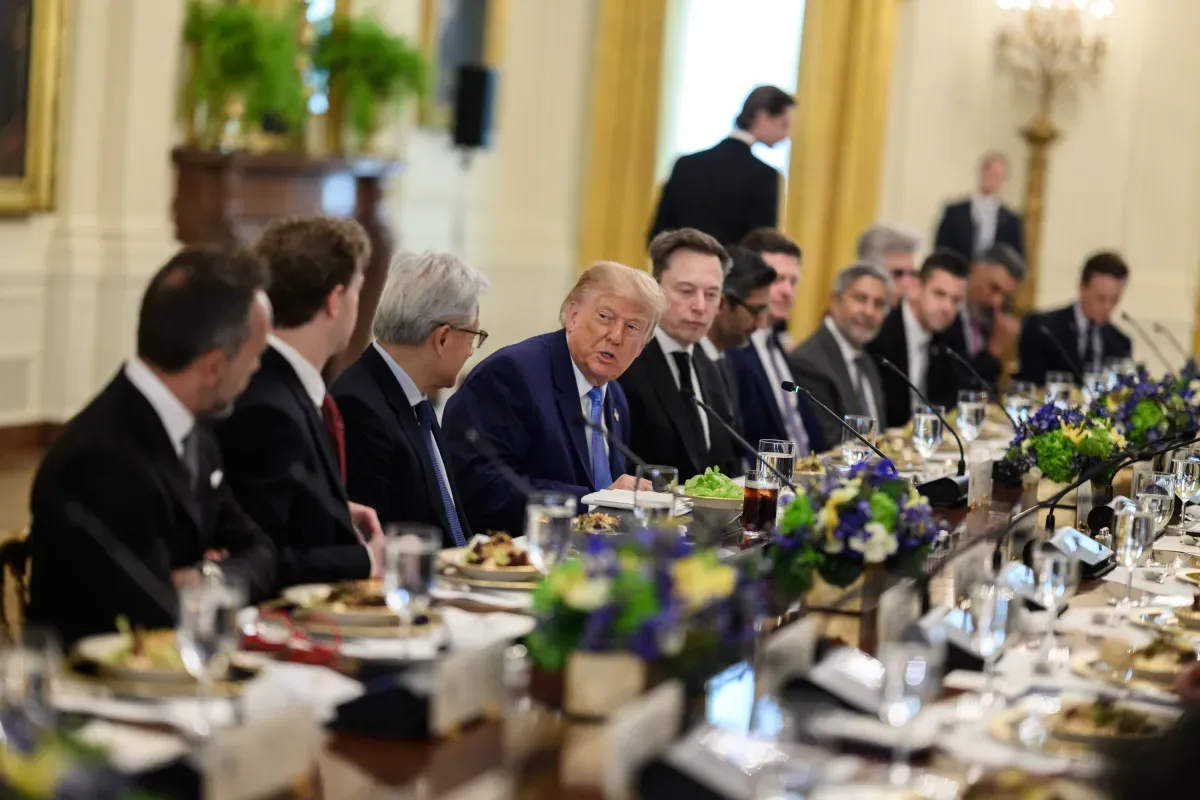
A separate industry safety accord was also signed September 29. In official remarks published by his office, House Speaker Mike Johnson described voluntary commitments involving internal controls and internal and external review.
The signatories included Trump, Elon Musk, Meta CEO Mark Zuckerberg, Nvidia CEO Jensen Huang, Anthropic CEO Dario Amodei, Google CEO Sundar Pichai and OpenAI President Greg Brockman. The White House Accord on Super Intelligence outlines four layers of safeguards: internal controls, a team responsible for monitoring and correcting problems, independent external evaluations, and oversight by an independent committee of each company’s board.
The accord sets no penalties for failing to meet those commitments and does not require companies to publish audit findings. Participating companies agreed to meet regularly to develop safety standards and best practices, while leaving open the possibility of future legislation or regulation. The voluntary agreement addresses how companies oversee their systems; the separate executive order governs terminology used by federal agencies.