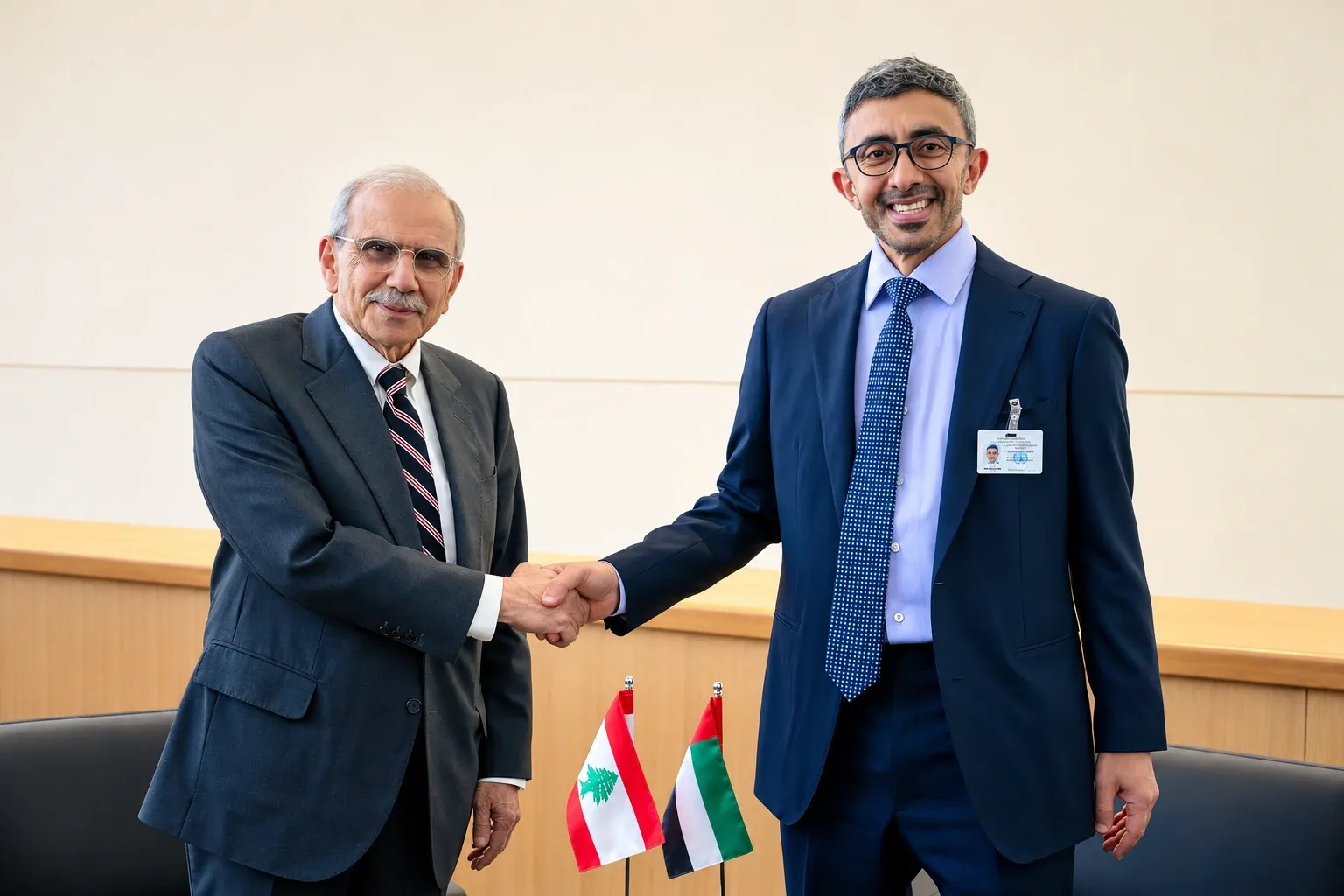
The United Arab Emirates and Egypt have renewed a currency swap agreement worth approximately $1.36 billion [AED 5 billion], extending their framework for exchanging local currencies for five years. The renewal is intended to support trade, investment and financial cooperation between the two countries.
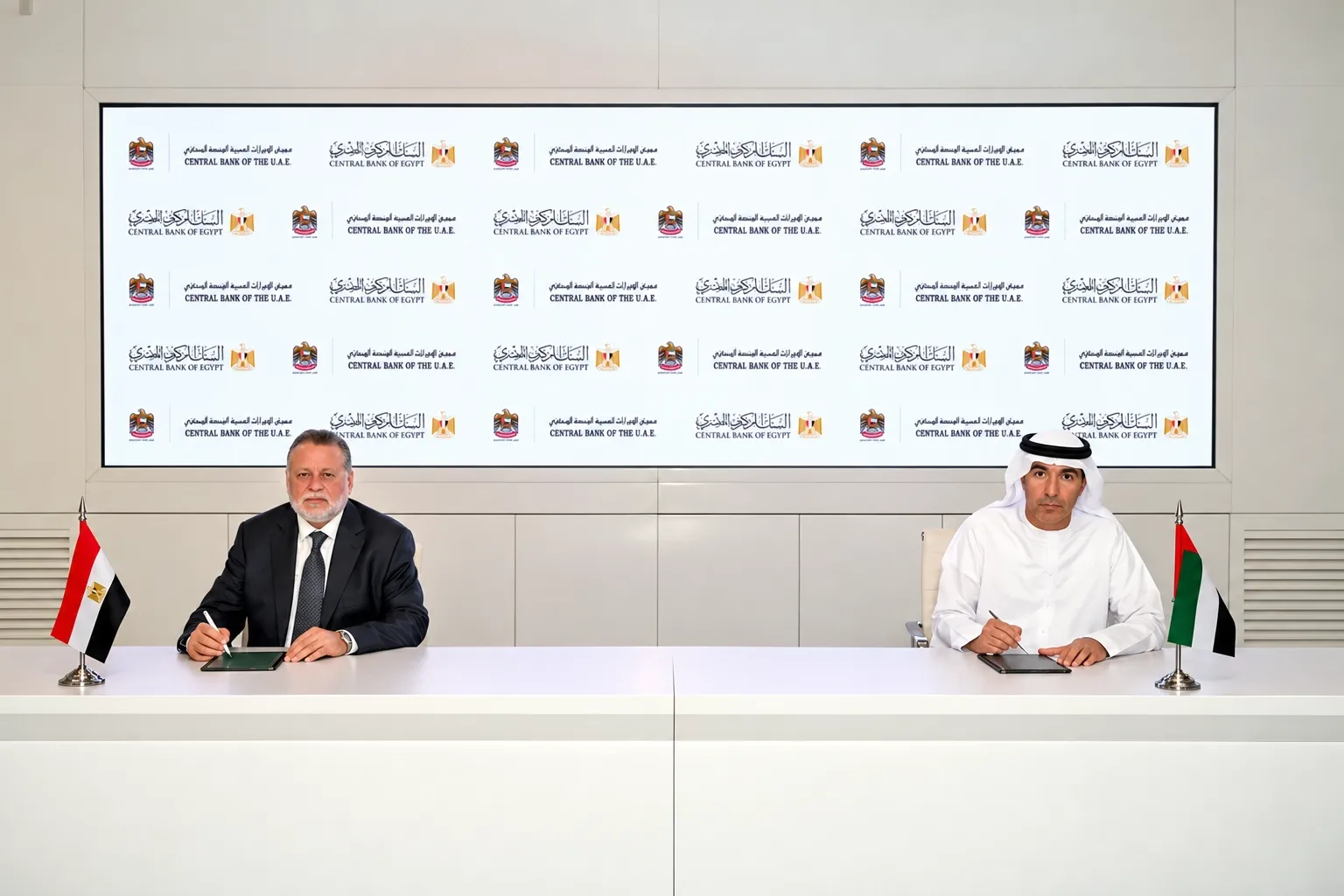
Central Bank of the UAE Governor Khaled Mohamed Balama and Central Bank of Egypt Governor Hassan Abdalla signed the agreement at the UAE central bank’s headquarters in Abu Dhabi.
H.E. Khaled Mohamed Balama, Governor of the CBUAE, said: “This agreement contributes to financial stability and facilitates trade and investment flows between the two countries. It also marks a significant step forward in our efforts to promote greater use of local currencies in bilateral settlements, in line with international best practices, thereby strengthening the resilience of the financial system in both countries.”
H.E. Hassan Abdalla, Governor of the CBE, added: “The agreement provides an important mechanism for promoting the use of local currencies in trade and financial settlements, thereby enhancing the resilience of financial markets in both countries. We look forward to this agreement creating broader opportunities for cooperation in finance and investment, contributing to economic development objectives in both countries.”
An Existing Facility With Updated Currency Amounts
The agreement builds on a swap signed on September 28, 2023. The original CBUAE announcement authorized exchanges between the two central banks with a nominal size of up to approximately $1.36 billion.
Both governors signed the original arrangement. Their statements in 2023 emphasized cooperation between the financial sectors and support for trade, investment and financial stability. The renewal continues that institutional relationship, now with an explicitly announced five-year term.
A swap’s nominal size describes the scale of the arrangement. The renewed agreement retains the original $1.36 billion [AED 5 billion] dirham amount, while the Egyptian pound counterpart rises from EGP 42 billion to EGP 69 billion. The five-year term extends the framework established by the two central banks in 2023.
How the Swap Fits Into Financial Transactions
Central bank currency swaps allow monetary authorities to obtain another currency by exchanging their own. The European Central Bank’s explanation describes these facilities as agreements between central banks to exchange currencies. Its liquidity framework explains that swap transactions include a commitment to reverse the exchange at a specified future date.
Such arrangements can give central banks access to foreign-currency liquidity that they can, under applicable arrangements, make available to their banking systems. The ECB describes their use as a liquidity backstop when market conditions disrupt access to a currency. Specific operating terms differ between facilities.
The UAE-Egypt announcement emphasizes bilateral settlements and financial cooperation. Both central banks identified greater use of local currencies in commercial and financial transactions as an objective of the renewal.
Trade Links and Egypt’s Wider Policy Setting
The renewal comes alongside substantial commercial ties. Bilateral trade reached approximately $9.7 billion in 2025, up 61.7% from the previous year. The figures show the scale of commerce between the two countries, which the renewed agreement aims to support through local-currency settlements.
Egypt’s wider economic policy remains relevant to the arrangement’s operation. In its February 2026 review, the International Monetary Fund said exchange-rate flexibility and foreign inflows had helped improve the country’s external position. It also identified uneven progress on deeper structural reforms.
The IMF’s subsequent seventh-review report continued to describe exchange-rate flexibility, inflation-focused monetary policy and financial-sector oversight as elements of Egypt’s economic program.