@2026 Finance News International. All Rights Reserved.

Blends Media
A Blends Media Group Production

Meta Targets Up to $95 Billion in Stock Sales to Fund AI Expansion

Arry Hashemi
Arry Hashemi
Oct. 27, 2026
Mark ZuckerbergMeta, led by Mark Zuckerberg, plans to raise up to $95 billion through stock sales to support its AI expansion. (Shutterstock/Modified by Finance News International)

Menlo Park, California — Meta Platforms has begun selling roughly $35 billion of new equity through two simultaneous public offerings, combining common shares with mandatory convertible preferred stock, as the Facebook and Instagram owner raises money for its artificial intelligence data centers and computing capacity.

The deals are only the first part of a larger financing plan. Meta also intends to set up an at-the-market (ATM) program of up to about $60 billion once its new non-voting Class C shares start trading, which the company does not expect to happen before the first quarter of 2027.

Of the $35 billion, approximately $22.5 billion is Class A common stock sold in connection with forward sale agreements. The remaining $12.5 billion or so comes from 250,000,000 series A depositary shares, each worth one-twentieth of a share in a newly created Series A Mandatory Convertible Preferred Stock. Both the preferred and the Class A stock carry a par value of $0.000006 per share.

Three chipmakers have signaled they want a piece of the deal. NVIDIA Corporation, Advanced Micro Devices, Inc. and Broadcom Inc., described by Meta as cornerstone investors, have each separately indicated interest in buying up to $5.0 billion of Class A shares in total, paying the same price and accepting the same terms as other buyers.

Those indications are not binding commitments. Any of the three companies could end up taking a larger or smaller allocation, or none, and the underwriters are equally free to sell them more, less or nothing. The banks will collect the same underwriting discount on any cornerstone purchase as on shares sold to the wider public.

Nvidia is already a key supplier to Meta's build-out. In February, Meta widened a multiyear partnership with Nvidia to roll out GPU systems built on the Blackwell architecture and future Rubin designs across its data centers.

The forward structure means Meta will not collect cash immediately from the common stock sale. Morgan Stanley Capital Services LLC and Goldman Sachs & Co. LLC, acting as forward purchasers, are expected to sign agreements initially covering $22.5 billion of Class A shares, and they or their affiliates will sell stock to investors in the offering. Meta said it does not expect to receive any proceeds from those initial sales.

The money arrives later. On one or more dates of its choosing, no later than November 19, 2027, Meta plans to issue new Class A shares to the two banks and receive cash in return. The per-share amount will be the public offering price of the Class A stock minus underwriting discounts, with certain adjustments set out in the agreements.

Meta has filed a registration statement, including a prospectus, with the U.S. Securities and Exchange Commission (SEC) for the offerings, and advised investors to read it alongside the company's other SEC filings before buying. It said net proceeds from the preferred sale, and the cash it receives when the forward agreements and any additional ones settle, will go to general corporate purposes.

The release presents the raise as support for Meta's continued spending on AI infrastructure and what the company calls "personal superintelligence".
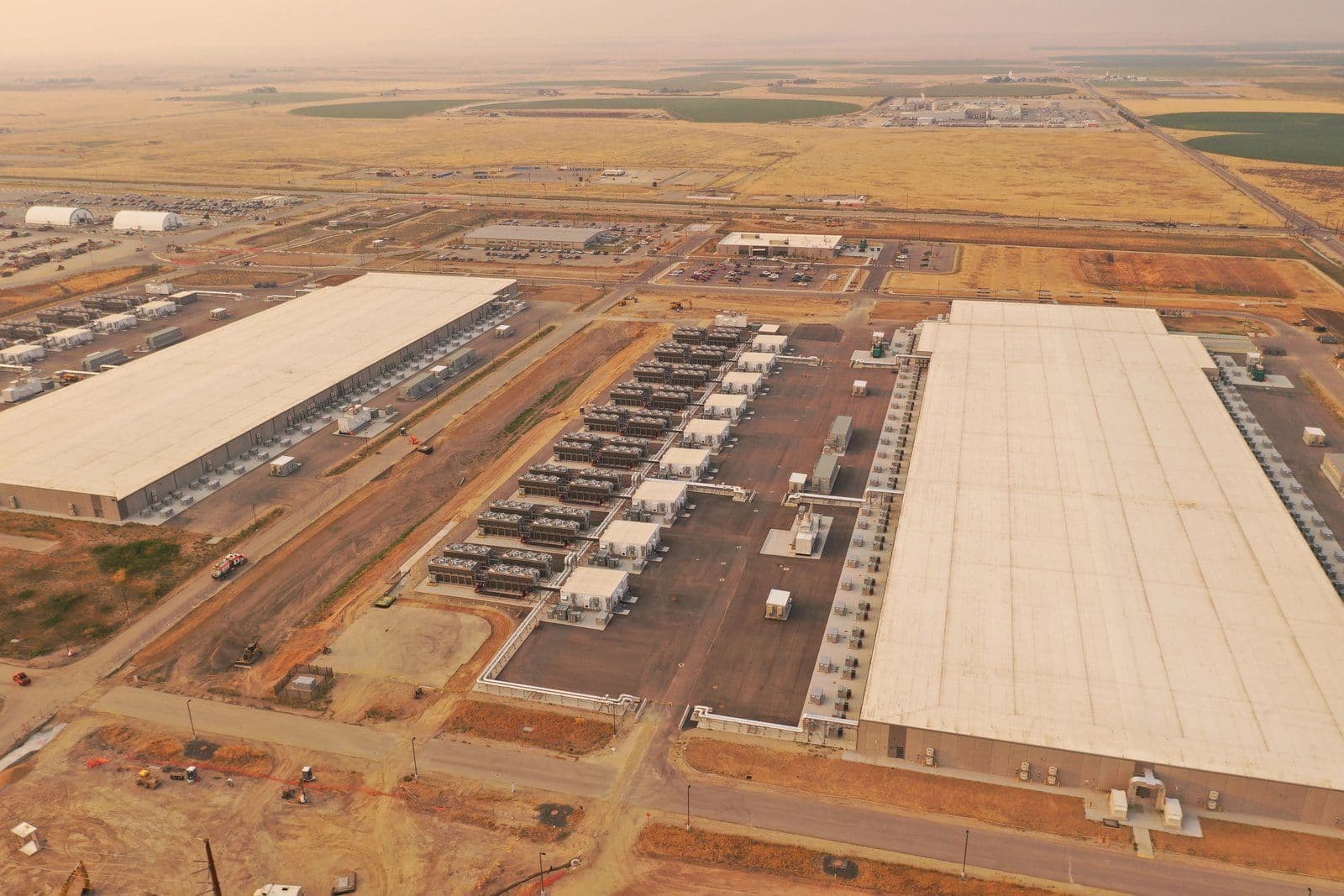

Meta's data center campus in Kuna, IdahoMeta's data center campus in Kuna, Idaho. The company owns data centers in 23 U.S. states and expects 2026 capital expenditures of $135 billion to $145 billion. (Image source: Meta)

The ATM program is less certain than the underwritten deals. Meta plans to sign an equity distribution agreement allowing it to sell Class C stock from time to time, through or to a manager, up to a maximum of $60 billion, and those sales would not depend on the two current offerings.

The $35 billion offerings and a $60 billion ATM program would add up to about $95 billion of potential new equity. That could dilute existing shareholders if the shares are sold in full, although the final amount will depend on pricing, option exercises and whether the ATM program goes ahead.

Meta announced the Class C stock with its third-quarter results on October 21. Its board approved a publicly listed, non-voting share class with an effective date of January 19, 2027, and declared a one-time dividend of one Class C share for every Class A and Class B share outstanding.

After that dividend is paid, Meta expects the Class A share price to reflect the effect of a two-for-one stock split. The company said the dividend will not alter any shareholder's voting power, and the board will set the record and payment dates later.

A filing with the SEC gives one reason for making the new shares non-voting. Meta's preliminary information statement says the design will allow the company to raise equity from sovereign financial institutions in light of U.S. foreign direct investment rules. It also records management's view that non-voting shares could ease the regulatory and compliance issues raised by selling voting securities.

That may make a future Class C sale more accessible to state-owned investors than the voting Class A stock on offer this week, although Meta has not named any such buyers.

Meta says the build-out will be paid for with a blend of cash from operations, investment-grade borrowing, strategic partnerships and equity. Its operations brought in $97 billion of cash over the first nine months of 2026, and it held approximately $82 billion of cash, cash equivalents and marketable securities when the third quarter ended.

Debt has already carried part of the load this year. Meta's third-quarter accounts show net proceeds of $24.91 billion from long-term debt issued in the first nine months of 2026, and long-term debt of $80.92 billion on September 30, up from $58.74 billion at the end of 2025. The company bought back no Class A stock during those nine months, against $26.25 billion of repurchases a year earlier.

The company argues the investment is already paying off. AI is opening significant opportunities across its core business as well as new products and services, Meta said, with returns showing up in higher engagement, stronger advertising performance and greater monetization. It is also targeting personal superintelligence, consumer and business agents, enterprise products and AI glasses.

The extra infrastructure and compute are meant to support those efforts and bring personal superintelligence to billions of people and businesses, according to Meta. The company owns data centers in 23 U.S. states and is building four superclusters, each with more than one gigawatt of capacity.

Meta also says it is on course to almost double its total infrastructure capacity in 2026 compared with 2025. Spending on custom silicon and other optimization projects is intended to lower the cost of compute and raise the return on each dollar invested.

Revenue has grown more than 20% year over year for six quarters in a row, helped in part by AI-driven improvements to content recommendations, engagement and ad performance, the company said. Third-quarter 2026 revenue was $64.6 billion, up 26% from a year earlier, and net income came to $9.9 billion.

Muse, Meta's consumer AI agent, signed up more than 10 million users in the U.S. and Canada in the first weeks after launch. Shopping is the most common use, with more than 25% of weekly active users turning to Muse for it. At launch, Muse could prepare purchases and check out using Link, Stripe's payment service.