@2026 Finance News International. All Rights Reserved.

Blends Media
A Blends Media Group Production

Wall Street Surges as NVIDIA Regains Nearly $1 Trillion in Market Value

Arry Hashemi
Arry Hashemi
Nov. 24, 2026
Wall StreetU.S. stocks logged their biggest one-day gain since April 2025 as chip and AI shares rebounded. (Shutterstock)

New York — U.S. stocks posted their sharpest one-day advance since April 2025, with the Nasdaq Composite closing 6.51% higher and the S&P 500 gaining 4.73%, as a 31.48% jump in NVIDIA shares added about $952 billion to the chipmaker's market value.

The S&P 500 finished at 7,237.17, up 326.78 points, and the Nasdaq Composite rose 1,471.83 points to 24,089.56. Neither had gained this much in one session since April 9, 2025, when they climbed 9.52% and 12.16% respectively, daily index data from the Federal Reserve Bank of St. Louis shows. The Dow Jones Industrial Average added 1,447.98 points, or 3.01%, to 49,595.31, although its 3.03% rise on November 4 was slightly larger.

NVIDIA drove much of the move. Its shares closed at $165.05, up $39.52, with 782,593,300 shares changing hands, according to Nasdaq trading data. Based on the 24.1 billion shares outstanding in the company's latest quarterly filing, the gain was worth about $952 billion at the close and briefly topped $1.1 trillion when the stock touched $171.50.

The rebound followed the board's decision to reinstate Jensen Huang as president and chief executive officer, disclosed in a Form 8-K filed with the U.S. Securities and Exchange Commission. Huang's resignation had been announced on November 12, and Colette Kress, who ran the company as interim CEO in the meantime, stays on as executive vice president and chief financial officer.

Chipmakers moved hardest. The PHLX Semiconductor Sector Index (SOX) jumped 14.03% to 9,588.05, its biggest one-day rise since an 18.73% surge on April 9, 2025, according to Nasdaq index data. Micron Technology rose 19.04% to $707.70, Marvell Technology 18.37%, Intel 16.34% and Arm Holdings 16.08%, while the U.S.-listed shares of Taiwan Semiconductor Manufacturing Company gained 14.08%.

Equipment suppliers were close behind, with Applied Materials up 14.62%, Lam Research up 14.45% and ASML 9.28% higher. Some large chip names trailed the group: AMD rose 6.85% and Broadcom 3.00%.

Gains spread to companies that supply and operate AI computing capacity. Cloud provider CoreWeave climbed 22.32% to $48.33 and Dell Technologies 20.46% to $334.91, while Super Micro Computer added 13.30%, Oracle 12.34% and Vertiv 12.10%. Software company Palantir rose 11.06% and Qualcomm 10.30%.
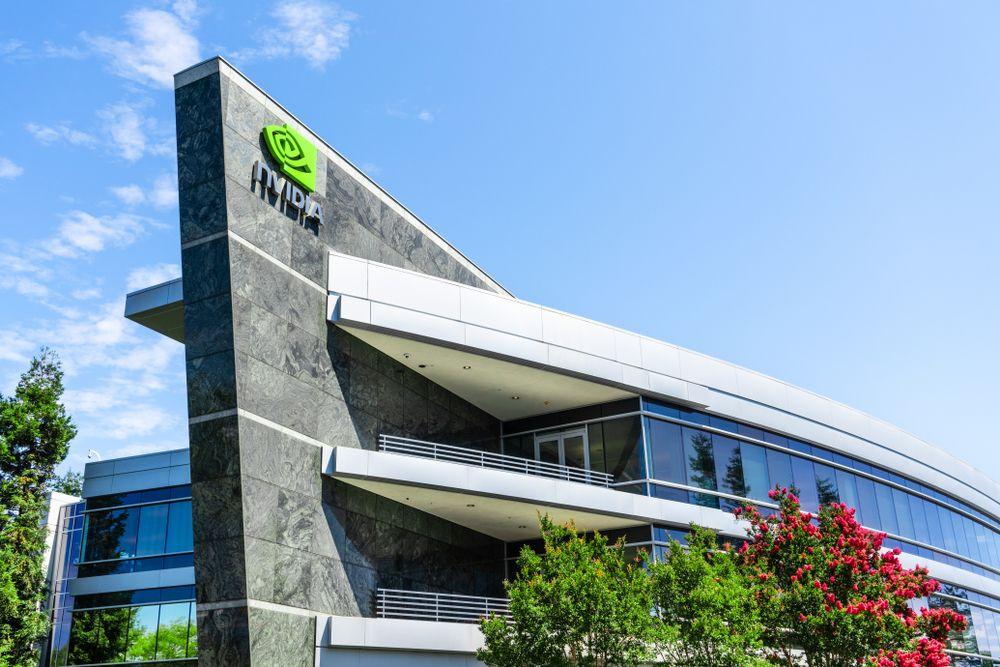

NVIDIANVIDIA shares closed 31.48% higher at $165.05, adding about $952 billion in market value and lifting chip stocks across Wall Street. (Shutterstock)

Among the largest U.S. companies, Tesla gained 11.46% to $385.46, Meta Platforms 6.55% and Alphabet's Class A shares 6.34%. Amazon rose 3.47%, while Apple and Microsoft lagged with gains of 1.90% and 1.65%. The Nasdaq-100, made up of the exchange's biggest non-financial companies, ended 6.86% higher at 26,746.10.

Sector funds showed where the money went. The Technology Select Sector SPDR Fund, which tracks the S&P 500's tech stocks, gained 8.97%, more than twice the next-best funds for consumer discretionary (3.97%) and industrials (3.90%). Financials rose 1.98% and health care 1.23%, while the consumer staples fund slipped 0.09% and the energy fund lost 1.06%.

The advance was narrower than the index figures suggest. The Invesco S&P 500 Equal Weight ETF, which gives every member of the index the same weighting, rose 2.59%, a little over half the S&P 500's gain, and the iShares Russell 2000 ETF of smaller companies added 3.56%. With so much of the session resting on a few large technology stocks, the benchmark could stay sensitive to sharp swings in that group.

The bounce came after a steep sell-off. Between November 13 and November 20, the Nasdaq Composite lost 10.02%, the S&P 500 8.61% and the Dow 8.02%, while the semiconductor index fell 17.13%. The S&P 500 had declined for seven straight sessions, and NVIDIA dropped 14.01% on November 20 alone, to $125.53.

Much of the damage from earlier in the year has yet to be repaired. The semiconductor index remains about 34% below its 2026 closing high of 14,634.72, reached on June 22. The Bank of England's Financial Policy Committee said in the record of its September 25 meeting that equity valuations for AI companies fell sharply in July and that the risk of a sharper correction persists.

NVIDIA itself is still short of where it traded before the leadership change. Its close is below the $173.73 of November 11 and about 11.5% under its $186.50 finish to 2025. When Apple overtook NVIDIA as the world's most valuable company on November 2, a market-value ranking put the chipmaker at $4.941 trillion, close to $1 trillion above the roughly $3.98 trillion implied by its latest close.