@2026 Finance News International. All Rights Reserved.

Blends Media
A Blends Media Group Production

Bank of England Governor Warns Overvalued AI Stocks Could Burst ‘Bubble’

Arry Hashemi
Arry Hashemi
Nov. 11, 2026
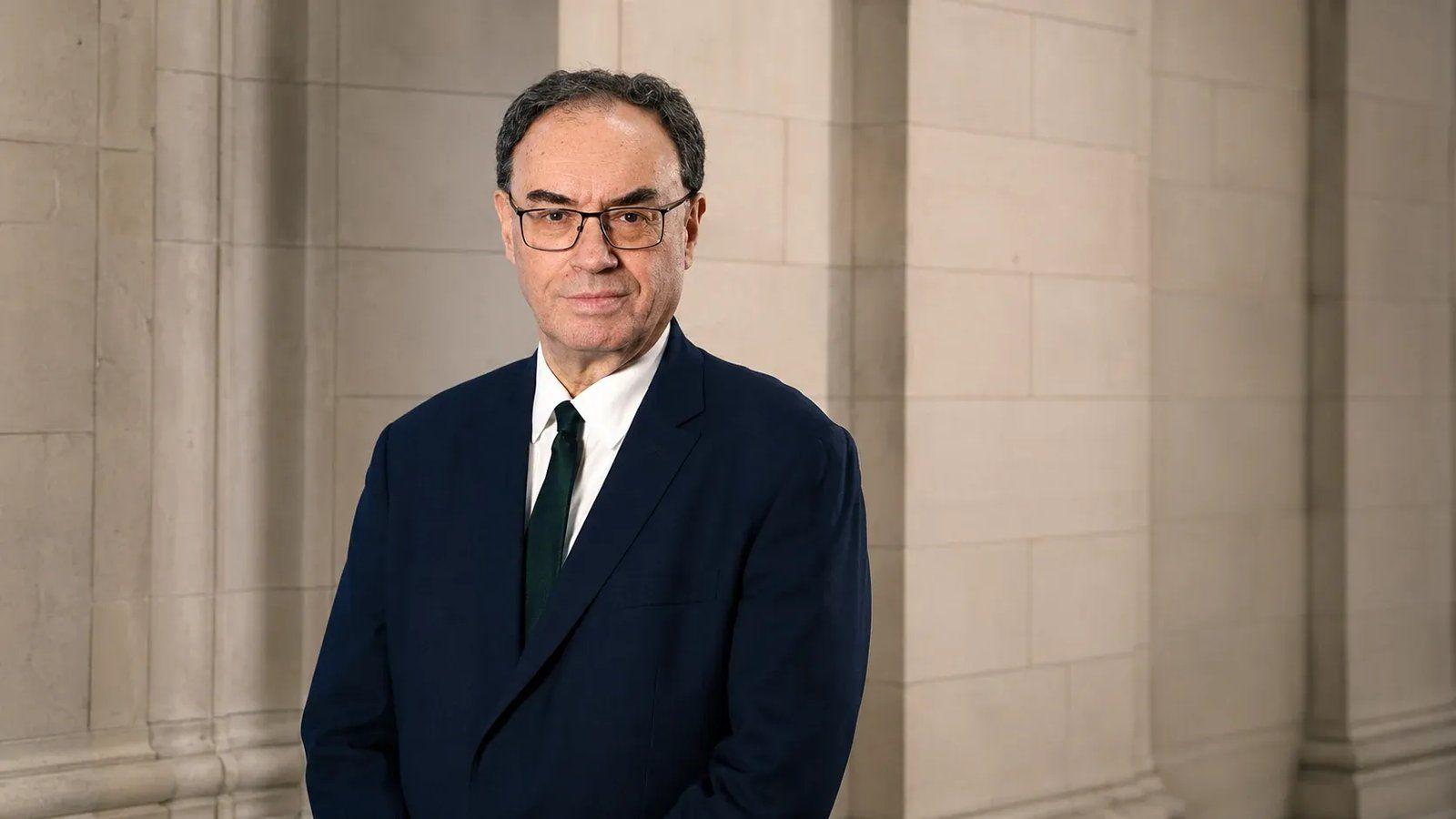
Bank of England Governor Andrew Bailey in a navy suit against a stone wallBank of England Governor Andrew Bailey, who told a Zurich audience that markets may overvalue AI returns and that an asset price bubble risk exists. (Image source: Bank of England)

Zurich, Switzerland — Financial markets may end up overvaluing the returns that artificial intelligence will deliver, Bank of England Governor Andrew Bailey has warned, laying out four ways a possible AI asset price bubble could burst and create problems for financial stability.

Bailey spoke at the University of Zurich in a lecture series run by the Swiss Institute of International Studies (SIAF). The Bank published his remarks as Central Bank independence in today’s world. He kept his opening comments short, framing them as a prompt for discussion on three themes: central bank independence, financial stability and technology.

Andrew Bailey, Governor of the Bank of England, said: “There is a lot of speculation on the subject of whether there is an asset price bubble in AI, and the financial stability risks that go with that. Bubble spotting is an imprecise science. But, let’s recognise that such a risk exists, which we should do. How might the bubble burst and potentially cause a problem? Four arguments can I think be advanced here.”

His first argument rested on what markets are built to do. Bailey said: “First, it is the job of financial markets to value uncertain future returns. The returns from AI may be good, but still markets may overvalue them. That’s in the nature of the task of valuing uncertainty.”

The second was about timing, and he reached back to the arrival of electric power to illustrate it. Bailey said: “Second, the returns may be good, and they may match expectations, but they take longer to be realised than predicted. This has been the case historically with big General Purpose Technology innovation – take Edison and electricity for instance. There are good reasons to believe that the world moves faster now, but still the timing may not live up to market expectations.”

His third and fourth points turned to winners and losers, and to public confidence. Bailey said: “Third, everyone is priced to be a winner, but history tends to tell us that this is not the case. Remember Netscape.”

He added: “Fourth, the public trust point – there is a certain fragility created by this nexus. Arguably it is not new. A British Member of Parliament was killed by one of the earliest steam locomotives, people worried about the dangers of electricity. I would argue that at present the argument seems more powerful with AI – but as I noted earlier, I treat that as a problem to be solved. But, until we have done so it could affect asset valuations.”


Wall streetA Wall Street sign in New York. Bank of England Governor Andrew Bailey warned that investors could overestimate the returns from AI, creating risks for financial stability. (Shutterstock)

Bailey then summed up: “So, there are clear financial stability risks here, and that’s without talking explicitly about cyber risks.”

Three of his four arguments concern how investors price a technology whose payoff is uncertain. The fourth is of a different kind, since it rests on whether the public comes to trust AI, an issue Bailey placed in the hands of policymakers and one that, on his account, could weigh on valuations until it is resolved.

None of this made Bailey a skeptic of the technology itself. He said: “I am an optimist on AI, digital technology and most probably robotics too. They have the potential to lift the sustainable growth rates of many economies through raising productivity growth. That is a good thing.”

He also set out the downsides. In the financial world, he said, frontier AI has added to a cyberattack threat that was already prominent, and wider worries about the technology could erode public confidence in it. Authorities need to move quickly and be clear about the public interest goals they are pursuing, he argued, starting with more extensive testing of models before and after release, better incident reporting, monitoring and follow-up, and possibly more or different ways for human users to intervene in how AI operates. Bailey said: “The key point is that public trust will depend on assured human intervention. AI will succeed as a tool of humans.”

He tied that back to the work of central banks through what he called a nexus. Economic growth, the businesses that drive it and the public interest, which governments and in some policy areas central banks represent, have long been closely linked, he said, adding that economists as different as Hayek, Keynes, Marx and Schumpeter could all accept it. In his view AI poses a new and more forceful challenge to that link, because the risk of losing public trust calls for a careful but determined response. Anyone who says “very good things can come from this, but bad things may happen too” cannot simply stop there, he said, adding: “And, it deepens the dependency between commercial success and public policy.”

Bailey opened the lecture by discussing how supply shocks can push up inflation and slow economic activity, making it harder for central banks to respond when those shocks are large and frequent. He also pointed to early signs that AI investment was supporting growth, noting that the UK economy had held up better than the Bank expected, partly because of investment in AI in the business services sector.

Shocks of this kind push inflation away from target, and the job of a central bank is to set interest rates to bring it back, he said, while acknowledging that Switzerland has had a record of more subdued inflation. Difficult periods are when robust institutions matter most, Bailey argued, adding that independent central banks remain accountable to the whole population they serve, a public legitimacy he called a critical feature of independence.

On financial stability, he described it and monetary stability as inseparable, both anchored to the stable value of money, but said the politics differ. No one doubts the independence of interest-rate decisions, he said, whereas financial stability decisions are far more contested, with louder lobbying and more sharply defined interests. Fading memories of the financial crisis are adding to pressure to loosen regulation, he said. While not claiming every UK rule is perfect, Bailey argued that sustained growth depends on financial stability, that the system’s resilience through recent shocks reflects post-crisis reforms, and that risks are now moving into new areas of finance. He thanked Sarah Breeden, Karen Jude, Clare Lombardelli, Dave Ramsden and James Talbot for helping to prepare the remarks.

The Bank’s Financial Policy Committee had already flagged the market risk. In the record of its September 25 meeting, the committee said equity valuations for AI companies fell sharply in July and that the risk of a sharper correction persists, notably if earnings expectations take a bigger hit over the pace of AI development or adoption. It cited a Morgan Stanley estimate that global AI-related debt issuance reached around $450 billion by early September, more than double the total for all of 2025.

The governor has returned to the subject repeatedly in recent months. As chair of the Financial Stability Board, he warned G20 finance ministers and central bank governors in late August that AI-related risks could intensify a future market correction, and in October he called for rigorous AI testing before and after deployment, ahead of any new regulatory framework.

The committee also pointed to a channel beyond equity markets. Because growth prospects and fiscal outlooks depend partly on expected productivity gains from AI, it said, a rethink of those hopes could hit sovereign debt markets as well as the prices of AI-related assets.