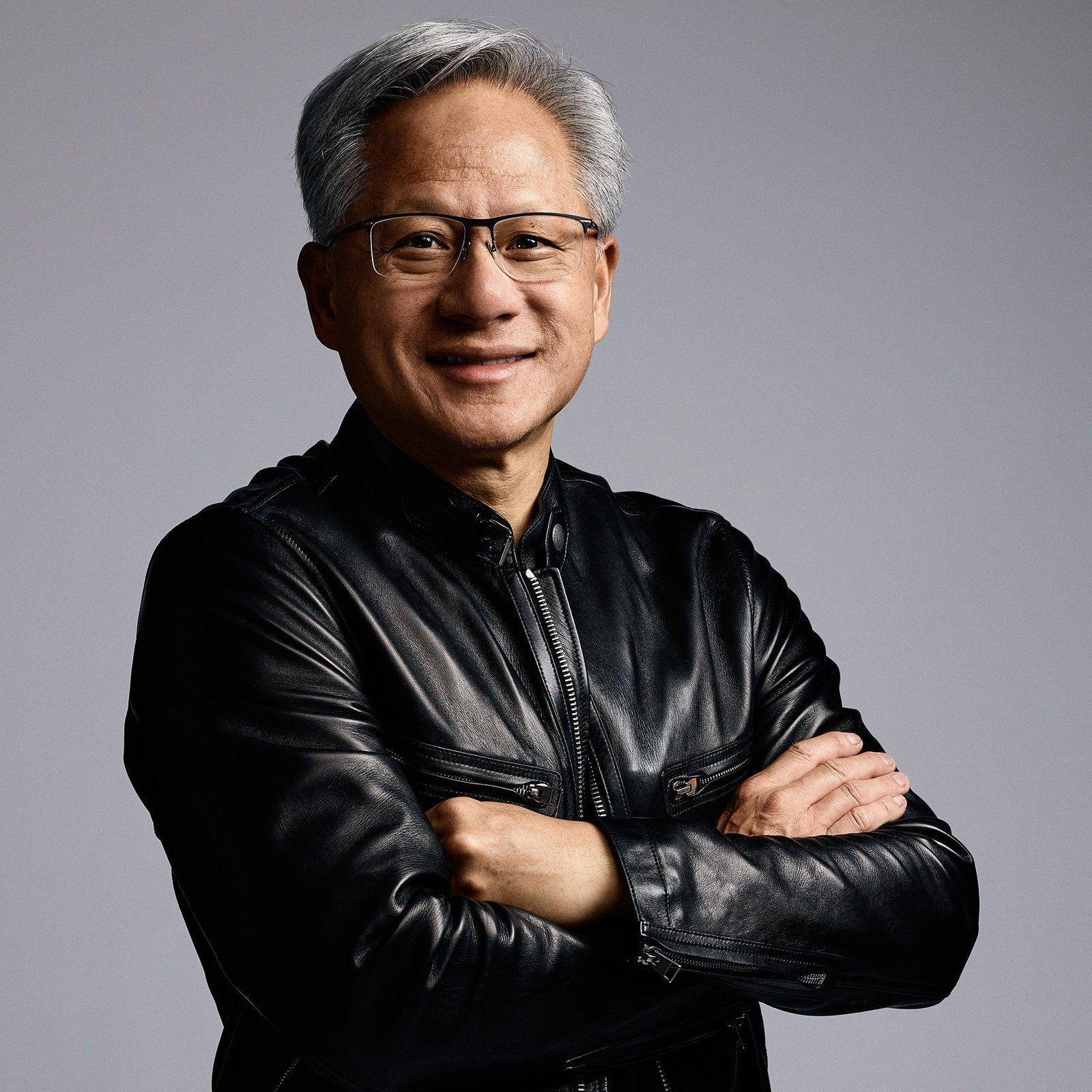
Santa Clara, California — Jensen Huang, who co-founded NVIDIA and led the chipmaker for 33 years, has quit as president, chief executive officer and board member with immediate effect, the company's board of directors announced on Thursday, appointing Chief Financial Officer Colette Kress as interim CEO.
His departure came after reports of two extramarital relationships. One was with Alice Huang, a businesswoman whom US intelligence officials suspect of working for Chinese intelligence. The second was with Kimberly Powell, one of NVIDIA's own senior leaders and a direct report of Huang, Business Standard reported.
Investors reacted quickly. NVIDIA stock was down more than 10% at $155.53 in premarket trading on Thursday, according to Investor's Business Daily, ahead of the 9:30 a.m. ET open on Wall Street. A day earlier, the shares had closed at $173.73 and then dropped 7.91% to around $159.98 after hours, as reports emerged that the board was weighing Huang's removal. Reuters reported a decline of around 7% in early trading in Frankfurt on Thursday.
Kress will keep her roles as executive vice president and CFO while she runs the company on an interim basis. The board said it has started looking for a permanent chief executive and will weigh candidates from inside and outside NVIDIA. It also named Harvey C. Jones as the first chair in the company's history. Jones has spent more than 30 years as an entrepreneur, technology executive and venture investor, and was previously chief executive officer and executive chairman of Synopsys.
Kress came to NVIDIA in September 2013 and has run its finance organization ever since, a period in which the board says she played a key part in the company's growth. Her earlier career included nearly 25 years in finance positions at technology groups such as Cisco and Microsoft.
Harvey Jones, Chair of the NVIDIA Board of Directors, said: “Colette has helped lead NVIDIA through a period of extraordinary growth and has a deep understanding of our business, customers, operations and financial position,” adding: “She is supported by an experienced leadership team that has been instrumental in executing NVIDIA’s strategy and advancing its technology roadmap. The Board has full confidence in Colette and the leadership team, and we expect the company’s operations, customer commitments and product roadmap to continue without interruption.”
Colette Kress, Interim CEO and CFO of NVIDIA, said: “NVIDIA’s strength has always come from its people, and together with our leadership team, I am committed to building on the extraordinary foundation Jensen created over the last 33 years,” and went on: “We will continue advancing the work that has made NVIDIA a leader in accelerated computing and AI, and execute on the opportunities ahead. Our focus remains on serving our customers, partners, developers and shareholders.”
In its announcement, the board called Huang's contributions to NVIDIA profound and thanked him for the part he played in building both the company and the wider industry. He no longer holds any executive post at the chipmaker, nor a seat on its board.
The resignation comes four days after the board opened an independent investigation into reports that a foreign intelligence effort had targeted Huang. Independent directors, supported by outside counsel, are running that inquiry. On November 8, the board said it had no reason to believe that national security or NVIDIA secrets had been compromised, and it expressed confidence in Huang at the time. Earlier this week, the directors hired Joon H. Kim, who once served as acting US Attorney for the Southern District of New York, together with his firm Wachtell, Lipton, Rosen & Katz, to lead the probe.
Alice Huang previously held an executive role at Megaspeed, a Singapore cloud operator that partners with NVIDIA and can obtain its chips. American intelligence officials believe she worked for China's Ministry of State Security, while Megaspeed itself is under scrutiny over claims that it helped Chinese buyers get advanced AI chips barred by US export rules. Beijing denies the spying allegations. Megaspeed, which the BBC describes as the biggest buyer of NVIDIA chips in South East Asia, said through its chief executive, Tan Yong Pong, that it “takes its compliance obligations under US export control laws extremely seriously” and had co-operated with US Commerce Department inspections.
Earlier this week, Huang apologized to staff in a message published by the company, saying: “I was unfaithful to my wife. My actions hurt her and our children. There is no excuse for what I did. I am deeply sorry.” Turning to the national security questions, he added: “I am fully committed to NVIDIA and will work to earn back your confidence.”
Pressure on the board grew on Wednesday, when The New York Times reported a separate relationship between Huang and Powell, NVIDIA's vice president of healthcare, citing five people who had worked at the company. Neither NVIDIA nor Powell responded immediately to requests for comment, and Reuters said it was unable to verify the allegations independently.
Wall Street analysts moved fast after the second report. Six more firms cut NVIDIA to neutral from buy, on top of two downgrades earlier in the week, and at least seven others lowered their price targets, taking the week's total above 10 cuts, Investor's Business Daily reported. Dan Ives of Yorkville Ives said the second affair was “the straw that broke the camel's back for the Board” and kept his outperform rating, though he cut his target to $225 from $300. Bernstein's Stacy Rasgon moved to market perform and halved his target to $200 from $400.
William Blair's Sebastien Naji also downgraded the stock to market perform, writing before the resignation that the full picture could require several investigations, including the board's own probe and a requested US House briefing. Sebastien Naji, analyst at William Blair, said: “What is already clear is that Huang's likely departure and heightened scrutiny of the company will be a significant overhang on NVDA shares in the near term.”
Attention now turns to succession. Bloomberg reported late on Wednesday that the board was using an outside firm to help find Huang's replacement. Ian Buck, NVIDIA's vice president and general manager of hyperscale and high-performance computing and the creator of its CUDA computing platform, has emerged as the leading internal candidate, according to Investor's Business Daily. Brian Colello, analyst at Morningstar, said: “He strikes us as a logical successor to Jensen Huang.”
Huang remains a major shareholder, with more than 870 million shares, or just over 3.5% of the company, according to a June filing with the US Securities and Exchange Commission cited by the BBC. NVIDIA, which the BBC put at about $4.2 trillion in market value, is one of the Magnificent Seven technology stocks that together account for more than 30% of the S&P 500, Russ Mould, investment director at AJ Bell, told the BBC. Earlier this month, Apple overtook NVIDIA as the world's most valuable company, with CompaniesMarketCap listing the two at $5.029 trillion and $4.941 trillion on November 2.
The case has also reached Washington. Three Republican committee chairmen, Brian Mast, John Moolenaar and Rick Crawford, have asked Huang for a closed-door briefing on November 18 about his interactions with Alice Huang and NVIDIA's safeguards against foreign espionage, the BBC reported, and Moolenaar has said Huang would likely face a subpoena if he neither accepted nor proposed another date. Beijing's Foreign Ministry has warned that the allegations should not become grounds for new US restrictions on technology sales to China, where the Trump administration permitted sales of NVIDIA's H200 chips last year, urged on by Huang. A new chief executive may therefore inherit questions over China access as well as investor confidence.
The chipmaker said its third-quarter fiscal 2027 results are still due on Tuesday, November 17, around 1:20 p.m. PT, with the earnings call to start at 2 p.m. PT, the first under its interim chief. In August, the company guided for third-quarter revenue of $108 billion, plus or minus 2%.