@2026 Finance News International. All Rights Reserved.

Blends Media
A Blends Media Group Production

California AG Subpoenas NVIDIA Over Huang Affair with Alleged Spy

Arry Hashemi
Arry Hashemi
Nov. 23, 2026
NVIDIA logo sign outside the company's Voyager headquarters building in Santa ClaraCalifornia's attorney general has subpoenaed NVIDIA, the Santa Clara-based chipmaker, over possible chip transfers to China and its statements to investors. (Shutterstock)

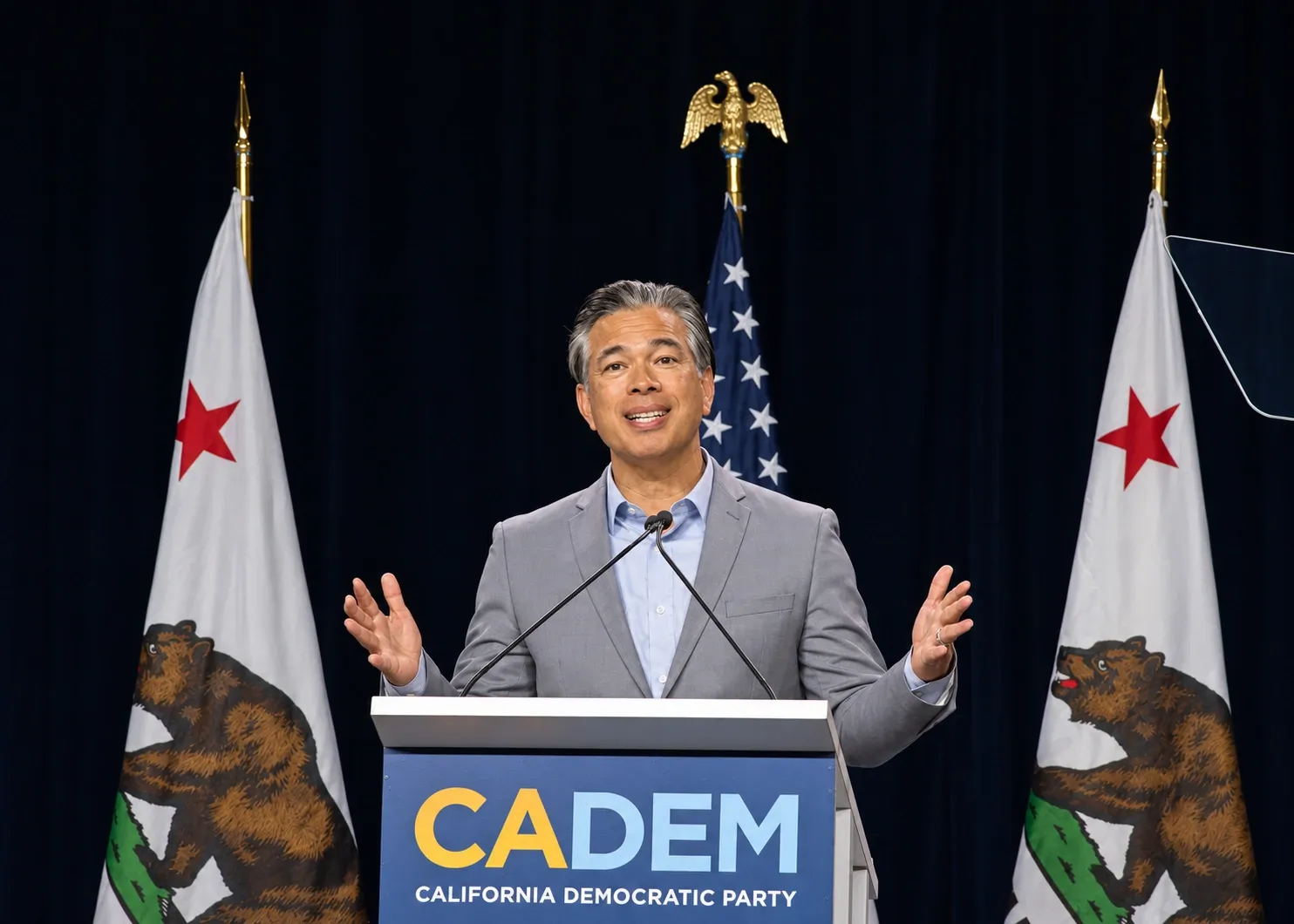
Oakland, California — NVIDIA has been served with an investigative subpoena by California Attorney General Rob Bonta, whose office wants to know whether the chipmaker's advanced chips or confidential information may have reached China, and whether the company misled the public and its investors.

Bonta's office announced the subpoena linking it to reports that Jensen Huang, NVIDIA's former chief executive, had an affair with an alleged Chinese spy. The answers NVIDIA provides will be used by the California Department of Justice to judge whether the company broke state law, the office said.

An investigative subpoena is a demand for information at an early stage of an inquiry. The announcement did not include any charges or a lawsuit against NVIDIA, and it did not describe what material the state has asked the company to hand over.

Rob Bonta, California Attorney General, said: “The conduct of Nvidia and its former CEO raises bright red flags, including about the ways in which the company may have misled investors. My office is investigating whether Nvidia or Jensen Huang’s actions resulted in China obtaining advanced chips or confidential information — and if Nvidia misled investors and the public about this risk, in violation of the law,” adding: “Nvidia is in a messy, transnational situation but the underlying principle of our corporate securities law is clear: Companies cannot mislead their investors.”

The state law Bonta pointed to is California's Corporate Securities Law of 1968. Under Section 25401 of the Corporations Code, nobody may offer, sell or buy a security in California through a written or spoken communication that contains an untrue statement of a material fact, or that leaves out a material fact needed to stop what was said from being misleading. The attorney general's office has not said which provisions it is examining.

Nvidia's board started its own review weeks before the state stepped in. On November 8, directors opened an independent investigation after reports that a foreign intelligence operation had targeted Huang, who was still founder and CEO at the time. Independent directors, working with outside counsel, are leading that inquiry. The board said then that it had no reason to believe national security or NVIDIA secrets had been compromised, but that it would examine all available information.

Four days later, NVIDIA announced that Huang had resigned as president, chief executive officer and board member with immediate effect. Colette Kress, the executive vice president and chief financial officer, agreed to run the company as interim CEO while keeping her finance role, and Harvey C. Jones was named the board's first-ever chair. Opening the company's earnings call on November 17, Jones ruled out a comeback for the co-founder.

Harvey Jones, Chair of the NVIDIA Board of Directors, said: “The NVIDIA board unanimously accepted his resignation and does not intend to reinstate Jensen as CEO,” before moving on to the quarter's numbers.

Huang addressed his conduct earlier that day in a post on X, his first public statement since stepping down. Jensen Huang, co-founder and former chief executive officer of NVIDIA, said: “I did not live up to the standards expected of everyone at NVIDIA, and I have made serious mistakes in my personal life. I created problems for the Board that I deeply regret. I own my mistakes completely, and I am committed to cooperating with the Board’s independent investigation.”

NVIDIA has also changed how its board watches over export compliance. On November 17, it set up a National Security and Export Control Oversight Committee, a permanent body that watches, at board level, over the company's national security policies, its compliance with export controls and the way it handles global trade risk. Director Suzanne Nora Johnson chairs it, with directors Stephen C. Neal and John O. Dabiri as members, and it will meet at least quarterly.

NVIDIANVIDIA must now answer a state subpoena over whether its chips or trade secrets reached China. (Shutterstock)

The company's existing National Security Team and Global Trade Compliance Team now report directly to that committee and, on day-to-day operations, to Kress. Outside specialists in law, national security and trade compliance will advise the committee, NVIDIA said.

Federal lawmakers are pursuing their own questions. Huang and NVIDIA General Counsel Tim Teter have voluntarily agreed to sit for transcribed interviews with the House Select Committee on China, the House Foreign Affairs Committee and the House Intelligence Committee, the three chairmen said on November 17.

John Moolenaar, Brian Mast and Rick Crawford, the chairmen of the three committees, said: “We look forward to hearing from Jensen Huang and Tim Teter on their roles in a potential breach of our national security,” adding: “The American people need answers on Mr. Huang and NVIDIA’s role in allowing dangerous PRC actors to access our most advanced chips, as well as the role of a potential Chinese intelligence asset in this scandal.”

The congressional inquiry centers on chip access and national security. Bonta's subpoena adds a different line of questioning, because it asks what NVIDIA told shareholders about that risk. Any findings in California could therefore turn on the company's investor disclosures as much as on where its chips ended up.

The scrutiny arrives as NVIDIA's China business is already set apart in its outlook. Third-quarter revenue rose 103% year on year to $115.8 billion, and the company's fourth-quarter outlook of $130.0 billion, plus or minus 3%, excludes any data center compute sales in China.

Huang is scheduled to appear before the House committees on December 1, followed by Teter on December 2.