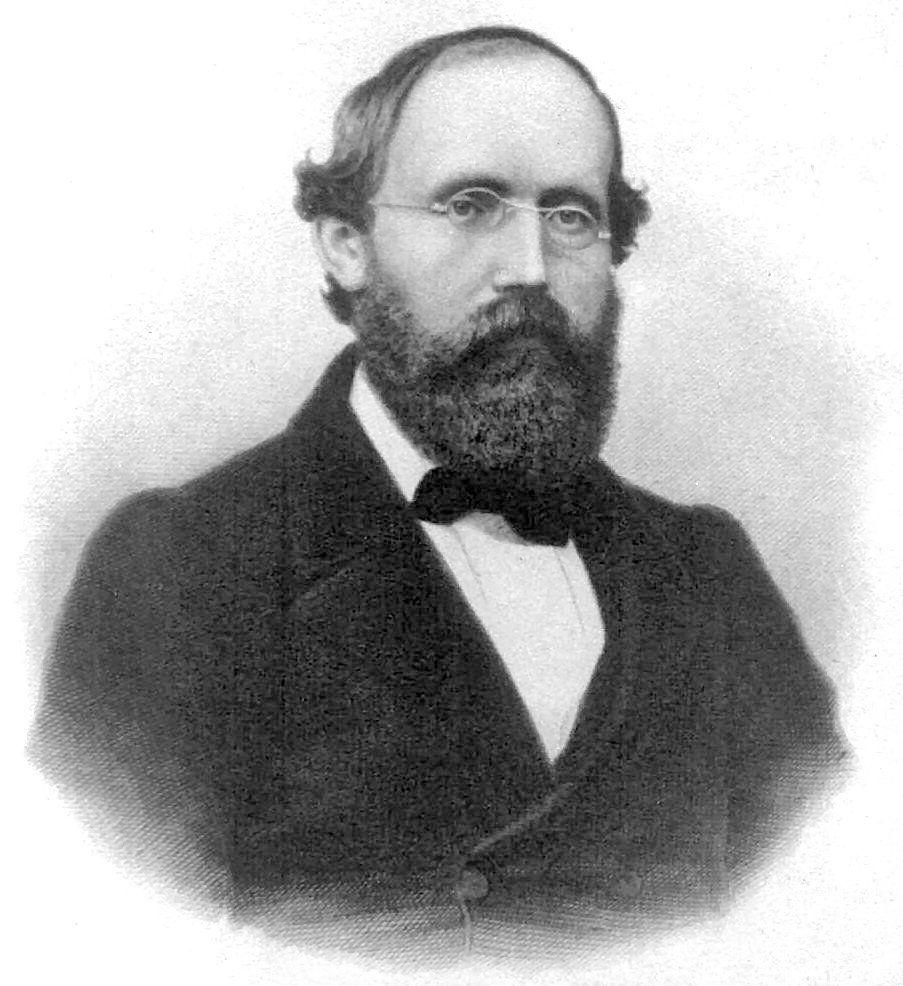
Alpöge gave Claude much of the credit for the final stretch. He said he had spent his student years preparing for the problem, learning every tool he thought it might need, and that he steered the work toward combining two quite different ideas taken from a simpler toy setting. From there, he said, the model began to leave him in awe. He wrote: “Claude and I have had a great time together with such breadth in recent months, but this time Claude far outpaced me near the finish line. No, Claude flew, and danced, and sparkled near that finish line.”
The note gives one technical example for specialists. The argument descends from a method of Stepanov, which settled the analogous question over function fields with the help of multiplicity, something Alpöge said is hard to find over the integers. He said Claude proposed recovering it by chaining together theta lifts, with the length of the chain growing in step with the size of the prime sum under study. Alpöge said the argument draws on far more mathematics than he had once expected and predicted that it will be greatly simplified, likely very soon.
Rather than a paper, Alpöge released the proof only as code in Lean, a programming language and proof assistant that checks every logical step by machine, split into 14 downloadable archive files. He said an AI-written document laying out the details had passed 250,000 pages, which Claude playfully called the GRH book, and that posting an unreadable document of that size would have been inappropriate.
He was open about the limits of his own grasp. Alpöge said he is presenting a complete argument before mastering much of the mathematics around it, has little command of automorphic forms on higher-rank groups, which the proof relies on, and may have built odd, suboptimal choices into it. A rough timeline in the note, which he said Claude compiled, runs from October 6 to November 16, 2026, the day the Generalized Riemann Hypothesis step is logged; where Claude was the expert, he said, his descriptions paraphrase the model’s summary.
Outside checks of the code moved quickly. In a joint statement published on November 21 and endorsed by the Lean FRO and the Mathlib Initiative, the Lean and Mathlib communities said the library runs to 17 million lines of code, that dozens of people had compiled it and reproduced the same proof file, and that two separate tools confirmed it proves exactly the statement of the hypothesis held in Mathlib, Lean’s shared mathematics library.
The Lean and Mathlib communities said: “We have full confidence that Alpöge’s proof of the Riemann Hypothesis is correct, and we congratulate him on this achievement.” They added that several proof checkers written in different programming languages had accepted the exported proof.
Andrew Sutherland of the Massachusetts Institute of Technology (MIT) is keeping a public log of verification runs, which he says were carried out with Claude Code. As of 04:35 UTC on November 22, all 175,187 modules had compiled with no errors, two independently written checking programs had accepted the full proof, and a sealed-off rebuild on a separate machine had matched the published proof file byte for byte. Two further runs were still in progress at that time.
The log also narrows what has been shown beyond the original hypothesis. The generalized statements checked cover Dirichlet L-functions for every modulus and character, while Dedekind zeta functions, Hecke L-functions and automorphic L-functions in general were not among them. Sutherland noted that a passing result depends on the checking programs and on Mathlib’s definitions being what they are meant to be.
Alpöge said that task now falls to him. He wrote: “The argument is incredibly long at the moment, and while its formalization is finished and it is routine to produce a huge, unreadable document containing sufficient detail, in my view of my path I have just taken a step. I intend to do my best to understand and impart understanding of this argument and its certain simplifications, to speak about it, to write it properly.” He closed the note hoping the argument offers a glimpse of what lies ahead in what he described as a time of revolution in mathematics.
The note arrived one day after Anthropic’s Class A shares began trading on the Nasdaq Global Select Market under the symbol ANT. The company said on November 20 that it had closed its initial public offering at $83.00 per share, with gross proceeds of approximately $93.5 billion, a price that valued the Claude maker above $1 trillion.
Alpöge addressed the timing directly. He wrote: “The precise timing is horrible. If I could have, I’d have finished this all much earlier.” He said the result came together late on a Sunday night, after which he messaged Dario, an apparent reference to Anthropic chief executive Dario Amodei, about whether he could announce it, and learned there was a constraint to respect. He said Anthropic’s leadership and the trusted mathematicians he consulted held very similar views on how to proceed, and that he alone was responsible for deciding not to wait any longer. He wrote: “There is an obvious cynical view, to do with the timing, but it is false, and I am pleased that I am in circumstances where it is obviously false.”
If the wider mathematical community accepts the work, it could strengthen Anthropic’s argument that its models can contribute to research at the frontier of science. In September, the company said Claude had produced the first complete computer-checked proof of Fermat’s Last Theorem, writing 13 million lines of Lean over 11 days. That project formalized a proof humans had already found, while Alpöge says this one is new.
Alpöge, a junior fellow at Harvard’s Society of Fellows who wrote his PhD thesis at Princeton, lists a solution of Hilbert’s tenth problem over all number fields as his most recent paper. In the note he thanked mathematicians including Manjul Bhargava, Peter Sarnak and Maksym Radziwiłł, and credited OpenAI’s mathematical results, among them its work on the Ehrhart conjecture, with shaping his thinking.