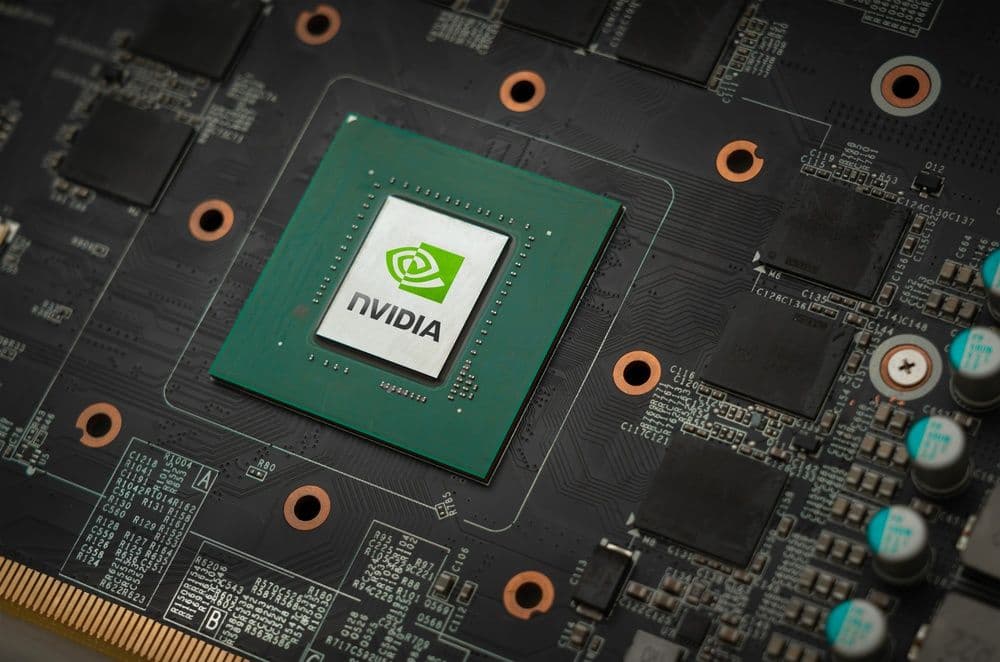
The project will involve NVIDIA's financial services team and its Transaction Foundation Model developer blueprint. According to Starling's announcement, the development process will use NVIDIA CUDA-X libraries for accelerated data processing and NVIDIA NeMo AutoModel for model training.
The decision to use Civo's infrastructure introduces a second dimension to the project: where sensitive financial data is processed and which companies control the underlying computing environment.
Civo operates UK-based cloud infrastructure designed to support computationally intensive AI workloads. Its role in the arrangement is to provide the environment in which Starling's transactional model will be trained and hosted, while NVIDIA supplies the computing technology and development tools.
Cloud sovereignty has become an increasingly prominent consideration in financial services, particularly as banks expand their use of external technology providers. Keeping computing infrastructure within a national jurisdiction can offer institutions greater control over data residency and certain operational arrangements.
Mark Boost, CEO of Civo, said: “AI will only deliver lasting value for the UK economy if it’s built on secure, resilient, sovereign infrastructure. Starling is leading the financial sector by training and hosting its Transactional Foundation Model on a homegrown cloud. Pairing NVIDIA compute with Civo’s UK sovereign cloud shows that banks don’t have to trade performance or innovation for control of their data, or depend on a handful of global providers.”
Starling's approach also reflects broader questions about concentration risk. Financial institutions that depend heavily on a limited number of technology suppliers may face operational challenges when outages, contractual changes, or disruptions affect those providers. Introducing alternative infrastructure can diversify that exposure, but the effectiveness of such diversification depends on the architecture and dependencies of the overall system.
The announcement follows the publication of the UK government's Financial Services AI Adoption Plan, released in July 2026. The plan examines barriers to AI adoption and identifies the concentration of cloud and AI services among a relatively small group of international suppliers as a potential resilience concern.
Harriet Rees, Starling's group chief information officer, was involved in preparing the government plan in her capacity as a UK Government AI Champion for Financial Services. Her participation places the bank's infrastructure decision within an ongoing policy discussion about the financial sector's access to computing capacity and alternative technology suppliers.
The relationship between national infrastructure and banking regulation nevertheless requires careful interpretation. Hosting data in the UK does not automatically establish compliance with all applicable financial regulations. Banks remain responsible for assessing outsourcing arrangements, information security, operational resilience, and the management of material third-party risks.
The use of NVIDIA technology also demonstrates that sovereign cloud arrangements do not necessarily mean relying exclusively on domestic suppliers. Starling's project combines infrastructure operated by a British company with hardware and software developed by a US technology provider, illustrating how domestic control of cloud operations can coexist with international technology dependencies.
Aser Blanco, Global Head of Banking at NVIDIA, said: “Banks are at the forefront of turning massive amounts of data into timely, personalised insights while also protecting customers from fraud. By combining NVIDIA’s accelerated computing and software for data processing and model training with Civo’s UK sovereign cloud, Starling can deliver exceptional customer experiences while maintaining control of its customers’ data.”
Starling expects its transactional foundation model to support a range of banking applications when it enters production in early 2027. Building on its existing use of AI, the bank aims to enhance transaction analysis, strengthen financial monitoring, and improve the intelligence behind its digital banking services.
Transaction-based models may help banks identify spending patterns and relationships between financial activities that are difficult to recognize through conventional analytical methods. However, their effectiveness will depend on the model's accuracy, the quality of its training data, and how its outputs are integrated into existing banking systems.