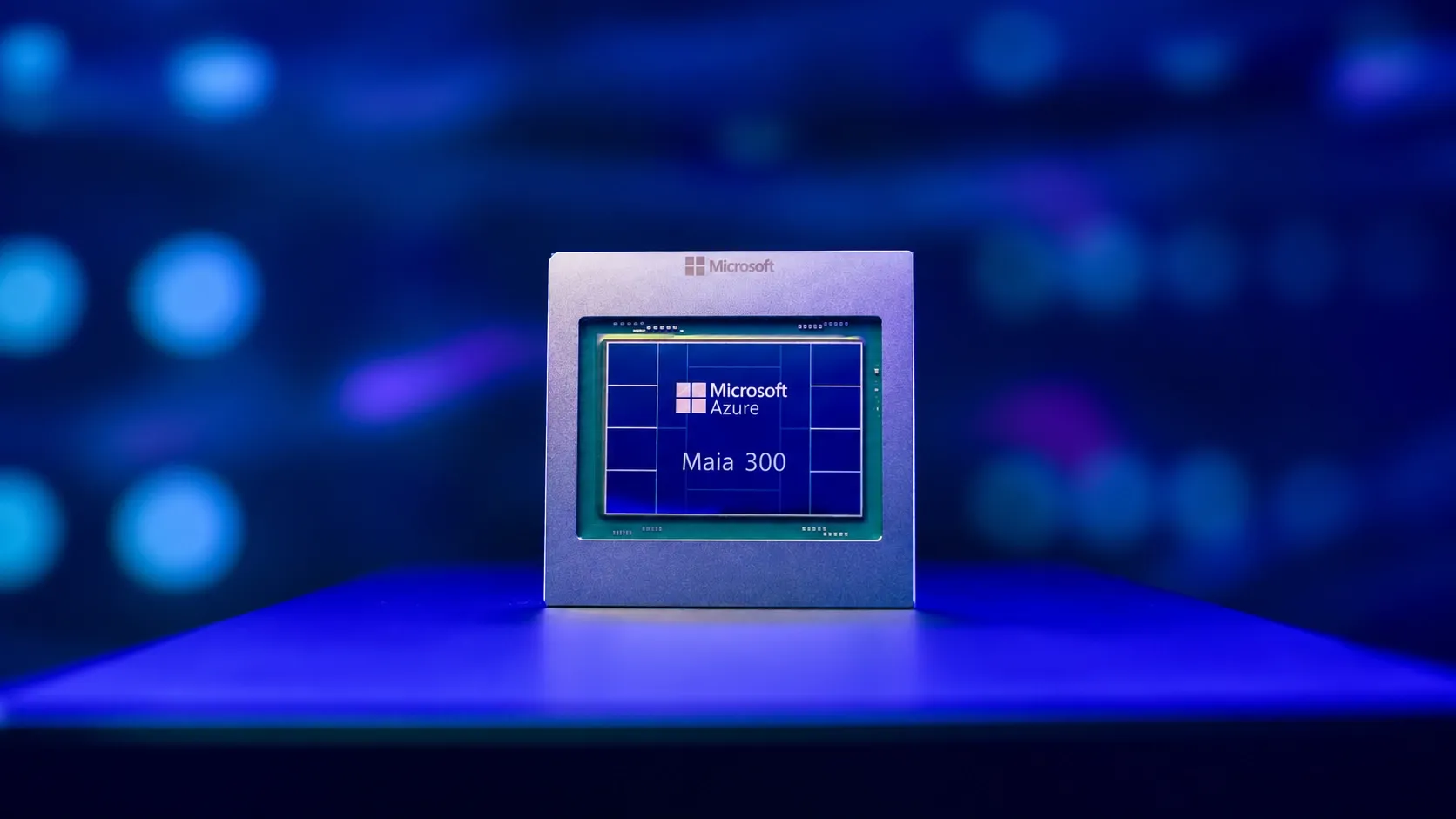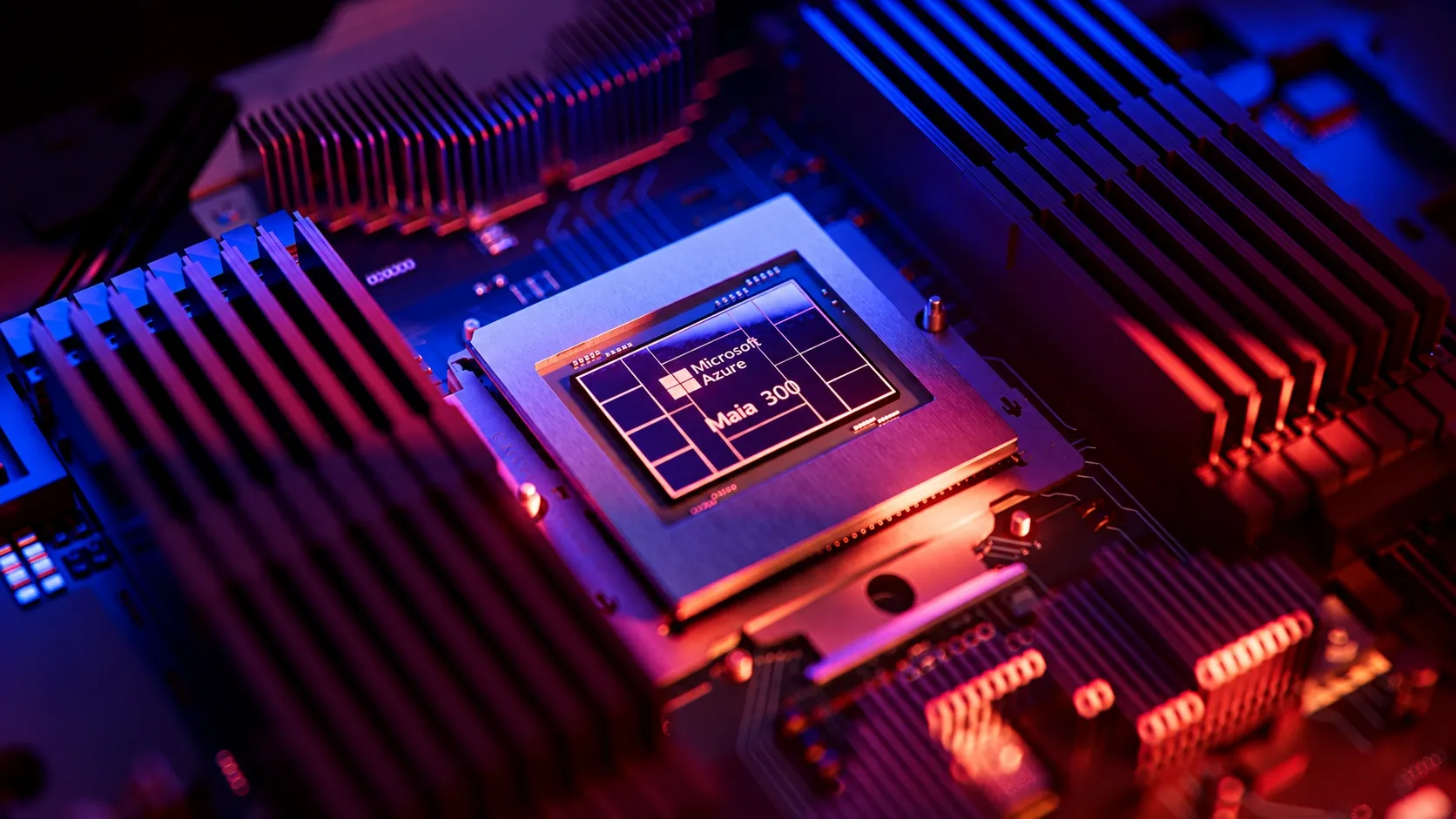
Microsoft plans to expand its Azure Maia chip family to deployments measured in multiple gigawatts beginning in 2027, putting its internally designed hardware at the center of the infrastructure serving its AI products. The company announced the expansion alongside Maia 300, its next-generation AI accelerator, on October 12.
The plan moves Maia beyond a supporting role. Scott Guthrie, Microsoft’s executive vice president for Cloud and AI, said the family would become the primary inference system for Microsoft products and services. Inference is the computing performed when an already-trained model processes a request and produces an answer, rather than the earlier work of training the model.
Microsoft’s announcement places the forthcoming rollout alongside an existing deployment. Maia 200 is already handling production workloads, including Microsoft Copilot, and supporting the company’s MAI model development team. GitHub Copilot and Microsoft Foundry are scheduled to follow by the end of 2026.
Microsoft expects Maia 300 to deliver 40% more tokens per megawatt than leading GPU-based systems. Tokens are the units of information that language models process and generate. Measuring their output against power consumption gives operators one way to assess how much AI work they can support within available electrical capacity.