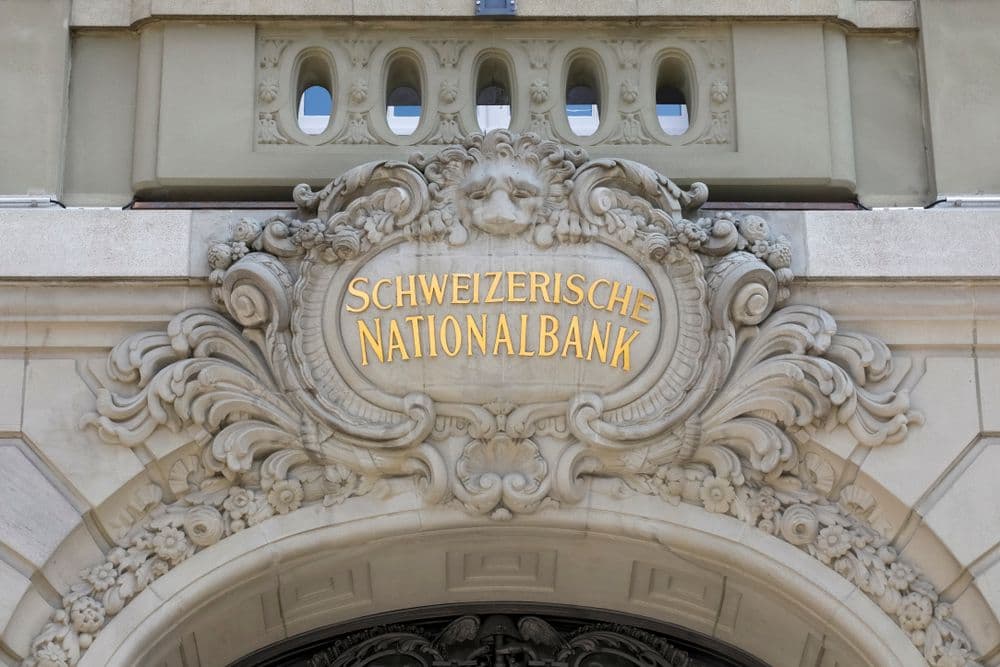
Large stablecoins operating with limited connections to the banking system could make monetary policy harder to implement, Swiss National Bank Governing Board member Petra Tschudin warned, placing their design and regulation at the center of the central bank’s concerns.
Tschudin presented the assessment at the KOF forecasting conference in Zurich. Her presentation, “New Forms of Money and the Role of the SNB,” compared different approaches to digital money, including tokenized bank deposits and stablecoins with varying degrees of integration into existing financial infrastructure.
The presentation warned that shifting financial activity away from banks could complicate credit creation and the transmission of monetary policy. It also identified risks to the functions of central bank money when large stablecoins operate as separate payment systems backed entirely by securities.
Tschudin’s assessment was conditional: the consequences depend on a stablecoin’s size, regulation and connections to the financial system. The published slides also recognized potential benefits, including lower fees, competition and innovation. They did not announce a ban or conclude that stablecoins have already disabled central banks’ control over interest rates.
Switzerland’s monetary policy operates through financial markets and banks. The SNB sets its policy rate and seeks to keep short-term secured Swiss franc money-market rates close to that level.. Its instruments include interest on banks’ sight deposits and operations that supply or absorb liquidity.
Interest paid on sight deposits gives financial institutions an incentive that influences money-market rates. The SNB also uses a tiered remuneration system to encourage liquidity to move between account holders, supporting activity in the money market. These arrangements help connect the central bank’s policy decision to the conditions under which institutions obtain and exchange funds.
Borrowers experience monetary policy further along that chain, through the availability and price of credit. A policy decision does not directly set every mortgage or business loan rate. Its effects pass through financial institutions, whose funding arrangements and lending decisions influence the terms offered to households and companies.
Stablecoins introduce another possible route for holding and transferring money. The concern is that changes in where funds are held could alter the institutions through which policy decisions reach the economy. Assessing that risk requires examining the issuer’s reserves and its relationship with banks, rather than treating every digital payment instrument as economically identical.
The Bank for International Settlements reached a similarly qualified assessment in its 2026 Annual Economic Report materials. Wider stablecoin adoption could change bank funding and credit provision, it said, but the outcome depends on reserve composition, usage, regulation and the response of other financial institutions.
That framework leaves room for different outcomes. An arrangement that retains substantial links to bank money differs from one built around securities and a separate payment network. The BIS examined scenarios rather than presenting a universal estimate of how much lending would fall as stablecoin adoption increases.
Another concern involves whether different forms of money can reliably be exchanged at face value. The BIS calls this the “singleness of money”: recipients should be able to accept a payment without investigating the quality of each individual monetary claim. Its report chapter explains how settlement in central bank money supports that confidence within a currency system.
The same chapter highlights the importance of liquidity that can respond to changing payment needs. Central banks supply settlement liquidity, while commercial banks provide credit lines and create deposits through lending. Separate digital networks can introduce difficulties when money cannot move smoothly between platforms, potentially fragmenting liquidity and weakening confidence in interchangeable payment instruments.
The SNB is also examining how digital assets can settle using central bank money. Its Project Helvetia explores both settlement directly on a distributed ledger platform and synchronized settlement connecting digital asset infrastructure to conventional payment systems. The project is scheduled to continue until at least June 2028.
Within the pilot, the SNB provides wholesale central bank digital currency to financial institutions on the SIX Digital Asset Platform. This allows the payment side of transactions involving tokenized assets, such as digital bonds, to settle on the same platform. The currency is restricted to financial institutions.
A separate approach uses a real-time gross settlement link. Tokenized assets settle on a distributed ledger, while payments settle in traditional central bank money through the Swiss Interbank Clearing system. Connecting the platforms enables the asset transfer and payment to occur in a synchronized manner.