@2026 Finance News International. All Rights Reserved.

Blends Media
A Blends Media Group Production

Dubai Climbs to 20th in Kearney Global Cities Index as Abu Dhabi Gains

Arry Hashemi
Arry Hashemi
Nov. 27, 2026
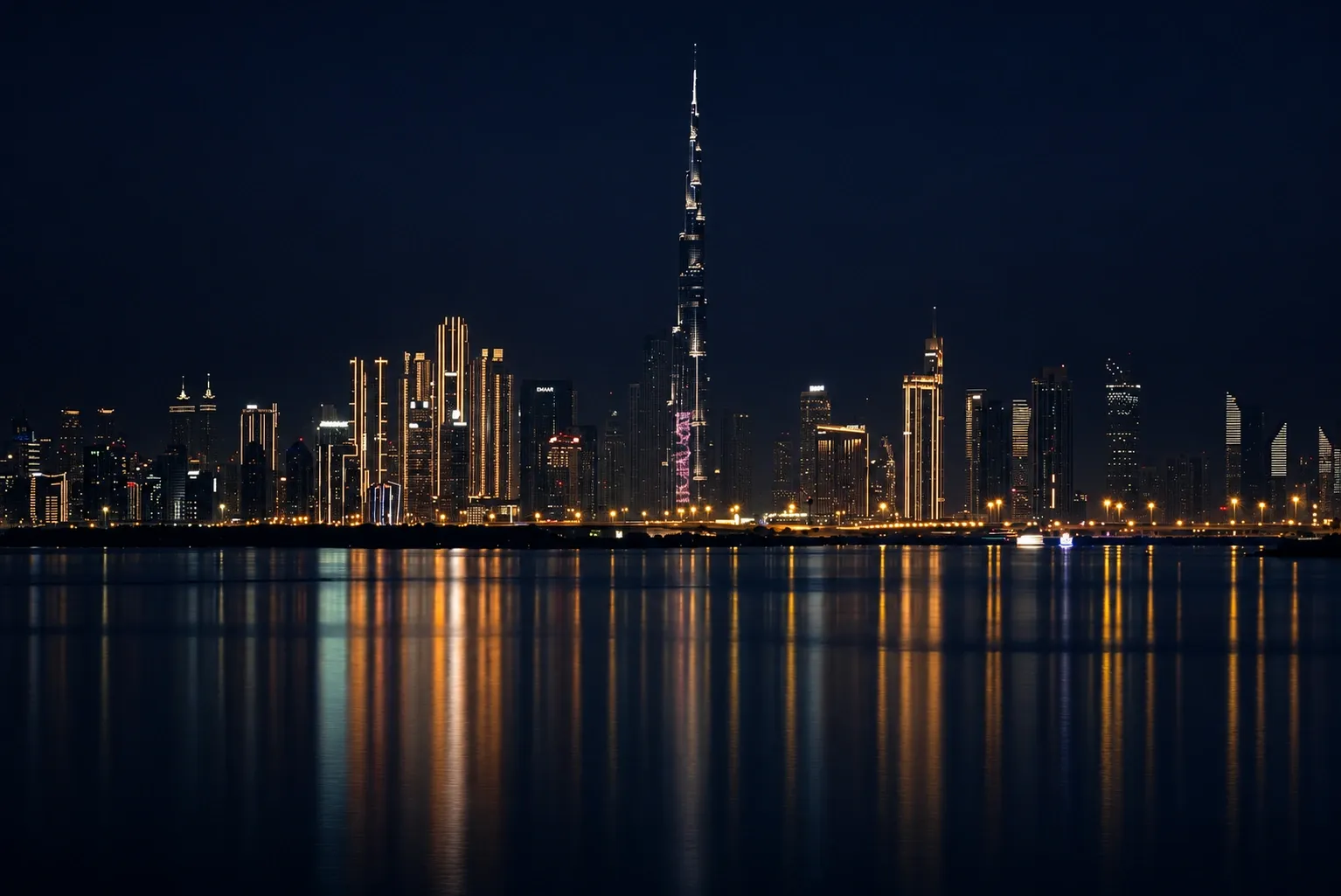
Manhattan skyline with the Empire State Building under a clear skyDubai's skyline, with the emirate rising three places to 20th in Kearney's 2026 Global Cities Index. (Shutterstock)

Dubai, United Arab Emirates — Dubai has moved up three places to 20th in management consultancy Kearney's 2026 Global Cities Index, a ranking of 158 cities, while Abu Dhabi rose four spots to 45th and Riyadh gained two to reach 54th.

Kearney said the result takes Dubai into the index's top 20 for the first time. The emirate placed 23rd in the 2025 edition, and the consultancy's ranking data shows it at 22nd, 23rd and 24th in the three years before that, so this year's position is its best across the five editions the data covers.

The emirate now stands well clear of every other Gulf city. Istanbul sits one place above it at 19th, and Barcelona, Sao Paulo, Berlin and Amsterdam fill the slots from 21st to 24th. At the top nothing changed: New York, London, Paris, Tokyo and Singapore held the first five places in that order.

Published in Kearney's 2026 Global Cities Report, the index gauges how well a city attracts, retains and generates global flows of capital, people and ideas. It scores 31 metrics grouped into five dimensions. Business activity and human capital carry 30% of the weight each, information exchange and cultural experience 15% each, and political engagement the remaining 10%.

Much of Dubai's climb came from business activity, a measure of capital flows, market dynamics and the presence of major companies, where Kearney's data now ranks the emirate 13th, up from 20th a year earlier. It also improved to 12th from 15th in cultural experience, to 23rd from 25th in human capital and to 42nd from 57th in information exchange, while its political engagement rank stayed at 51st.

Because business activity and human capital together make up 60% of the score, further progress in either could lift Dubai's overall position more than gains in the smaller categories. The business activity result may also be watched closely by the investors and multinational companies whose presence that dimension tracks.
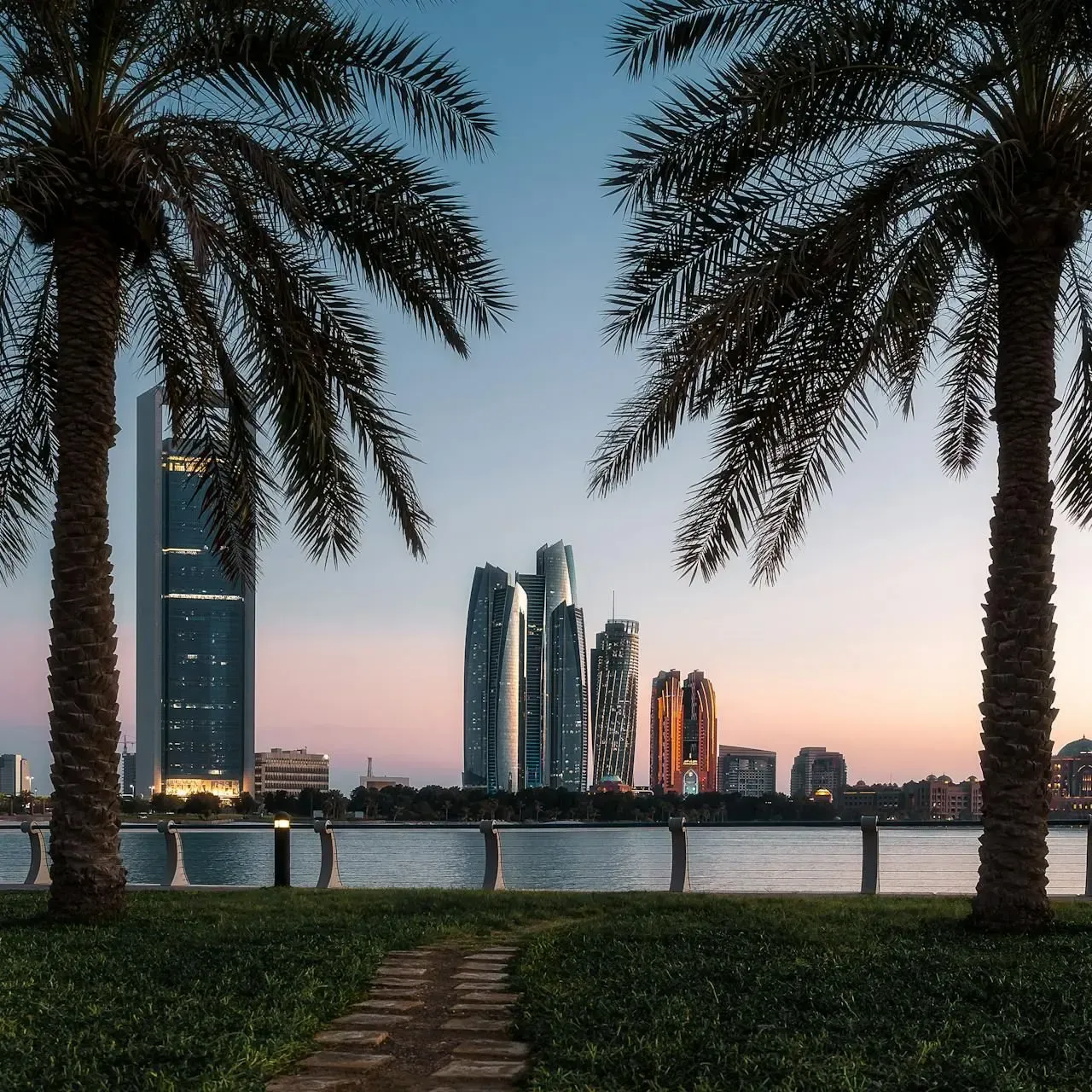
Abu DhabiAbu Dhabi climbed four places to 45th in Kearney's 2026 Global Cities Index. (Unsplash)

Abu Dhabi's move extends a steady run. Kearney's figures place the capital at 76th in 2022, 66th in 2023, 59th in 2024 and 49th in 2025. Its strongest dimension this year is political engagement, at 20th, followed by human capital at 31st.

Kearney credited Abu Dhabi's progress to its long-term push to diversify away from oil and grow non-oil industries, which the consultancy said have supported 18 consecutive quarters of gross domestic product growth. It also pointed to the expansion of Abu Dhabi Global Market, the emirate's international financial center, and Khalifa Economic Zones Abu Dhabi, along with the capital's tourism, renewable energy and cultural sectors.

In its summary of findings, Kearney grouped Abu Dhabi and Riyadh with Ho Chi Minh City as rising cities that are diversifying their economies, while Busan and Taipei are building depth in specialized industries. Riyadh, 70th in 2022, has gained 16 places since then. Elsewhere in the Gulf, Doha held 51st, Jeddah slipped two places to 85th, Kuwait City fell four to 94th, Muscat rose two to 110th, Dammam gained three to 114th and Manama edged up one to 124th.

Valentin Lavaill, executive director of Kearney Foresight MEA, said: “Nearly all of the Gulf’s cities benefited from improved economics, and the region distinguished itself on innovation. Amid a more challenging operating environment, leaders proved the value of committing to a well-defined, multiyear investment strategy.”

Kearney's second ranking, the Global Cities Outlook, looks ahead rather than at current performance. It projects a city's potential 10 years out from 13 leading indicators across personal well-being, economics, innovation and governance, each weighted equally. Singapore, London, San Francisco, Seoul and New York lead the 2026 Outlook.

Across all 158 cities, Kearney found that economics improved in 142, but most of those cities also saw their innovation and governance scores weaken. The consultancy said this suggests that growth on its own may not be enough to keep a city prosperous.

The report, titled Connected in a fragmenting world, also gives weight to what Kearney calls citycraft, in which cities work directly with foreign counterparts on shared problems. Kearney said Gulf cities could deepen cooperation on shared infrastructure, artificial intelligence development and governance, talent attraction and business corridors.

Rudolph Lohmeyer, partner and chairman of Kearney Foresight Middle East and Africa, said: “Many of the factors that contribute to the business landscape are set at the national level. Cities are taking matters into their own hands by engaging with their peers to advance shared interests in what we call ‘citycraft.’ Through these innovative forms of collaboration, they are building coalitions around shared infrastructure, common standards, investment partnerships, and technical expertise.”

The Kearney ranking follows other recent city assessments that placed Dubai near the top. The emirate came sixth among 148 cities in the IMD Smart City Index 2026 in April, and in July it ranked second overall in Boston Consulting Group's Intelligent Cities Index, behind London, among 61 cities.