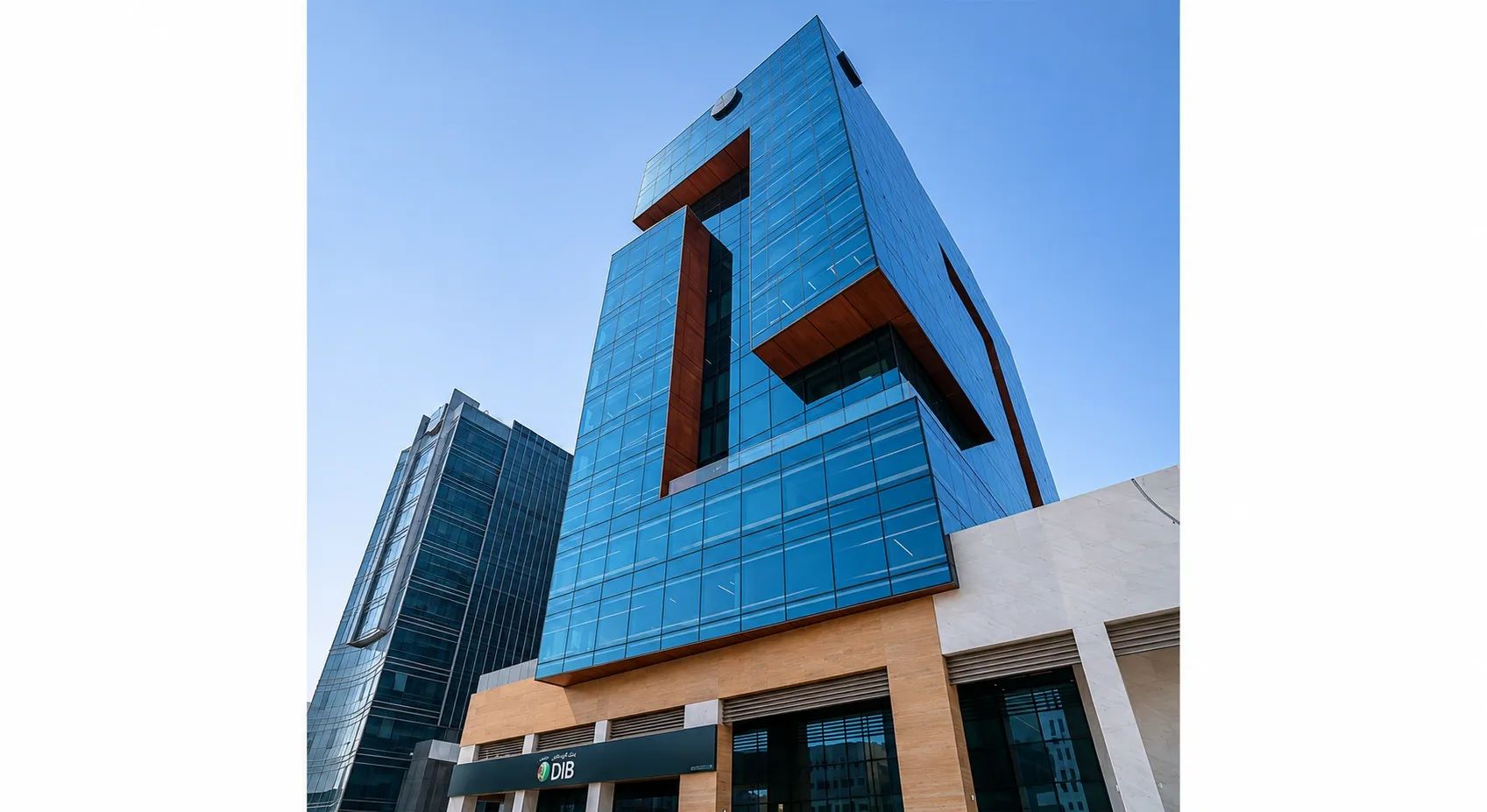
Dubai, United Arab Emirates — Dubai Islamic Bank (DIB) has agreed to buy Emirates Islamic Bank from Emirates NBD in a transaction paid for entirely in new DIB shares, a combination the two lenders say would hold about $159.29 billion (AED 585 billion) in total assets and rank as the world's second-largest listed Islamic banking group by that measure.
The boards of both banks approved the deal before they signed a share purchase agreement covering 100% of the issued share capital of Emirates Islamic, which Emirates NBD currently owns outright. DIB will settle the purchase by issuing new ordinary shares to Emirates NBD rather than paying cash.
The acquisition has not yet closed. It still needs regulatory and shareholder approvals, including final clearance from the Central Bank of the UAE, the Capital Markets Authority and other relevant authorities, and the banks did not give a date for completion.
The asset figure is based on both banks' financial information as at September 30, 2026. On that basis, the enlarged DIB would extend its lead as the UAE's largest Islamic banking group. DIB alone reported total assets of approximately $116.27 billion (AED 427.0 billion) in its nine-month results, up 3% since the start of the year, alongside customer deposits of about $88.09 billion (AED 323.5 billion).
Once the deal completes, Emirates NBD will hold a significant strategic stake in DIB. The banks described Emirates NBD as Dubai's biggest financial institution and among the largest lenders in the GCC, and said its market presence and global footprint would bring significant value to the partnership.
Both lenders presented the combination of what they called two market-leading franchises as part of Dubai's push to build regional champions across industries. They also called it a significant step toward developing the emirate as a global center of excellence for Islamic finance.
The commercial case rests on how the two businesses fit together. According to the banks, DIB brings strength in corporate banking, while Emirates Islamic contributes an established retail banking operation and a deposit franchise. Together they would offer a wider platform covering financing, savings, payments and investments for individuals, companies and institutions.
Emirates Islamic's own nine-month figures give a sense of what DIB is buying. Its total assets rose 8.6% to approximately $43.1 billion (AED 158.3 billion), customer deposits grew 13.4% to about $31.53 billion (AED 115.8 billion), and current and savings account balances made up 63.2% of those deposits. Added to DIB's own balance sheet, those assets make up the combined total of about $159.29 billion.
DIB expects the purchase to speed up growth by joining the two banks' product engines, widening its customer base and strengthening its funding. The banks said Emirates Islamic's deposit base would improve the combined group's funding mix, and that the larger deposit franchise, together with scope to optimize funding costs, should lift funding efficiency and support net financing margins. DIB would also gain Emirates NBD as a strategic and significant shareholder.
Emirates NBD, for its part, will be paid in stock rather than cash, which the banks said would let it and its shareholders take part in the enlarged group's future growth, value creation potential and future distributions. A larger institution would also support further spending on digital capabilities, products and service delivery, and add capacity to finance businesses and projects that contribute to the development of Dubai and the UAE, according to the announcement.
The banks pointed to possible operating efficiencies from shared infrastructure, an optimized branch network and streamlined operations, along with extra revenue from cross-selling complementary products to each other's customers. They said these gains should support profitability and organic capital generation over time, strengthening their ability to invest in growth and deliver higher sustainable returns to shareholders. Any benefits would arrive gradually after completion and depend on successful integration, the banks cautioned, and they did not attach figures to the expected savings or revenue gains.
H.H. Sheikh Ahmed bin Saeed Al Maktoum, Chairman of Emirates NBD, said: “This transaction represents an important opportunity for Dubai to create a leading Islamic banking champion, with the scale, capabilities and ambition to further strengthen the Emirate’s position as a global centre for Islamic finance. By bringing together two highly complementary Islamic banking franchises, the combination will create a stronger institution to serve customers, support the UAE’s economic ambitions and contribute to Dubai’s continued growth.”
“Emirates Islamic has been an important part of Emirates NBD’s journey, and this transaction represents an important next chapter in its development. Our ownership in the enlarged DIB, reflects our long-term strategic commitment to the institution and our confidence in its future. We look forward to continuing to work with the Dubai Government to strengthen this strategic partnership and support sustainable, long-term value creation for the shareholders of both institutions.”
Fadhel Abdulbaqi Al Ali, Chairman of DIB, added: “Today marks a defining moment for DIB and for Islamic finance. Having pioneered Islamic Banking 50 years ago as the first Islamic Bank in the world, DIB now takes the next transformational step on this journey by creating the undisputed Islamic banking powerhouse. This acquisition further establishes DIB as the world’s best Islamic bank with the scale, strength and reach to compete with the largest financial institutions globally and to unlock long-term value for our shareholders. It also reinforces Dubai’s position as the global capital for Islamic finance and places the full weight of a stronger DIB behind the Emirate’s future, in line with the vision of our wise leadership.”
DIB has grown through a share swap before. In January 2020 it completed its acquisition of Noor Bank, issuing 651,159,198 new shares to take its issued share capital to 7,240,744,377 shares, and said at the time that the combined bank would have total assets of more than $74.88 billion (AED 275 billion). If the Emirates Islamic deal closes on the figures given, the group's asset base would be more than twice that size.
Merrill Lynch International, regulated by the Dubai Financial Services Authority (DFSA), is DIB's financial adviser, with Al Tamimi & Company Limited as legal adviser. Deloitte Professional Services (DIFC) Limited, registered with the DFSA as a Designated Non-Financial Business or Profession, is acting as DIB's financial due diligence adviser and CMA-accredited valuer.
On the Emirates NBD side, J.P. Morgan Securities plc is financial adviser, Clifford Chance LLP is legal adviser and Grant Thornton Audit and Accounting Limited is financial due diligence adviser. Until the central bank, market regulator and shareholder approvals are secured, Emirates Islamic remains a wholly owned subsidiary of Emirates NBD.