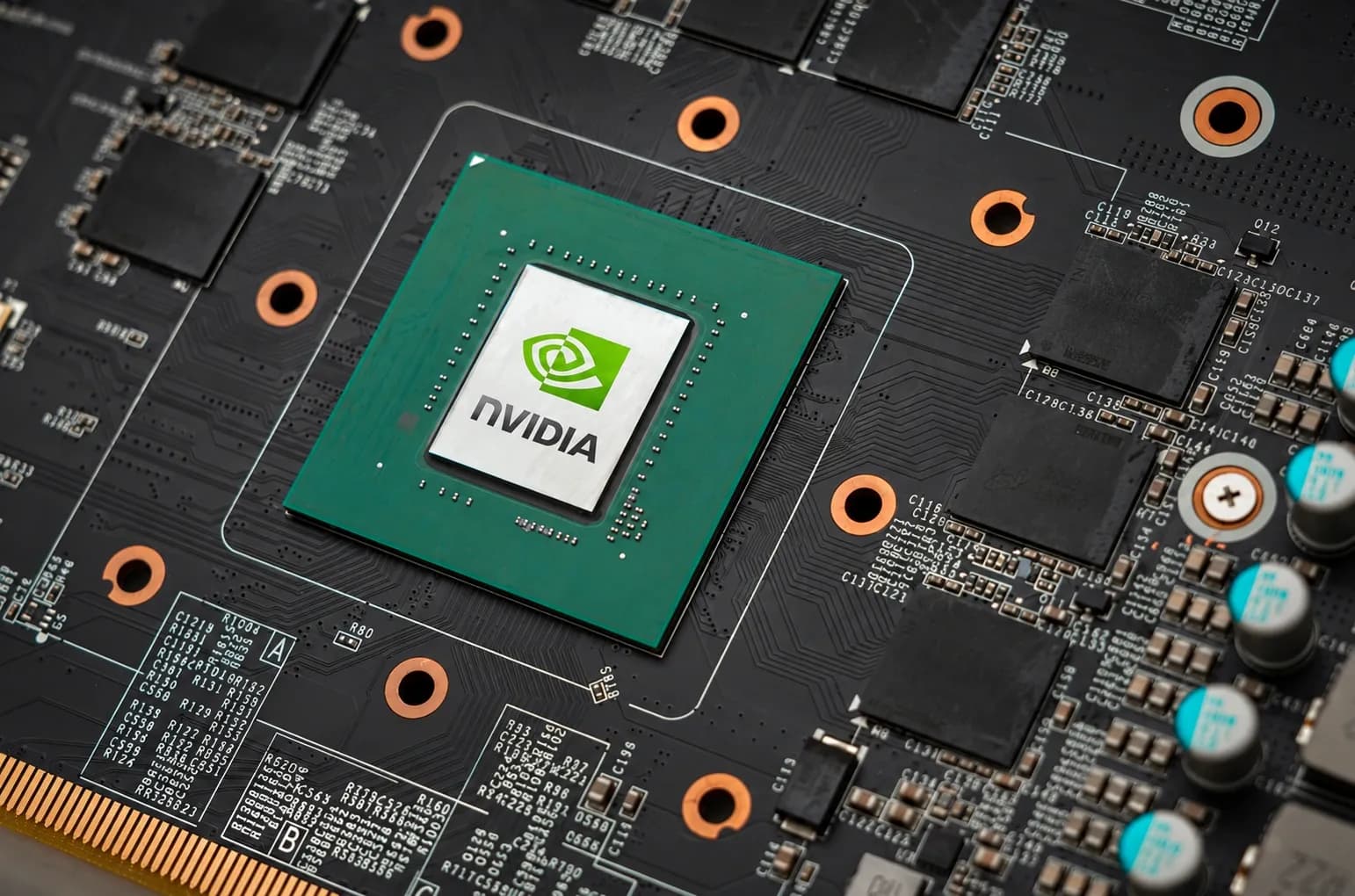
Chinese technology groups ByteDance, Alibaba and Tencent have ordered more than 3 million of NVIDIA’s new RTX PRO 5500 graphics cards, with a collective sticker price of over $35 billion, according to a report by Reuters.
The companies are rushing to secure the less powerful but export-compliant chips amid U.S. trade restrictions on China, according to people familiar with the matter. The graphics cards are priced at approximately $11,400 each, the sources said.
NVIDIA has told customers and partners it cannot guarantee it can fill the orders, because demand from Chinese technology companies far exceeds planned production, the two sources and a third person familiar with the matter said. One source said partners might receive only 5% to 10% of the quantities requested.
Another source said the U.S.-based chipmaker had indicated it could produce no more than 3 million RTX PRO 5500 cards globally in 2027. Total orders from customers in China have exceeded 6 million, two of the sources said.
The RTX PRO 5500 is a workstation chip, designed for powerful professional computers rather than the large data-center clusters that use NVIDIA’s most advanced artificial intelligence (AI) processors. NVIDIA lists it with 84 GB of GDDR7 memory for rack-mounted workstation deployment, and its product page still marks the card as coming soon.
It is among the most powerful NVIDIA chips still available to Chinese buyers. The Blackwell-based B300 data-center chip cannot be sold to Chinese buyers under U.S. export controls, while exports of the Hopper-based H200 are reviewed on a case-by-case basis and are subject to licensing conditions.
Chinese companies are seeking to use the cards primarily for AI inference, or running trained models to generate chatbot responses, the three sources said. Inference generally requires less computing power than training models on massive datasets.
The RTX PRO 5500 is similar in performance to the RTX 6000D. NVIDIA launched the RTX 6000D in the middle of last year as a reduced-capability product designed to meet U.S. export restrictions, but major Chinese tech firms initially showed little interest.
At the time, buyers viewed those chips as overly expensive given their capabilities and hoped Washington would eventually allow sales of more powerful processors. Those expectations have faded as restrictions stayed in place and AI computing capacity remained scarce. The RTX 6000D has since been discontinued, and its market price in China has doubled.
NVIDIA Chief Executive Jensen Huang has previously said U.S. export restrictions reduced the company’s share of China’s AI data-center chip market from approximately 95% to effectively zero. In 2025, Huang also warned that “China is going to win the AI race,” highlighting the growing competition between the two countries in artificial intelligence.
Washington’s curbs have pushed Chinese firms toward domestic suppliers, while Beijing has encouraged the use of homegrown chips. Huawei in particular has gained market share, though Chinese chipmakers have generally struggled to match leading American products, partly because separate restrictions limit their access to the foreign equipment used to make the most advanced semiconductors.
An NVIDIA spokesperson said Chinese producers of workstation chips and cards have experienced “unprecedented growth since 2022,” when the curbs were first imposed.
“US firms continue to be restricted by a combination of outdated US export controls, which cover gaming products released nearly a half a decade ago, and China’s own limit on US imports,” the spokesperson said.
NVIDIA’s inability to promise full deliveries reflects both the surge in demand and its manufacturing priorities, two of the sources said. Starting in 2027, the company is expected to devote much of its capacity at Taiwan Semiconductor Manufacturing Co (TSMC) to Rubin, its next-generation platform for large-scale data centers.
Last week, NVIDIA contributed Vera Rubin rack and compute tray designs to the Open Compute Project during the 2026 OCP Global Summit in San Jose, California.
NVIDIA has told customers to expect early samples in December, with commercial deliveries beginning in the first quarter of 2027, the sources said.