In Melbourne, Australia, Cortical Labs cultivates living human neurons on silicon, and those chips pick up tasks by trial and error while consuming significantly less electricity than a rack of top-end graphics processors. According to his blog, each of the company's CL1 units needs 25 to 30 watts, and a rack of 30 stays below 1,000 watts, against the roughly 600 kilowatts expected for the next generation of GPU racks. Vogels said energy costs will drive much of this progress, and machines that compute where they hold data and learn from fewer examples could also bring computing to sites with weak power supplies or poor connectivity, such as rural hospitals, schools and farms.
Security is the second theme. Turning a software flaw into a working exploit used to demand specialist skill, weeks of effort and resources that few organizations had, which left defenders time to patch. Vogels said that window has closed sharply over the past year, because AI agents carry the know-how themselves, work in swarms and cost so little that an attacker can launch hundreds side by side. His essay points to a Microsoft report on 182 confirmed Linux kernel crash findings, where producing proofs of concept took an average of 21.5 minutes and $3.61 for each successful case.
His answer is that adversarial testing will reach every stage of software development in 2027. By release day, a company's own agents will already have tried to break a product hundreds or thousands of times, and that probing will continue throughout its working life. Amazon says it already sees early versions of this, including AWS Continuum, which checks customers' code for weaknesses and demonstrates which of them could really be exploited. Vogels expects agents to leave security specialists free for work that needs human judgment, and systems to become safer as a result.
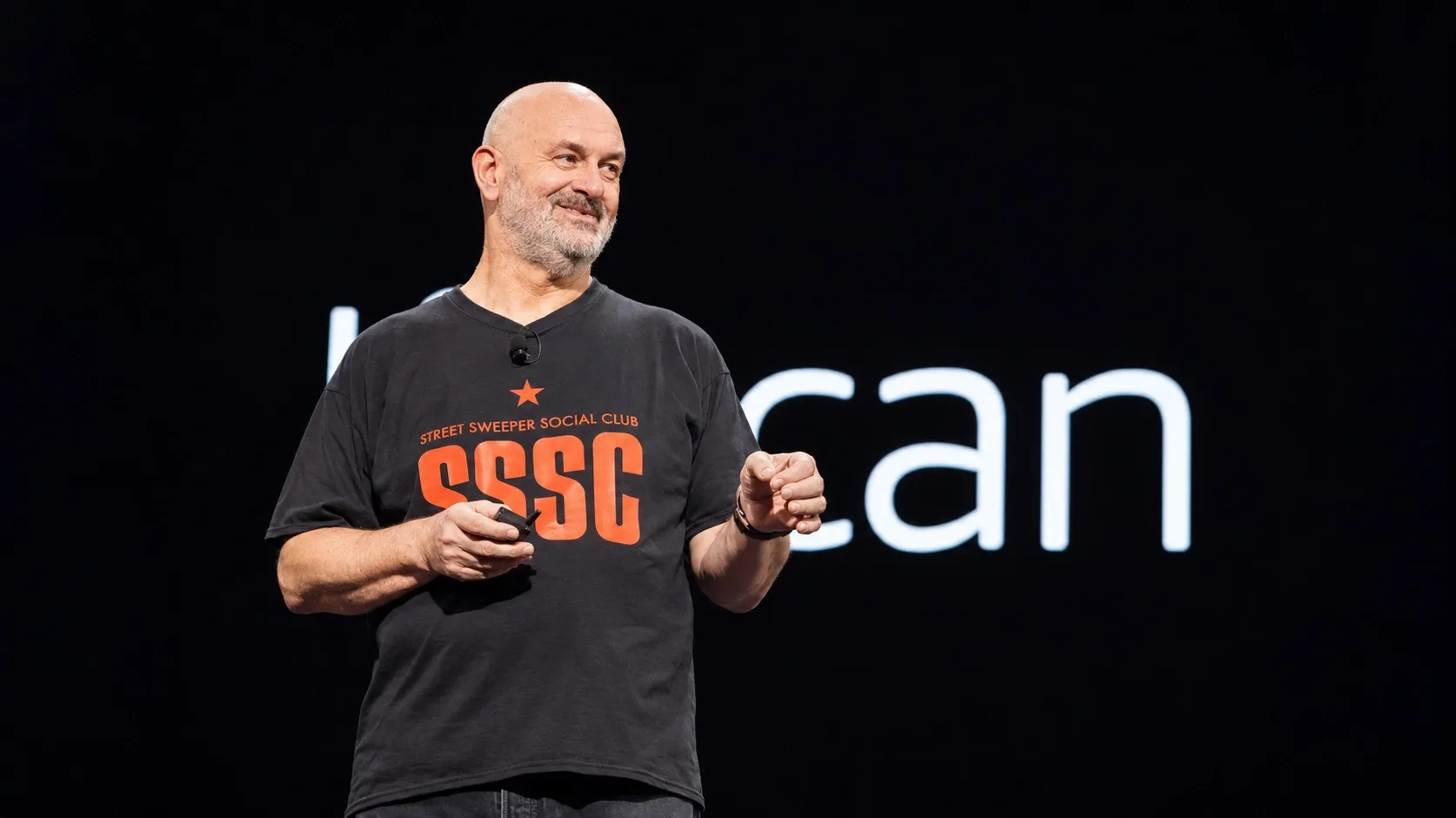
Werner Vogels, chief technology officer of Amazon, wrote: “No organization has the luxury of saying it is not a technology company anymore. Unpatched systems are your responsibility. Software schedules treatments in hospitals, moves money between banks, controls machinery on factory floors and in fulfillment centers, balances energy networks, and delivers public services.”
The third prediction speaks directly to CIOs. Vogels said keeping costs in check was the main worry he heard from them for several years, but over the past year their top question has been how geopolitical tensions could shape where they keep data, which locations host their workloads and what services they can rely on. From 2027, he expects builders to treat sovereignty the way they treat security and cost. Data location, control of the encryption keys and the choice of AI model will become requirements that each deployment must demonstrate, he said, because an agent can now copy data to another region or replace a model within minutes.
Vogels added: “Over-correcting carries its own risk. Frugality was always about spending deliberately. Sovereignty asks for the same discipline because isolation is not the same thing as control.” In his view, the organizations that handle this well will judge each workload separately, opting for a dedicated setup such as the AWS European Sovereign Cloud in some cases and keys held by the customer in others.
The question is live in the Gulf too. AWS has said its first cloud region in Saudi Arabia is due to open in December 2026, backed by planned investment of more than $5.3 billion (SAR 19.88 billion), so that companies and public bodies can keep data in facilities inside the kingdom. A workload-by-workload approach could be relevant to government agencies and regulated businesses there, groups for which AWS has called local data storage an important consideration.
Medicine is the fourth area. Any cure starts with knowing a disease well enough to choose which treatments to chase, and that step is also the slowest in research, dictating the speed of everything from lab work to clinical trials. Vogels said AI agents can now help research teams sift evidence faster and at a larger scale than any individual or group.
He cited two early signs. In August, a personalized mRNA cancer vaccine, its targets picked by machine learning from each patient's tumor mutations, lowered the chance of the disease returning in a late-stage melanoma trial when paired with an existing therapy. A drug whose target and molecule were identified by computational systems has also moved into Phase 3 trials for idiopathic pulmonary fibrosis.
Under that model, scientists lead the work and verify every finding, while agents help design experiments and score thousands of candidate interventions at once. New therapies would still have to clear clinical trials for safety and effectiveness. Even so, Vogels expects researchers working alongside agents to find a cure, before the decade is over, for a disease that current medicine can only keep under control. Amazon's cloud unit recently committed $100 million in AI, agentic tools and cloud services over five years to groups working on health gaps in underserved communities.
His final prediction is that the mind will become readable. Each interface to date, from the keyboard and mouse to touchscreens and voice, has required people to convert an intention into a movement a computer can detect; the next will read neural signals directly. The earliest working brain interfaces were implanted surgically, giving speech back to people with ALS and hand movement to people with paralysis.
That is why he argues mass-market brain interfaces must avoid surgery altogether. Over the summer, a team from Meta and several European labs placed a magnetoencephalography scanner outside the skull to capture brain activity while volunteers typed, and correctly decoded 61% of words across 90 hours of recordings. Vogels expects such devices to let people who cannot speak hold conversations and people who cannot move operate prosthetics or home appliances by the end of the decade, though the uses he finds most exciting are those that boost creativity, judgment and memory.