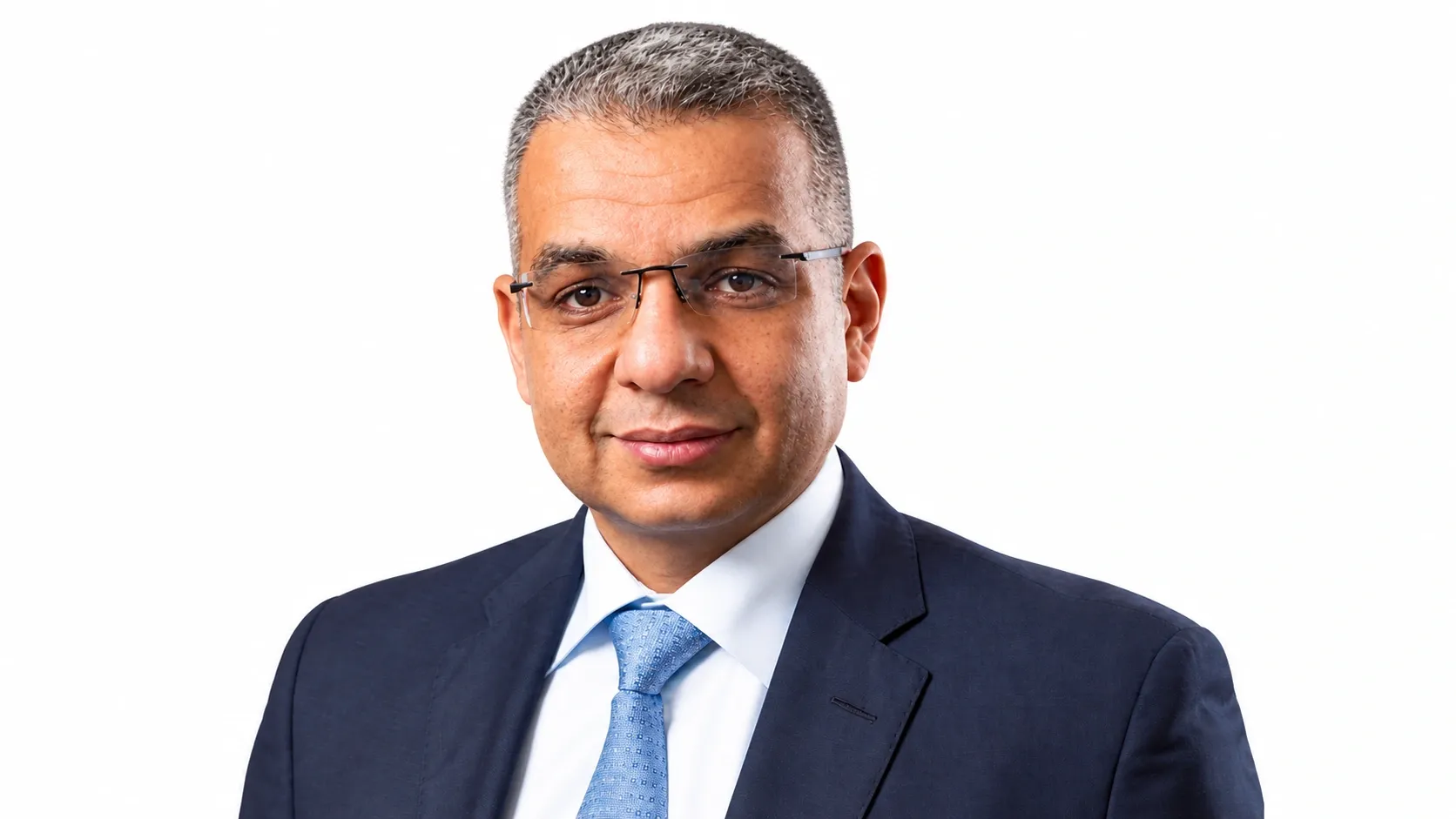
Mohamed Abdelbary was already familiar with Abu Dhabi Islamic Bank’s finances when he took charge of the institution. Having joined as group chief financial officer in May 2020, he became acting chief executive in March 2024 before the board confirmed his appointment as group CEO on October 30 that year. His promotion moved him from overseeing the numbers to taking responsibility for the wider business.
The transition came with an established institution to manage and a long-term strategy to implement. Today, his agenda includes expanding the bank’s core businesses, investing in artificial intelligence and securing additional equity to support growth. Managing that expansion requires attention to costs, capital strength and the service customers receive.
A Career Built Across International Banks
Abdelbary’s background includes senior roles at Citibank, Barclays and Standard Chartered. Before moving to ADIB, he was Standard Chartered’s regional CFO for Africa and the Middle East.
That experience matters to the demands of his current role. Managing a bank’s finances involves assessing how growth affects funding, expenses and capital. As CEO, those considerations sit alongside decisions about employees, technology and the markets the institution chooses to serve.
His move into the top job was also an internal succession. ADIB’s board selected an executive who had spent several years working on its financial strategy, rather than bringing in a leader from outside.
The CEO role broadened his responsibilities beyond financial oversight to the bank’s overall direction. Decisions about technology, staffing and customer service now sit alongside capital planning, requiring him to weigh immediate operating needs against the institution’s longer-term priorities.
First-Half Growth and Financial Performance
ADIB’s first-half 2026 results show the scale of the business Abdelbary now leads. Total assets reached approximately $82.78 billion (AED 304 billion) at the end of June, up 17% from a year earlier. Pretax profit increased 9% to approximately $1.17 billion (AED 4.3 billion).
Revenue increased 9%, while operating expenses rose 12%. The bank’s cost-to-income ratio stood at 29.0%, compared with 28.2% a year earlier, and its reported net profit margin was 3.78%, compared with 4.27%.
Credit quality improved, with the non-performing asset ratio falling to 2.2% from 3.5%. The common equity Tier 1 capital ratio stood at 12.2%, compared with 12.7% a year earlier. ADIB said its capital ratios remained above regulatory requirements.
The results provide a view of the bank’s expanding business and the operating conditions Abdelbary oversees, including costs, asset quality, and capital planning.