Tokyo, Japan — Toyota Motor is trying to turn two decades of in-house robotics research into a commercial business, as the world’s biggest carmaker upgrades its production lines to keep pace with Chinese manufacturers and looks for income outside the auto industry, according to a report by the Financial Times.
Senior Toyota executives have been courting investors around the world with the strategy. Its centerpiece is a plan to put 400,000 robots to work under a $6.4 billion annual spending program on factory automation, along with a dedicated robotics team reporting to the chief production officer.
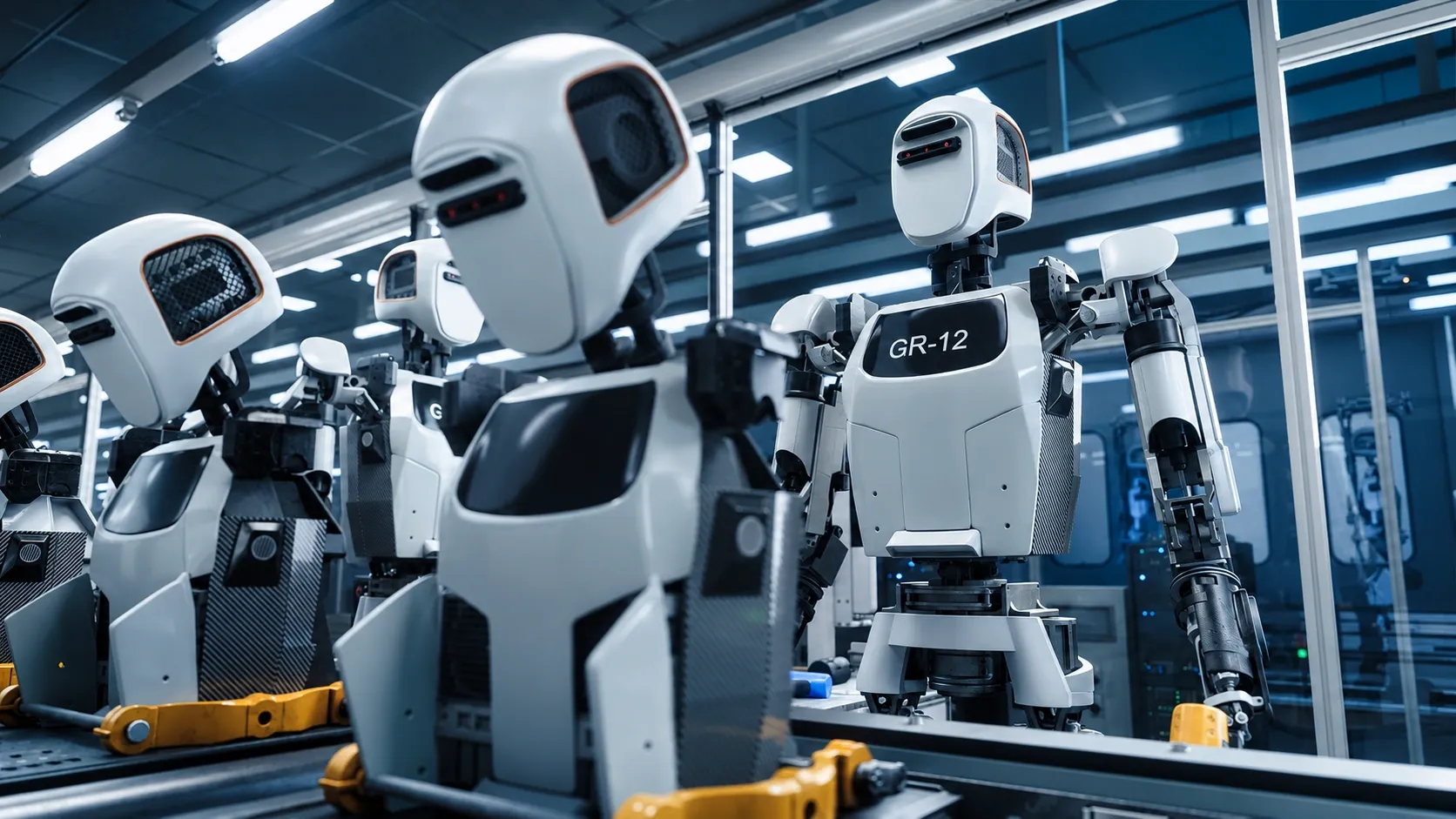
Toyota’s robotics ambitions include plans to deploy around 400,000 robots as part of a $6.4 billion annual factory automation program.
Only part of that fleet is meant for Toyota’s own plants. Around 250,000 of the 400,000 robots are set aside for group companies and their suppliers, in line with Toyota’s stated ambition to become a mobility company that earns money beyond building cars.
The company has been showing off what it can do. In April, its black and red Cue7, a humanoid robot powered by artificial intelligence, dribbled a basketball across the court at the Toyota Arena Tokyo and sank a shot to cheers from the crowd.
In July, Walden Robotics, an AI robotics spinout from Toyota, emerged from stealth with $300 million in funding at a $1.1 billion valuation. Bernstein analysts have singled out the start-up as the crown jewel of Toyota’s robotics ecosystem. According to Walden’s launch announcement, the round was co-led by Toyota and Deviation Capital, with NVIDIA and Boeing among the other backers, and its general-purpose robots have been doing production work at a Toyota plant in North America since February.
That track record has sharpened investor interest in whether Toyota can take on Tesla, Xpeng and Hyundai, all of which have turned to robots to lower vehicle production costs and open new revenue streams. Toyota arrives as a latecomer to that race, which has also drawn in AI developers: OpenAI chief executive Sam Altman said in September that the company plans to build a humanoid robot.
Carl Vine at M&G, a Toyota investor, said: “I think that Toyota could be the biggest humanoid robot company on the planet — they just need to get after it”.
He added: “Whoever controls the software layer will control global manufacturing. Toyota is developing its own large behavioural models . . . and they have massive amounts of data internally because of the sheer size of the business. Those are critical ingredients.”
Goldman Sachs analysts take a similar view. They estimate that Toyota’s technology and mass-production know-how could win it 3% to 8% of the humanoid market by 2035, or between 190,000 and 540,000 units. Some shareholders are more cautious, pointing out that several earlier Toyota bets, including hydrogen cars, its in-house software platform and solid-state batteries, have disappointed or have yet to deliver on their promise.
People close to Toyota say its increased focus on robotics under new chief executive Kenta Kon reflects pressure to keep pace with China in technology and manufacturing. A new vehicle assembly plant planned near Nagoya, Toyota’s first in Japan since 2012, is expected to begin operating in the early 2030s and could allow the company to incorporate robotics from the outset.
A former Toyota executive said: “The people in charge almost stopped thinking about new technology to build vehicles”. The former executive added: “The production system is one of the keys now to compete with China. Robots are one of the pieces of how to compete with Chinese manufacturing.”
Toyota had long kept quiet about its robot plans because of worries that staff would fear for their jobs. Labor shortages in Japan and other large economies are now easing that restraint.
The interest from investors also reflects the economics: growth in the car market is slowing, while a humanoid robot is likely to sell for well above the price of a new car. Masahiro Akita, an analyst at Bernstein, said Toyota’s real strength may lie in combining robots, AI and production processes into a better operating system, rather than in building the most advanced machines.
Much of the software comes from Toyota Research Institute, the company’s California-based subsidiary. It has built a foundational model that turns high-level decisions into precise, real-time movement and motor control, and that model is already used in the Atlas humanoid made by Boston Dynamics. Toyota’s own 50-kilogram humanoid, Eley, will use the same model to pick up new tasks by watching factory staff, particularly fine-motor work such as moving parts from one box to another.
Skeptics doubt robotics will grow into a large standalone business for Toyota, arguing that the push is mainly about building its 10 million cars a year more efficiently. Tomohiro Nomi, Toyota’s head of humanoid robotics research, said in a presentation earlier this year: “We’re giving the highest priority to deploying robots in our own factories, where there is real demand and where the environment can be controlled.”
The former executive described chair Akio Toyoda as “a car guy - but he’s not a robot guy” and said the priority remains strengthening an auto business that still leads the world, adding: “They don’t need to get away from the auto business now.” An Asia-based Toyota investor said that, on similar economics, sales of 200,000 humanoid robots would barely register against that car output, and that the robotics effort is likely to be praised when the core business is strong and written off as a distraction when it is not.
Toyota’s researchers have also set out what still needs work. In a March research note on Eley, whose name stands for “Embodied Learning robot for Enhanced Yield,” the company listed long-hour reliability, repeatable positioning and the data infrastructure behind robot learning as areas where the robot does not yet match leading technology, and said it plans to deploy it in conditions close to real production sites.