Instead of relying on others, the company builds every layer of its service in-house. That runs from licensing and local rails in each market it serves to a consumer app with cards and dollar accounts, tools for small and medium-sized enterprises (SMEs), corporate APIs that handle payroll, payouts and treasury, and a trading desk for institutions. Stripe, Mastercard and Visa are among its partners.
Owning the whole stack, Takenos says, means the same infrastructure can serve a freelancer in La Paz, an exporter in Guayaquil and the crew of a global airline. The company also runs its own stablecoin.
In Bolivia, Takenos says it was the first company incorporated and regulated by the Bolivian financial supervisory authority, the Autoridad de Supervisión del Sistema Financiero (ASFI), under its new fintech framework. In an October 16 post, the company said it had been set up from scratch as an Empresa de Tecnología Financiera (ETF), a financial technology company, after working with the authorities since 2025 to adapt its operations to the new rules.
It also has a physical presence in Santa Cruz de la Sierra, with a customer service center in the Equipetrol district and corporate offices in Green Tower, where its local team works.
The demand behind that growth is described in a case study by Rain, which powers the Takenos TakeCard. More than a million people in Latin America use Takenos to receive, hold and spend stablecoins, according to Rain, 350,000 of them in Bolivia, where 1 in 16 of the economically active population signed up in the app's first year there.
Rain links that uptake to access to dollars. Limited US dollar reserves in Bolivia at one time led banks to impose tight limits on USD card spending, it said, while persistent inflation and currency volatility in Argentina have long pushed people to save in dollars. The TakeCard can be used with US dollar stablecoins at upward of 175 million merchant locations around the globe.
Takenos believes the timing now favors stablecoins in the region, saying consumer trust in them and their use are rising fast as the United States and other jurisdictions bring them under regulation. In the US, the GENIUS Act was signed into law on July 18, 2025, and the Office of the Comptroller of the Currency has adopted a final rule for the issuers it oversees ahead of the law taking effect on January 18, 2027.
Lucas Posada, CEO and co-founder of Takenos, said: “The next great financial company in Latin America will be stablecoin-native. This is the future of the financial system,” adding: “We didn’t put an app on top of someone else’s rails. We built the rails: the licenses, our own stablecoin, local on- and off-ramps in every market. That’s why we are live in six countries today and will be in more than 15 next year, while the incumbents are still scoping their first pilot. This round is fuel. The rest of the region is next.”
Travis Scher of North Island Ventures, one of the two lead investors, said: “Takenos is doing the hard thing: building regulated stablecoin infrastructure in the markets everyone else overlooks, and the numbers prove that users in those markets were waiting for them,” and added: “We invested in the seed, watched the team execute at a super high level across six countries, and wanted to support them even more deeply. We believe that Takenos can become the leading financial network for Latin America.”
North Island Ventures was already on the cap table. It joined the $5 million seed round that Takenos announced in October 2025, which Variant and Lattice co-led, alongside Reverie and others, with MoonPay founder and CEO Ivan Soto-Wright among the angel investors. At the time, the company reported more than $500 million in transaction volume to date, a team of more than 30 people and a previous $500,000 pre-seed round.
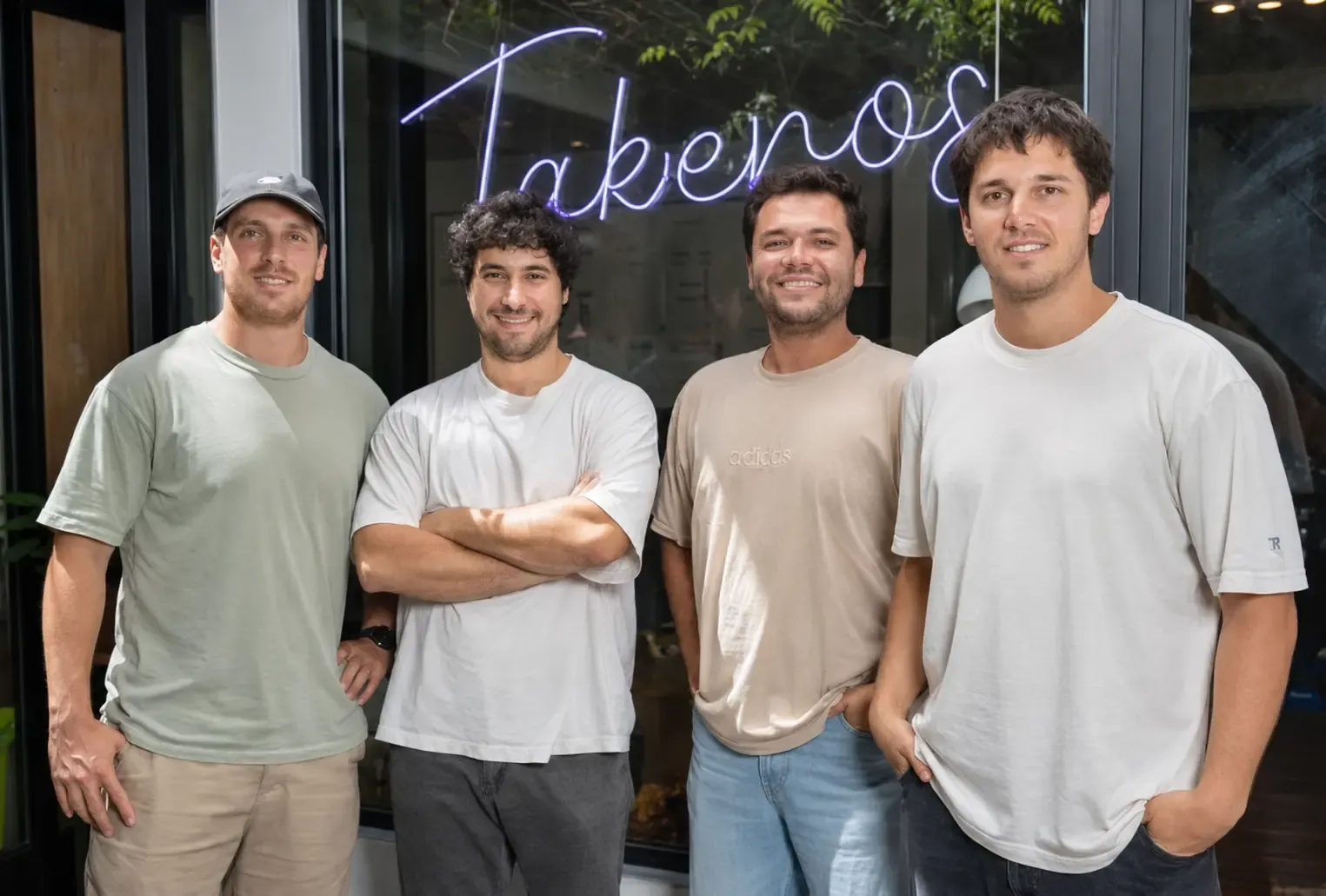
Posada started the company in 2022 with Joaquín Herrera, Francisco Goulu and Simón Bouché. Its move into more than nine further countries may prove demanding, since the company says each new market needs its own licenses and local rails, and that is the first use it lists for the new capital.