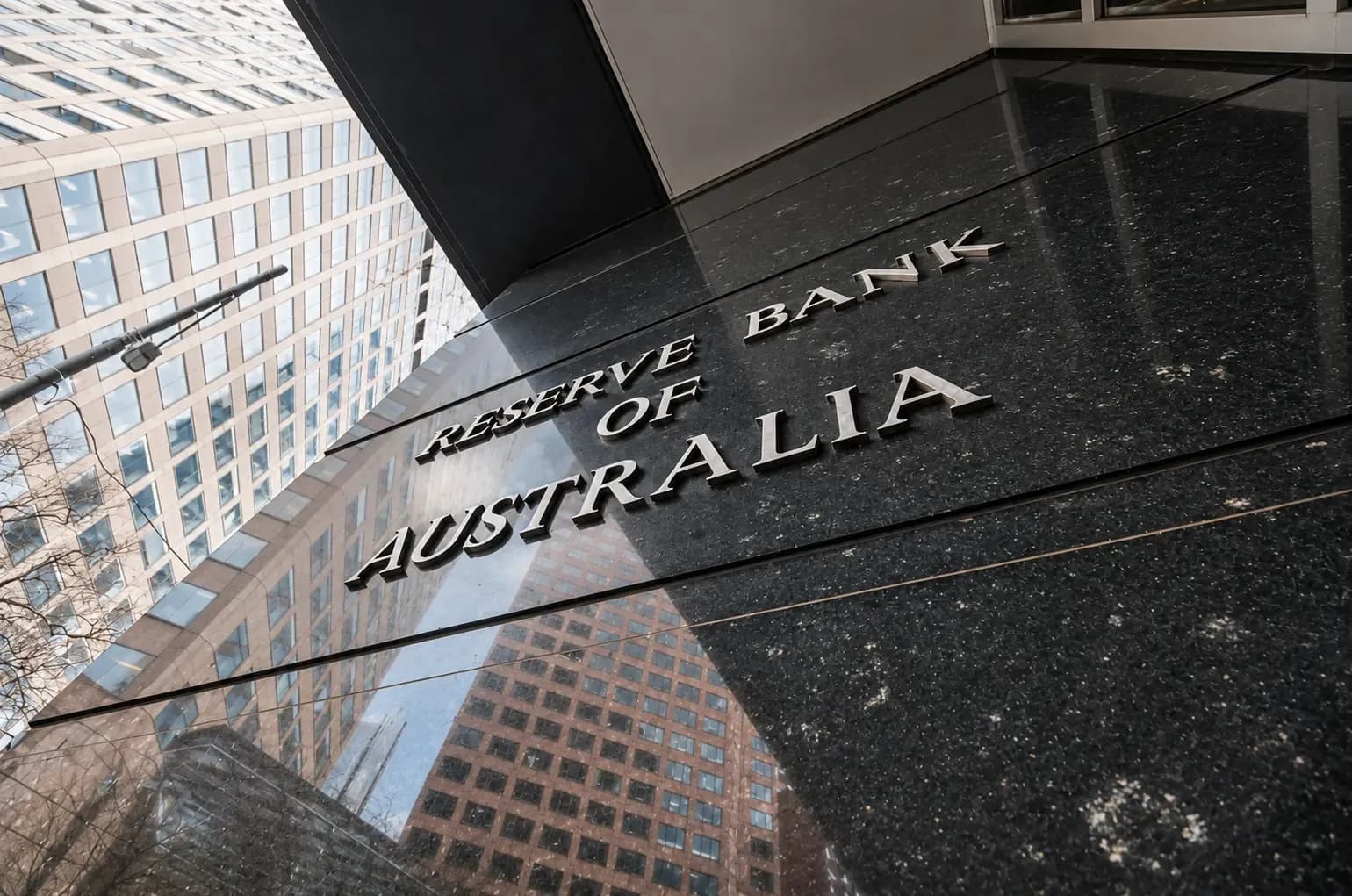
Sydney, Australia — The Reserve Bank of Australia raised its cash rate target by 25 basis points to 4.85% on Tuesday, its fifth increase this year, after its Monetary Policy Board concluded that inflation will stay above target for longer than it had expected.
The move takes the benchmark to its highest level since late 2008. According to the RBA's cash rate history, the target last stood above 4.85% in November 2008, at 5.25%, before a cut to 4.25% the following month. It peaked at 4.75% in 2010 and 2011, and at 4.35% in the 2023 to 2024 tightening cycle.
The decision was not unanimous. Six of the nine board members voted for the increase, while three wanted to keep the target at 4.60%, the level set at the September meeting. The new rate took effect on November 4.
In its statement, the board said inflation is still elevated and spread across the economy, and that staff have lifted their inflation forecasts materially. Part of that revision comes from fuel and other commodities whose prices have been driven up, but the board also now judges domestic capacity pressures to have been slightly tighter than it previously thought.
The RBA pointed to artificial intelligence as another source of pressure, saying AI-related investment is producing rapid price growth in technology-related goods. Inflation remains high across many goods and services, and the bank's business liaison found that many firms facing rising costs have already lifted their prices or plan to.
Under the new forecasts, inflation stays elevated through much of 2027 and remains above 3% over the coming year. It is not projected to fall to the top of the RBA's 2% to 3% target band until late 2027, about three quarters later than the bank previously forecast. The board warned of a growing risk that higher inflation expectations become embedded, noting that some measures of those expectations appear to have risen.
Official data released last week pointed the same way. The Australian Bureau of Statistics (ABS) said the consumer price index rose 4.3% in the 12 months to September, up from 4.0% in August, with automotive fuel prices up 9.4% in September alone. Trimmed mean inflation, a gauge of underlying price growth, was 3.6%.
Michele Bullock, Governor of the Reserve Bank of Australia, said at her media conference after the decision: “Inflation is too high, and our forecasts suggest it will stay higher for longer. Part of the reason for inflation staying higher for longer is global oil prices. However, I want to be very clear that we are not tightening monetary policy because of the direct impact of oil prices on inflation. I know there is confusion in the community, so I want to be very clear. Monetary policy cannot impact global oil prices.”
Bullock said the rate rises are aimed at domestic capacity pressures that were visible before oil prices climbed, which is why the board began tightening in February. The RBA's records show increases in February, March, May, September and November, lifting the target by a combined 1.25 percentage points from 3.60% at the start of the year.
The board said this year's increases have already tightened financial conditions, with the economy slowing, housing prices down significantly and unemployment higher. Staff expect output growth to slow further as higher borrowing costs and weaker housing prices and turnover weigh on dwelling investment and household spending, although business investment, including in data centers, is forecast to be stronger in the near term. Jobs should keep growing, but the RBA now sees unemployment rising by more than it projected in August.
Bullock acknowledged the strain on borrowers. She said: “Now, I understand that today's decision is going to be difficult for Australians with mortgages, many of whom are already managing large repayments. But households with mortgages are not the only Australians doing it tough. Every household is dealing with higher prices for groceries, electricity, insurance and other essentials. High inflation is particularly painful for Australians on lower incomes, including people who rent and have little or no savings to fall back on. When most of your income is already going towards essentials, there is nowhere left to cut spending. This is why getting inflation down matters so much. It affects everyone, but the burden is not felt equally.”
The board described the outlook as highly uncertain. With the global oil supply disrupted, inflation could run higher and activity weaker than forecast, and a long period of uncertainty may weigh on growth both overseas and in Australia. So far, AI-related investment has helped Australia's major trading partners grow faster than expected, more than offsetting the conflict's effects, while weak productivity growth at home keeps limiting potential growth and the depth of the housing downturn remains unclear.
Asked about the split vote, Bullock said the three members who preferred a hold weighted downside risks more heavily. In her account, they pointed to the response in housing, a gradual rise in unemployment and no sign of faster wage growth, and argued that after four earlier increases the board could wait for more data.
The board said further tightening was warranted given the revised outlook, and that it will do what it considers necessary to return inflation sustainably to target, guided by incoming data and its mandate of price stability and full employment. Bullock declined to signal the next step. She said: “I'd not be interpreting this as saying we're not going up. I wouldn't be interpreting this saying we definitely are going up. We're basically preserving our options.”
Bullock also said the last couple of increases have yet to flow through and that it was probably a good point to take stock, though the board would be watching closely given a remaining upside skew to inflation risks. The minutes of this meeting are due in two weeks, and the board next meets on December 7 and 8, with its decision due at 2.30 pm Sydney time on the second day.