@2026 Finance News International. All Rights Reserved.

Blends Media
A Blends Media Group Production

Sam Altman: UAE World’s Most Forward-Looking Country for AI Adoption

Arry Hashemi
Arry Hashemi
Nov. 03, 2026
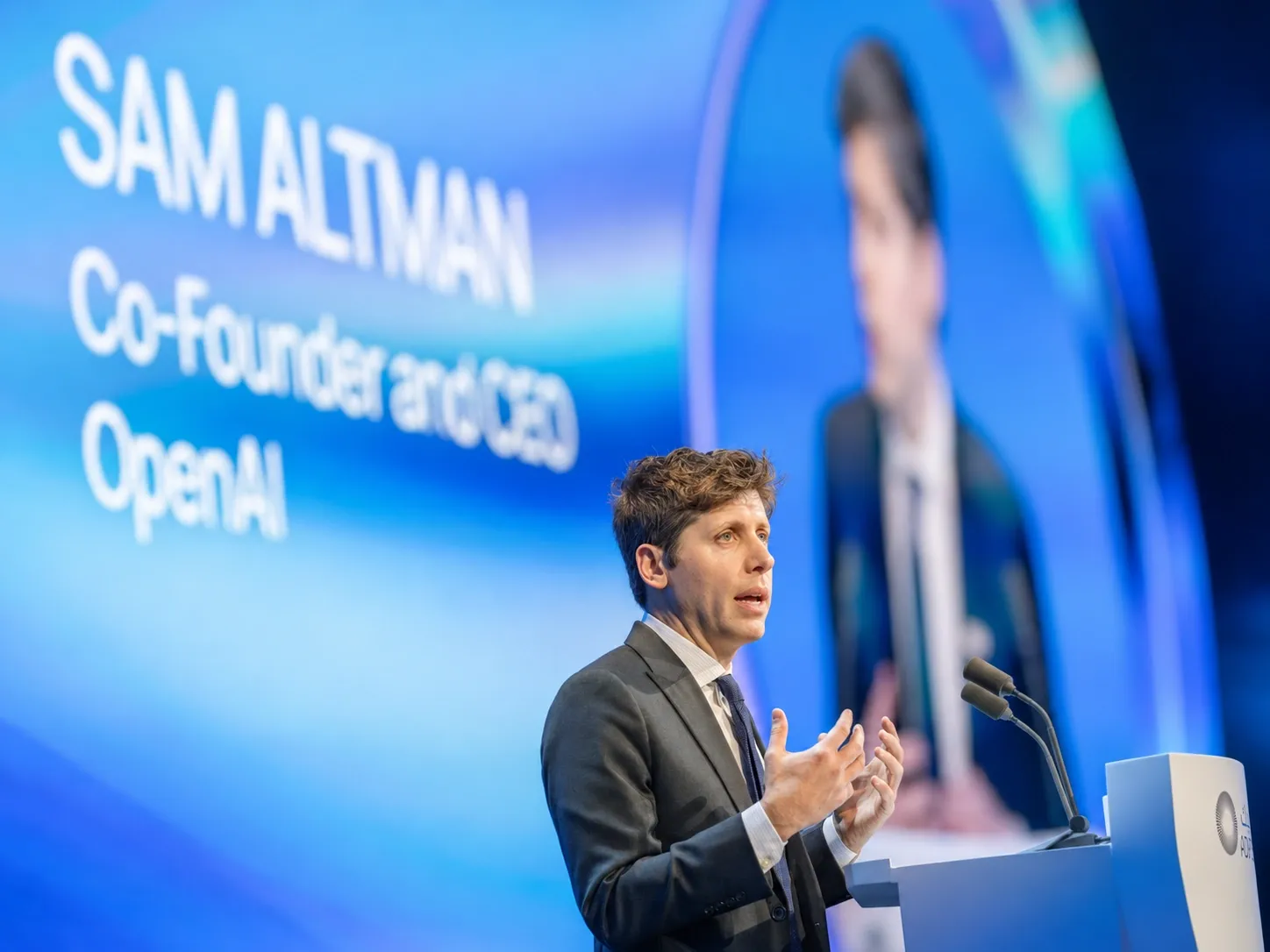
OpenAI CEO Sam Altman speaking at a podium on stage at ADIPEC 2026 in Abu DhabiSam Altman, CEO of OpenAI, on stage at ADIPEC 2026 in Abu Dhabi, where he discussed AI adoption, energy use and OpenAI's new ADNOC partnership. (Image source: WAM)

Abu Dhabi, United Arab Emirates — OpenAI chief executive Sam Altman has named the UAE as the most forward-looking country in the world when it comes to taking up artificial intelligence, speaking in Abu Dhabi at the ADIPEC 2026 energy conference.

"I think the UAE has consistently been the most forward-looking country in the world for AI adoption. Going back to the launch of ChatGPT, this is a country that has decided to go all in on AI -- through its government and across its economy. It's an incredible embrace, and it has come from the leadership. There has been an acknowledgement that societies need to bet on these technologies," Altman said.

The remarks came in a panel session at ADIPEC, the Abu Dhabi International Petroleum Exhibition and Conference. He used the session to talk through the agreements just announced between OpenAI, ADNOC and G42, telling the audience that the three-way partnership would help shape the energy sector and enable it through AI.

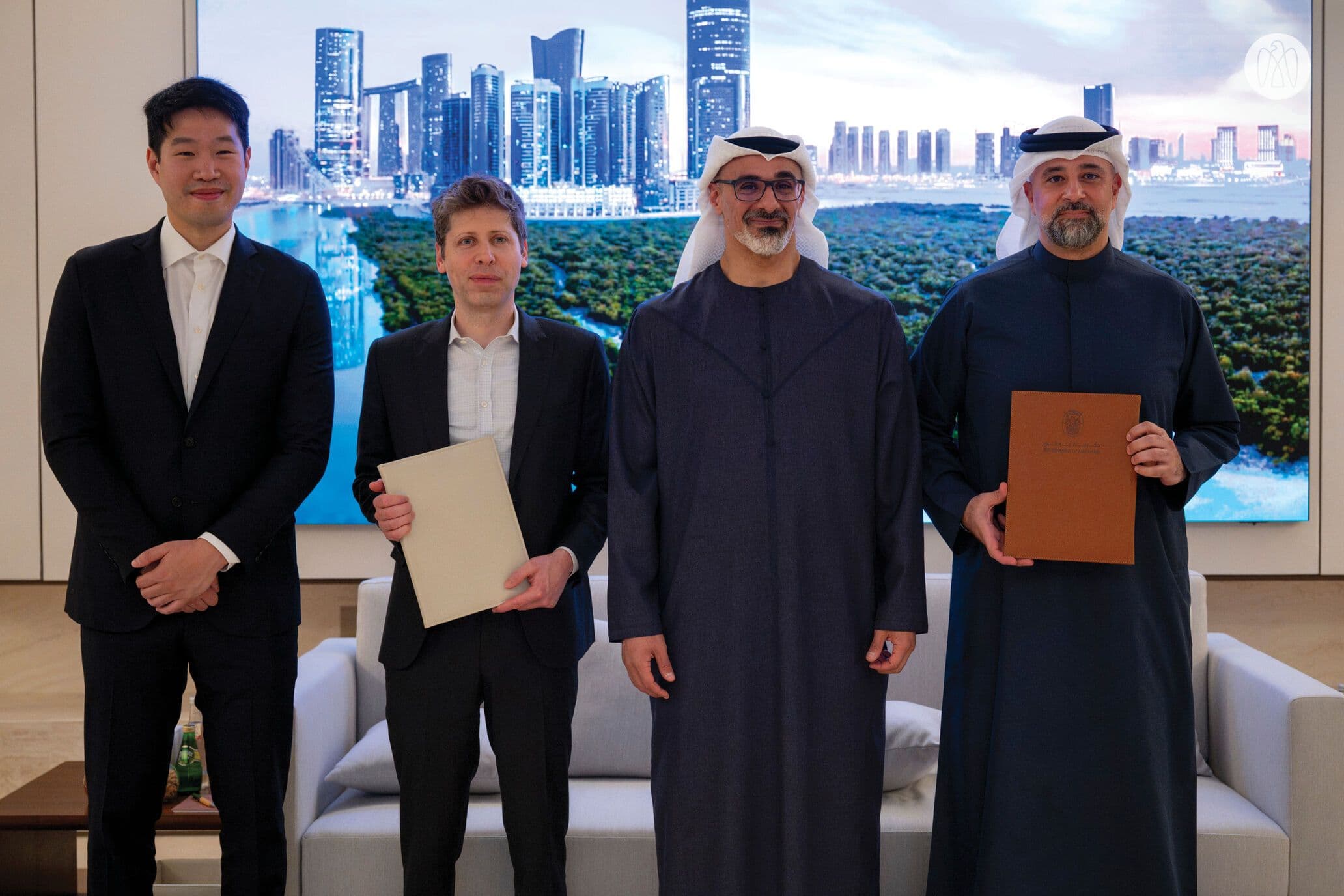
The ADNOC deal was signed earlier the same day. The Abu Dhabi National Oil Company said the multi-year partnership makes it the first energy company to deploy OpenAI Frontier, a platform built to link and coordinate AI agents working across a large business. The signing took place in the presence of Sheikh Khaled bin Mohamed bin Zayed Al Nahyan, Crown Prince of Abu Dhabi and Chairman of the Abu Dhabi Executive Council.

Two uses come first, according to ADNOC. One turns field master planning, today a chain of separate subsurface, facilities and economic studies, into one integrated decision. The other sets connected AI agents to forecast crude oil supply, demand, prices and margins, so the company can put a value on each barrel while it is still underground.

The system will pair OpenAI's frontier models with ADNOC's own industrial data and run on G42's sovereign AI infrastructure inside the UAE, the company said, with human experts keeping oversight of consequential decisions. It follows ADNOC's rollout of ChatGPT Enterprise to more than 40,000 employees, with more than 97% of them using it. ADNOC called that the biggest company-wide ChatGPT rollout anywhere in the Middle East and North Africa.

In the ADNOC release, Sam Altman, CEO of OpenAI, said: “More capable AI can help us tackle some of the world’s hardest problems – particularly around energy. By combining frontier AI, sovereign infrastructure and industry expertise, this first-of-its-kind partnership will help ADNOC move faster, operate more efficiently and make better decisions across the energy value chain. Together, we’re shaping the future of AI-enabled energy.”

On stage, Altman said AI is already altering the way people work. Tools such as ChatGPT are helping people get their jobs done more efficiently, he said, and a growing number of users treat AI as a colleague or a member of their team.

What excites him most, Altman said, is the part AI can play in scientific discovery. In recent months, AI systems have started working on mathematical problems that people had failed to crack, he noted, and he said those abilities could spread to other branches of science and to the hard problems involved in producing energy.

On AI's own appetite for power, Altman said each query now needs less energy as systems grow more efficient, but cheaper usage is pushing people to use AI more. He said he hoped AI applications in the energy industry would deliver enough benefit to make up for the technology's energy consumption and, in the end, help raise the amount of energy available worldwide.

Altman also turned to jobs. He said AI can already handle many parts of some white-collar roles, but voiced confidence that societies would adapt. He stressed the value of human creativity and judgment, said people need to stay in control of decisions, and argued that AI should be a tool serving people rather than a system trusted to decide their future.

The ADNOC partnership was one of four agreements between OpenAI and Abu Dhabi-based entities signed in front of Sheikh Khaled, spanning government, energy and investment, according to the Abu Dhabi Media Office. In one, Mubadala, Inception42 and OpenAI will bring AI to investment analysis, the search for opportunities and risk assessment. In another, a five-year deal, Inception42 and OpenAI will back the use of frontier AI by UAE government bodies, companies and schools.

On the government side, Abu Dhabi and OpenAI launched Machine-Readable Government, which rewrites a chosen set of the emirate's rules in a machine-readable format so that AI can handle routine permit and certificate reviews in minutes rather than days. Its first live use covers food imports at the Abu Dhabi Agriculture and Food Safety Authority.

OpenAI's reach in UAE finance has been widening too. In October, Emirates NBD said it would become the first bank in the Middle East and North Africa to run OpenAI's GPT models on in-country inference infrastructure, with plans to use them in customer service, risk, compliance and back-office work.

ADNOC said the agreement adds to an AI and robotics program that already spans more than 200 AI applications and 70 robotics use cases, some live and some still being built.