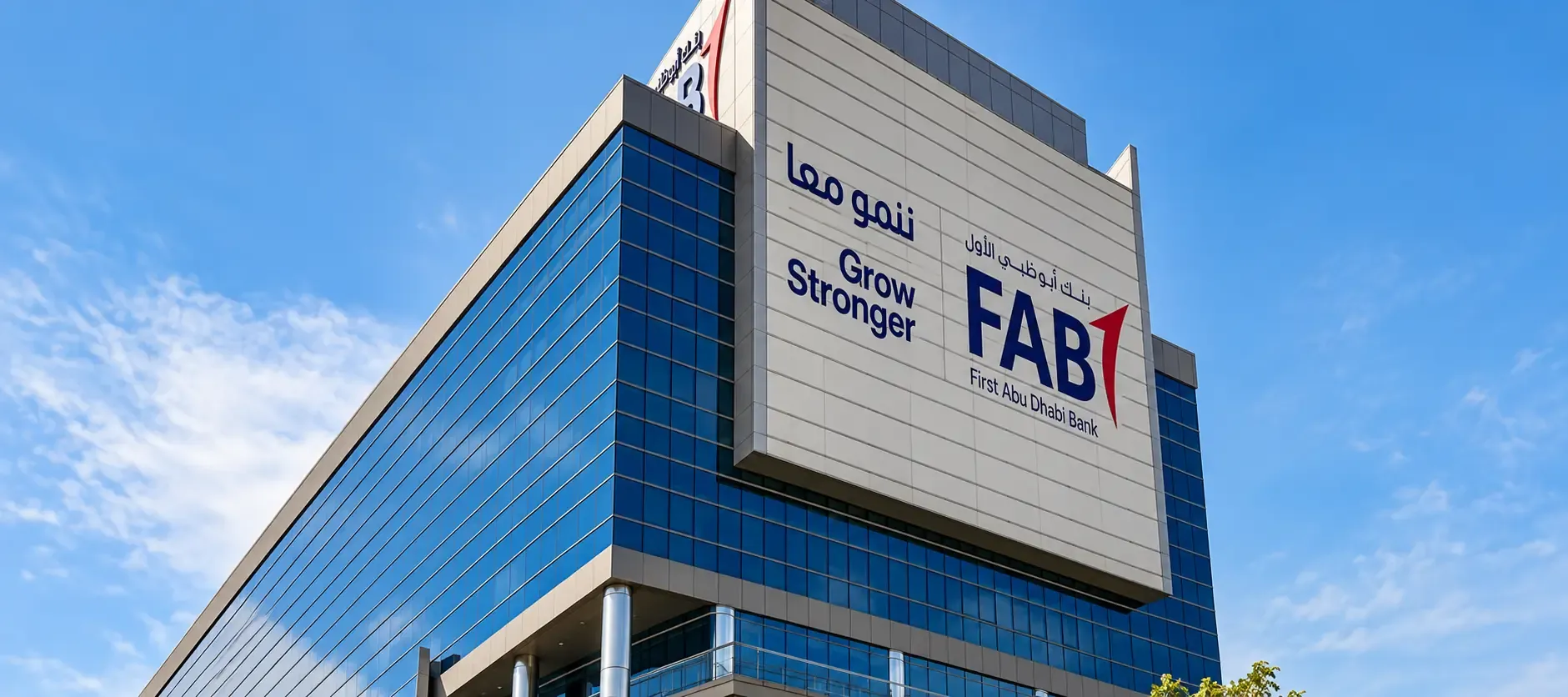
First Abu Dhabi Bank has established a $27.2 billion (AED 100 billion) target for financing water and blue-economy activities between 2026 and 2035, placing a defined figure and timetable around its plans in the sector. The Abu Dhabi-based lender also said it had become the first bank in the Middle East and North Africa to sign the United Nations Sustainable Blue Economy Finance Principles.
Financing counted toward the target may include sustainable water infrastructure, water reuse, technological development and other projects connected to the blue economy. The category extends beyond ocean conservation alone, covering economic activity that depends on water and marine resources while seeking to limit environmental damage. FAB said the commitment would guide financing between 2026 and 2035, giving the program a longer horizon than the bank’s existing 2030 sustainable-finance goal.
Hana Al Rostamani, group chief executive officer of FAB, said: “Water security is a defining sustainability priority for the UAE, the region, and the global economy. By becoming the first bank in MENA to join the UN Sustainable Blue Economy Finance Principles and committing AED 100 billion to blue finance, FAB is translating that priority into action at scale. Building on our track record in water-related financing, this commitment supports the UAE's long-term water security ambitions and reinforces FAB’s leadership in sustainable finance, contributing to a more resilient, nature-positive future for the region.”
The Dedicated target is not an additional commitment on top of FAB’s broader sustainable-finance program. Instead, it will form part of the bank’s previously announced $136.1 billion (AED 500 billion) sustainable and transition finance target for 2030.
Inside the UN Blue Finance Framework
Launched in 2018, the Sustainable Blue Economy Finance Principles provide a voluntary framework for banks, insurers and investors involved in ocean-related industries. They were developed by the European Commission, the World Wide Fund for Nature, the World Resources Institute and the European Investment Bank and are hosted by the United Nations Environment Programme Finance Initiative.
The framework asks signatories to consider environmental, social and economic effects when making financing decisions involving the ocean and related ecosystems. Its 14 principles address areas including transparency, scientific evidence, legal compliance, risk assessment, protection of livelihoods and cooperation among financial institutions. They also encourage capital providers to identify activities that may damage marine ecosystems rather than treating every project carrying a blue label as environmentally beneficial.
Signing the principles does not, by itself, certify every loan or investment made by an institution. Their practical effect depends on how a signatory incorporates them into credit decisions, project selection, monitoring and disclosure. FAB said its participation would involve integrating water-related risks and opportunities into financing decisions, but future reporting will be needed to show how the criteria are applied across the $27.2 billion (AED 100 billion) target.
Building on Earlier Blue Bonds
FAB entered the blue-bond market in August 2025 with a five-year issuance worth $50 million (HK$390 million). According to the bank’s announcement at the time, it was the first blue bond issued by a financial institution in the Gulf. The privately placed transaction was arranged with Crédit Agricole Corporate and Investment Bank acting as sole dealer.
A second three-year blue bond followed in October 2025, raising another $20 million and taking FAB’s cumulative blue-bond issuance to $70 million. The bank said the proceeds were designated for eligible water and marine projects under its 2023 Sustainable Finance Framework and the International Capital Market Association’s Green Bond Principles. Its second-bond disclosure identified wastewater treatment and renewable-energy-powered desalination among the financed activities.
Those two bond transactions are small beside the newly announced ten-year target, but they provide examples of the assets FAB may classify as blue finance. Eligible areas previously identified by the bank include clean-water infrastructure, wastewater recycling, climate adaptation, wetlands and mangrove restoration, sustainable fisheries, aquaculture and biodiversity conservation.
Water Security Shapes the Wider Context
The commitment comes as water security occupies a larger place in the UAE’s economic and environmental planning. The UAE Water Security Strategy 2036 seeks to maintain access to water during ordinary conditions and emergencies while improving demand management, water productivity, reuse and storage. Desalination, treatment infrastructure and more efficient consumption are central to that effort.
FAB’s announcement also precedes the 2026 United Nations Water Conference, which the UAE is preparing to host in Abu Dhabi in December. The timing connects the bank’s financing plan with a wider effort to bring water investment into climate and development discussions. Water projects have often competed for capital with more established sustainable-finance categories such as renewable power and low-carbon transportation.
His Excellency Abdulla Balalaa, the Assistant Minister of Foreign Affairs for Energy and Sustainability at the UAE’s Ministry of Foreign Affairs, commended FAB’s leadership, saying, “FAB’s commitment to mobilise capital for blue finance is a strong example of the financial sector leadership that water now requires. Water underpins economic growth, resilience, and stability, yet it remains critically underfinanced. Ahead of the 2026 UN Water Conference, we encourage financial institutions in the UAE and globally to follow this example, putting water at the centre of investment and risk management decisions, and unlocking the capital needed for a resilient and sustainable future.”
Progress toward the target will ultimately be measured through transactions rather than the headline commitment alone. FAB reported that it had facilitated approximately $107.6 billion (AED 395 billion) in sustainable and transition financing by the end of the first half of 2026, equivalent to 79% of its $136.1 billion (AED 500 billion) goal for 2030.