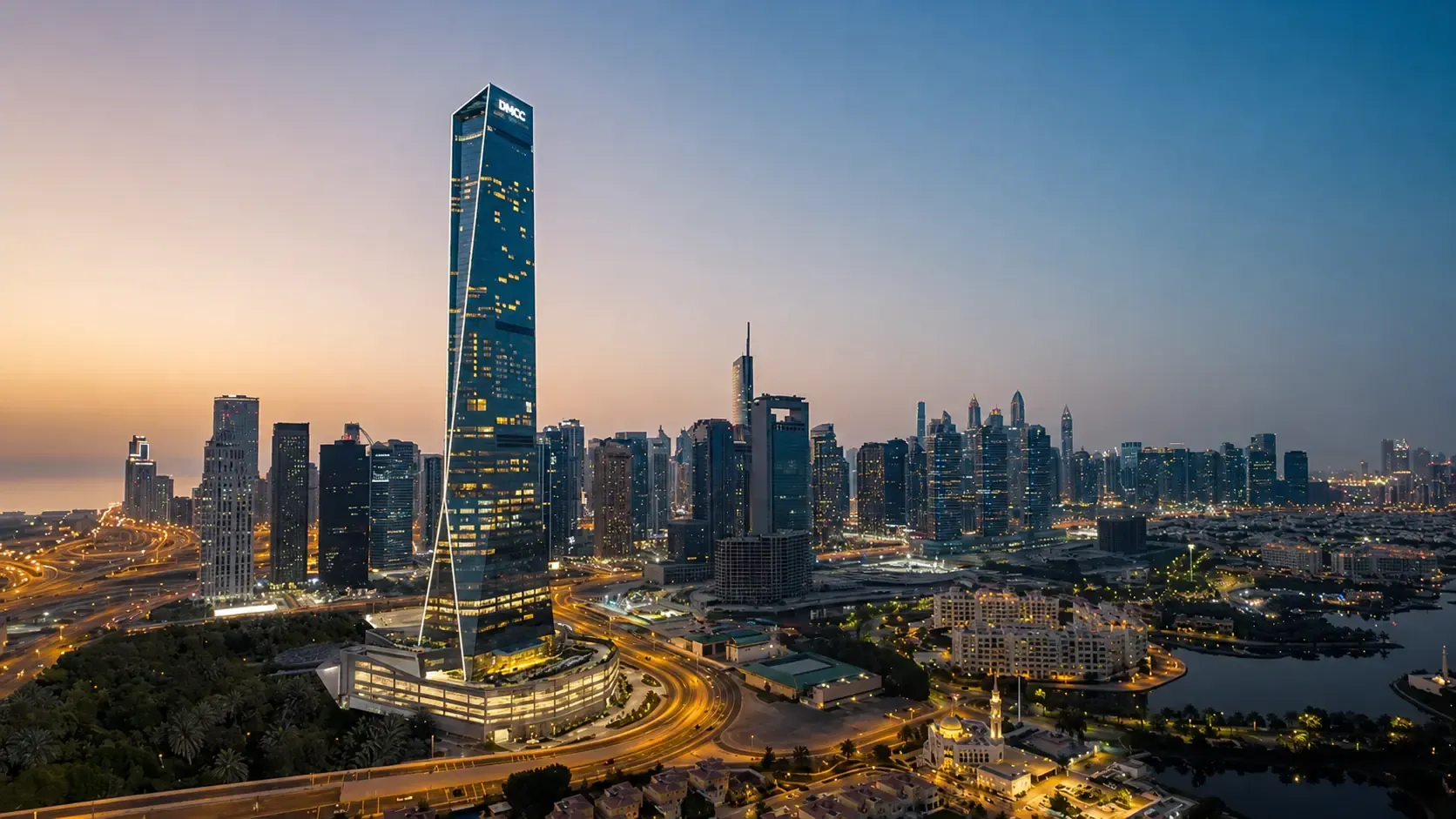
The Dubai Multi Commodities Centre has established a dedicated business platform for lab-grown diamonds after the United Arab Emirates recorded its highest annual trading volume for the manufactured stones. The new structure, called the Lab-Grown Diamond Vertical, will operate separately from DMCC’s natural diamond and colored-stone activities.
The UAE traded 76.9 million carats of lab-grown diamonds in 2025, representing a 91.5% increase from the previous year, DMCC reported. The value of that trade rose more moderately, increasing 7.5% to $1.3 billion. Volumes have climbed 109% since 2022, when 36.8 million carats moved through the country. Imports and re-exports grew at broadly similar rates, indicating that the expansion extended across the UAE’s diamond trade rather than being concentrated in a single flow.
DMCC said the platform will connect producers, manufacturers and traders with investors, finance providers, technology companies and industrial buyers. It is also intended to provide a distinct commercial structure for a market with different production methods and economics from mined diamonds.
Lab-Grown Diamonds Move Beyond Jewelry
Laboratory-grown diamonds have the same essential crystal structure as natural diamonds but are produced in controlled facilities instead of being extracted from the ground. Two main production methods are used: high pressure, high temperature, known as HPHT, and chemical vapor deposition, or CVD. The Gemological Institute of America explains that HPHT recreates the intense pressure and temperature under which natural diamonds form, while CVD grows diamond material from carbon-containing gas on a thin diamond seed.
Jewelry remains a major source of demand, but DMCC is positioning the new sector around a broader set of commercial uses. Lab-grown diamonds possess thermal, optical and mechanical properties that may make them suitable for semiconductor components, diamond wafers, quantum technologies, medical equipment, aerospace systems and precision engineering. Research published by GIA also documents substantial advances in the size and quality of laboratory-grown diamonds as CVD and HPHT production technologies have developed.
Ahmed Bin Sulayem, DMCC’s executive chairman and chief executive, said: “Lab-grown diamonds have reached the point where they need dedicated market infrastructure and a distinct economic case of their own, developed alongside the natural diamond trade rather than in place of it. For decades, China, India and the United States have driven the scientific, technological and industrial development that turned an experimental breakthrough into a global industry now estimated at close to USD 30 billion.”
“The most significant opportunity ahead may lie beyond jewellery, in semiconductors, diamond wafers, quantum technologies, medical devices, aerospace and other advanced applications where the material's thermal, optical and mechanical properties become commercially important,” he added.
Dubai Seeks a Larger Role in Global Trade
DMCC’s decision formalizes work that has been underway for several years. U.S.-based producer Diamond Foundry established international sales operations at DMCC in 2020. The Dubai center subsequently developed a digital platform for the sector, expanded its research and trade program, and organized two Lab-Grown Diamond Symposiums. A third symposium is scheduled for 2027.
The vertical also places lab-grown stones inside Dubai’s wider commodities ecosystem while keeping them institutionally separate from natural diamonds. DMCC reported that the UAE’s overall diamond trade, including categories beyond lab-grown stones, reached a record $41.7 billion in 2025. The creation of a specialized platform may help Dubai compete for a larger share of manufacturing-related transactions and industrial supply chains, although its effect will depend on participation by producers, buyers and financial institutions.
DMCC’s announcement therefore represents both an organizational change and a response to a market developing along two paths. Consumer jewelry continues to underpin demand, while advanced industrial uses are creating a separate group of potential buyers with different technical requirements. By establishing a standalone vertical, DMCC is acknowledging that lab-grown diamonds are no longer simply an alternative jewelry product; they are also becoming a manufactured material with an expanding place in technology and international trade.