Dubai has been ranked as the world’s leading FinTech location by financial-services professionals surveyed for the latest Global Financial Centres Index, adding another high-profile result to the emirate’s push for a larger role in international finance.
The finding appeared in the 40th edition of the index, known as GFCI 40, published on September 16 by London-based consultancy Z/Yen Group in partnership with the China Development Institute. Dubai also placed ninth in the index’s main ranking of global financial centers, with a rating of 750.
Hong Kong, however, remained first in the index’s broader FinTech ranking, followed by New York, Shenzhen, Singapore, Shanghai and London.
Dubai Strengthens Its Standing
Beyond the FinTech perception result, Dubai remained the highest-ranked financial center in the Middle East and Africa. Its ninth-place position put it behind New York, London, Hong Kong, Singapore, Shanghai, Tokyo, Seoul and Shenzhen, while placing it one position ahead of Zurich.
Dubai also ranked second globally in the professional-services category and rose to sixth in the reputation assessment. The city retained first place for future potential, a position it has held across four consecutive editions of the index.
The findings show a financial center gaining recognition in several areas without displacing the long-established leaders across every measure. New York remained first in the main GFCI table, a position it has held since September 2018, while London stayed second. Hong Kong and Singapore followed closely in third and fourth place.
Survey Results Meet Economic Data
GFCI 40 evaluated 117 financial centers selected from 139 locations researched by its authors. The index combined 39,531 assessments submitted by 6,147 financial-services professionals with 144 quantitative indicators.
Those indicators draw on information from institutions including the World Bank, the Organisation for Economic Co-operation and Development and the United Nations. They cover conditions affecting financial-center competitiveness, while the survey component records how professionals view different locations. Ratings may therefore change as economic data and market perceptions evolve.
The design of the index also explains why a city can lead one assessment but hold a different position elsewhere. Dubai’s designation as the leading FinTech location reflects the responses of surveyed professionals. The overall FinTech table, by comparison, combines assessments with wider data used by the GFCI methodology. Presenting the two results as interchangeable would overstate what the report found.
Regional Competition Intensifies
Dubai and Abu Dhabi retained the first two positions in the Middle East and Africa section of GFCI 40. Casablanca rose 11 places to become the leading African center, while Riyadh advanced 15 positions to fourth place within the wider region.
Movement elsewhere was also pronounced. Six Asia-Pacific centers appeared in the global top 10, while Shanghai climbed to fifth and Tokyo advanced four places to sixth. Zurich entered the top 10 as San Francisco slipped to 11th. Abu Dhabi, Beijing and Osaka joined the top 20, replacing Paris, Amsterdam and Frankfurt.
Z/Yen said the average rating across all centers increased by 0.8%, although results varied by region. Asia-Pacific recorded the largest average gain at 1.48%, while Eastern Europe and Central Asia posted the biggest decline, at 1.09%. The shifts point to a more geographically dispersed contest for financial business, talent and technology capacity.
FinTech Leadership Remains Contested
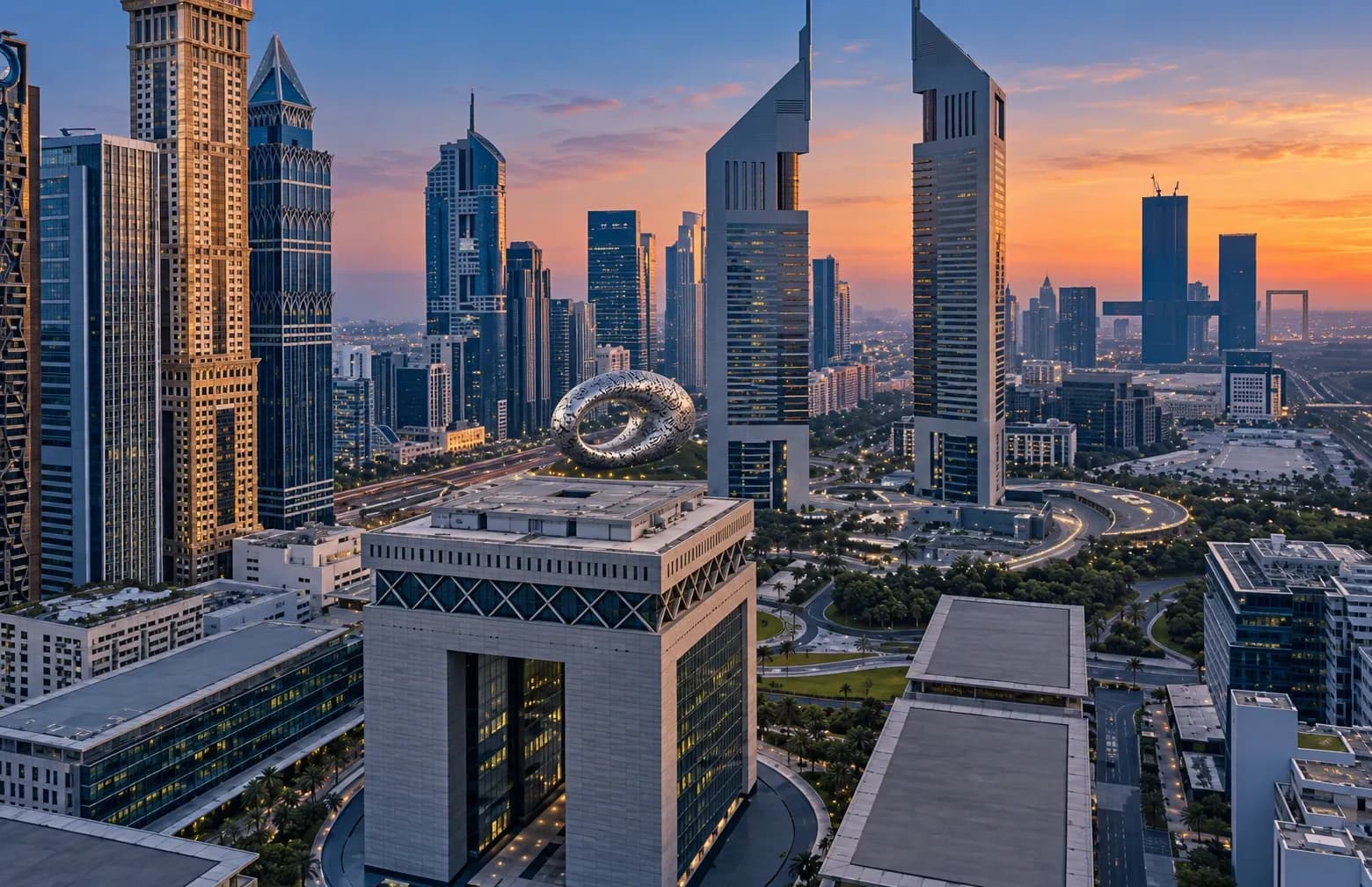
The official Dubai announcement linked the latest results to the role of DIFC, the emirate’s financial free zone. DIFC provides the regulatory and commercial setting for much of Dubai’s internationally oriented banking, insurance, investment and financial-technology activity.
Essa Kazim, governor of DIFC, said: “The GFCI results reinforce Dubai's position as a world leading financial centres and underscore the success of the vision set by our leadership through the Dubai Economic Agenda D33. DIFC has played a pivotal role in advancing Dubai's global competitiveness by attracting leading financial institutions, talent and innovation from around the world, while providing the regulatory, legal and business environment required for sustainable growth.”
Arif Amiri, chief executive of the DIFC Authority, added: “Dubai's position in the GFCI is underpinned by the strength and scale of DIFC, and validated by the assessments of financial services professionals worldwide. As the largest ecosystem of regulated financial firms in the Middle East, Africa and South Asia region, and the only financial centre in the region operating at scale across banking, capital markets, wealth and asset management, insurance and FinTech, DIFC provides a unique platform for innovation, growth and collaboration.”
Outlook Depends on Execution
Financial centers are increasingly competing on digital infrastructure, cybersecurity, regulation and access to specialized talent rather than relying solely on conventional banking activity. GFCI respondents identified investment in digital infrastructure, including cloud systems, data connectivity and cyber resilience, as the most urgent policy priority for the next five years.
Attracting FinTech and digital-asset companies ranked second among those priorities. Strengthening safeguards against money laundering and financial crime came third, followed by the development of deeper capital markets. These findings place regulatory credibility alongside innovation as a central test for cities seeking to expand their financial influence.
Dubai’s latest result strengthens the city’s global reputation and provides a solid foundation for further growth. Continued progress in infrastructure, regulation and market depth could reinforce its position alongside established financial centers across Asia, Europe and North America.