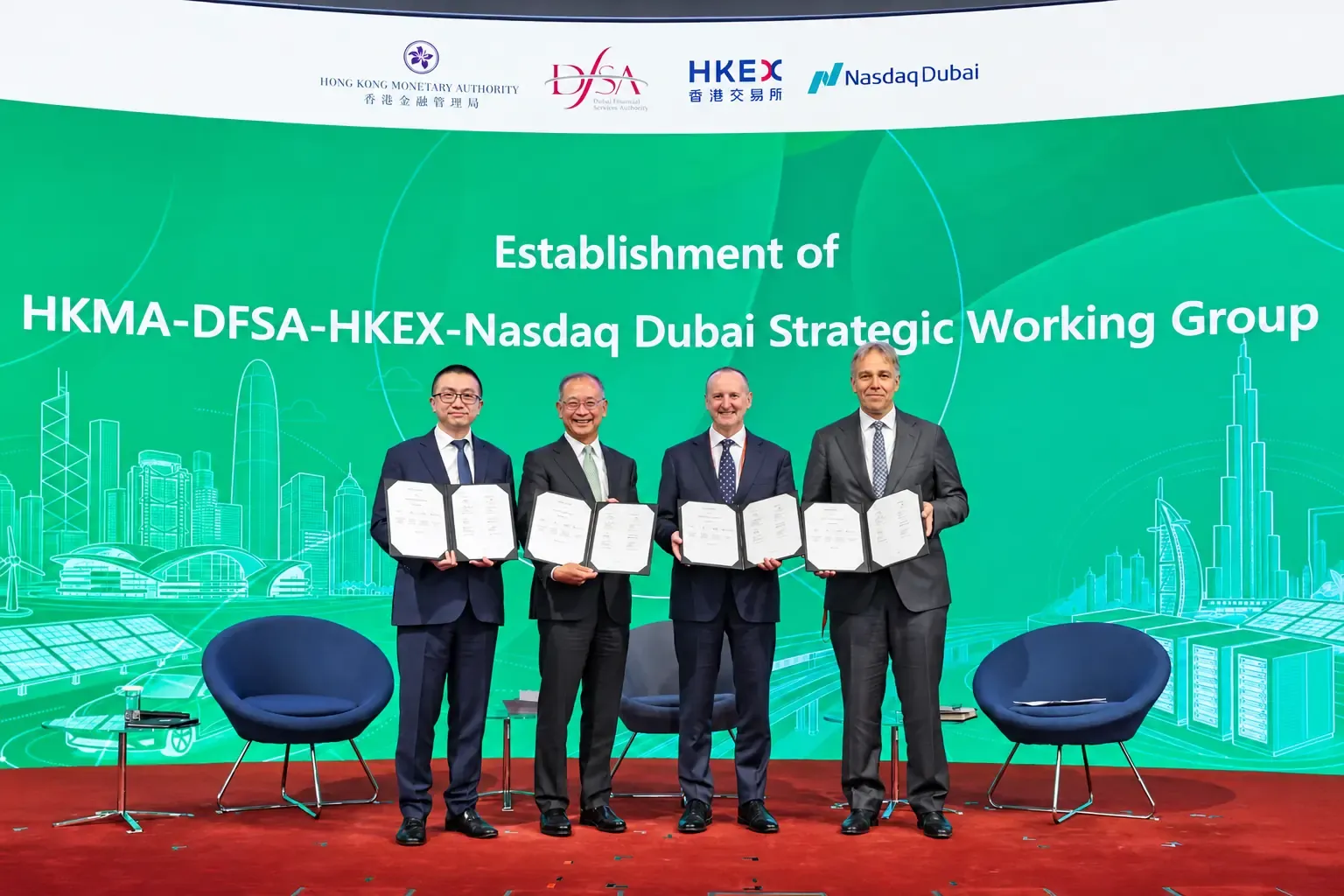
 Hong Kong and Dubai have launched a strategic working group to advance cooperation in Islamic finance, sustainable finance and capital-market connectivity. (Image source: HKMA)
Hong Kong and Dubai financial authorities have established a strategic working group designed to deepen cooperation between their markets and explore ways to improve financial connectivity between Asia and the Middle East.
The initiative brings together Hong Kong Exchanges and Clearing, the Hong Kong Monetary Authority, the Dubai Financial Services Authority and Nasdaq Dubai. The four institutions announced the group during the third HKMA-DFSA Joint Climate Finance Conference in Hong Kong.
Its work will cover sustainable finance, Islamic finance, financial innovation, capital-market development and market connectivity.
Rather than creating a new market or regulatory authority, the working group provides a structured forum through which two regulators and two exchange operators can compare priorities, exchange information and consider joint projects. The participating institutions said they intend to maintain regular engagement and examine emerging opportunities and challenges affecting both financial centers.
Eddie Yue, Chief Executive of the HKMA, said, “The Strategic Working Group marks another key step in deepening our institutional ties and market connectivity. By developing this collaboration mechanism, we are establishing a dedicated platform to better understand and align strategic priorities, as well as exploring new initiatives to facilitate smoother trade and investment between Asia and the Middle East.”
The agreement formalizes a relationship that has developed over several years. The HKMA and DFSA first announced a partnership on climate finance in December 2023, with the stated goal of strengthening policy and regulatory responses supporting sustainable capital flows in the Middle East and Asia.
That partnership led to the first HKMA-DFSA Joint Climate Finance Conference in Hong Kong in September 2024. During the event, the two authorities signed a memorandum of understanding covering sustainable finance, cross-border dialogue, information sharing, joint research and future events.
Mark Steward, Chief Executive of the DFSA, said, “This initiative reflects the maturing of our shared commitment to collaboration, knowledge sharing, and the discovery of greater mutual benefits within the Dubai-Hong Kong corridor. Cross-market connectivity helps both markets and offers investors greater choices and rewards across both financial centres.”
A second conference followed in Dubai in November 2025, while the latest gathering returned to Hong Kong and drew more than 350 participants attending in person or online. HKEX and Nasdaq Dubai supported the conference as strategic partners for the second consecutive year, widening an earlier regulator-led relationship to include the operators of the two financial markets.
The working group may help move those discussions closer to market implementation. Regulators can address supervisory and policy questions, while exchanges can examine the practical infrastructure used by issuers and investors.
Islamic finance is one of the clearest areas of potential cooperation. Nasdaq Dubai serves as a major listing venue for sukuk, financial instruments structured to comply with Islamic principles. At the end of the first half of 2026, the exchange had $98.6 billion of outstanding sukuk listings, within $141 billion of total listed fixed-income securities.
Hamed Ali, Chief Executive Officer of Nasdaq Dubai and Dubai Financial Market, said, “This Strategic Working Group builds on the strong collaboration between Dubai and Hong Kong. Nasdaq Dubai’s position as a leading international hub for fixed income and Islamic finance listings provides a strong platform to connect issuers and investors across the Middle East and Asia, particularly in Sukuk and sustainable finance. We look forward to strengthening this collaboration and enhancing market connectivity between the two regions.”
Closer dialogue could allow the two centers to examine how issuers seeking capital in one region might reach investors in the other. The working group’s announcement establishes a mechanism through which the institutions can identify viable areas of cooperation before proposing specific changes.
Sustainable finance represents another shared priority. Hong Kong has developed green and sustainable finance policies intended to channel capital toward environmental and transition-related projects, while the Dubai authorities have been building their own framework for climate-related financing. The working group gives the institutions a place to consider how standards, market practices and financing instruments operate across the two regions.
Islamic and sustainable finance can also overlap through green or sustainability-focused sukuk. Those instruments could become an area of discussion because they draw on Dubai’s established Islamic capital-markets activity while addressing investor demand for financing linked to environmental objectives.
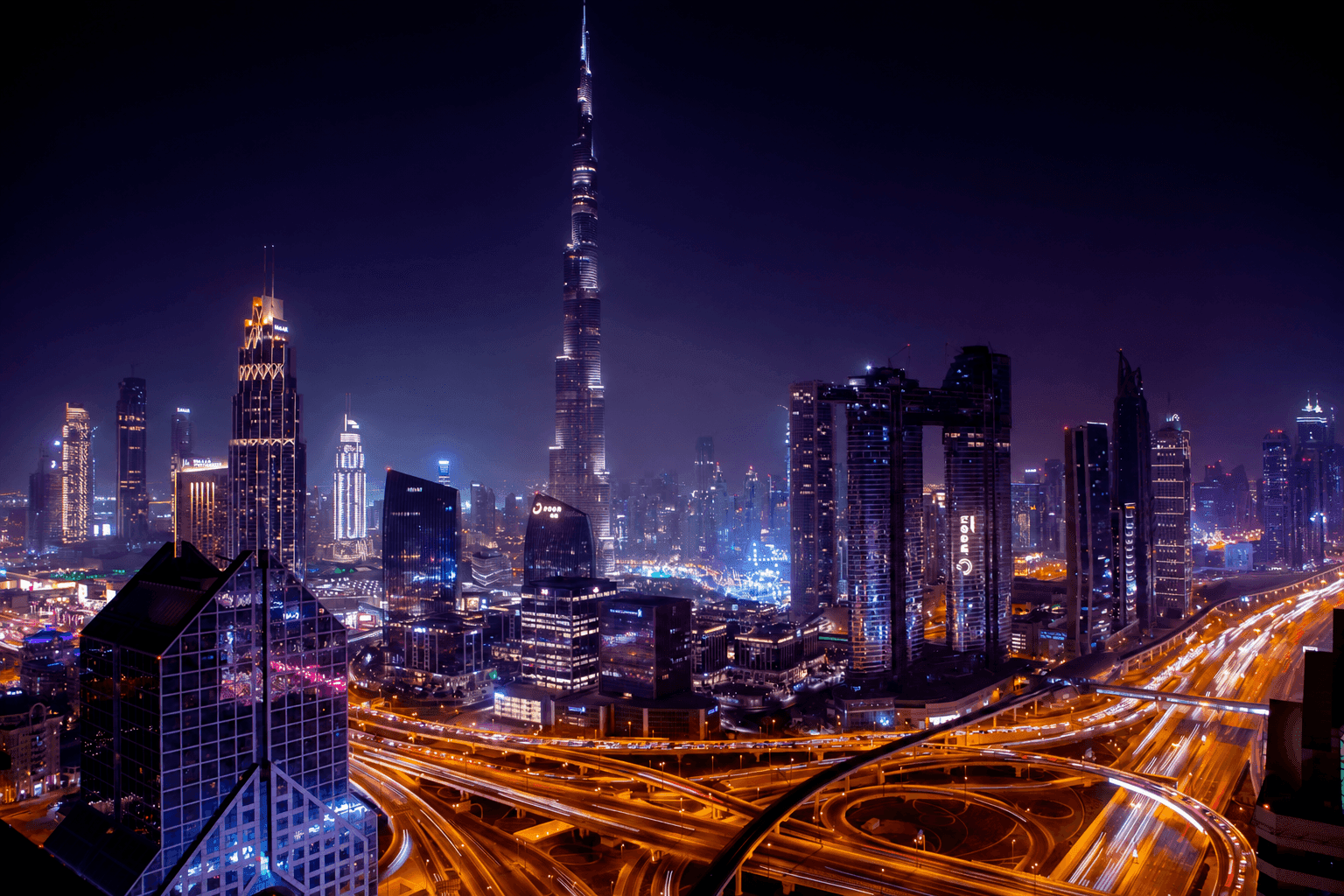
 Four regulators and exchange operators are building a formal channel for closer financial ties between Asia and the Middle East. (Unsplash)
The initiative arrives as financial institutions in Hong Kong and the Gulf devote more attention to cross-regional capital flows. Hong Kong positions itself as an international gateway to mainland Chinese markets, while the Dubai International Financial Centre hosts banks, investment firms and professional-services businesses operating across the Middle East, Africa and South Asia.
HKEX has already expanded its presence in the region. In October 2025, the exchange operator announced a Dubai-based subsidiary focused on commodities, including price reporting and market analysis for the metals sector. That operation provides a separate, tangible example of HKEX’s interest in building institutional links in the Gulf.
Bonnie Y Chan, Chief Executive Officer of HKEX, said, “Global capital flows are increasingly being shaped by the growing economic ties between Asia and the Middle East. HKEX’s growing commodities presence in Dubai, together with our engagement with exchanges across the UAE, reflects our long-term commitment to this dynamic corridor. The Strategic Working Group is an important next step in translating that commitment into action by deepening collaboration, advancing market connectivity and supporting innovation and sustainable growth.”
Leaders from all four participating organizations presented the working group as a means of improving dialogue and identifying practical opportunities. Their official statements emphasized smoother trade and investment, greater choice for investors, financial innovation and stronger connections between issuers and capital across the two regions.