@2026 Finance News International. All Rights Reserved.

Blends Media
A Blends Media Group Production

Anthropic Researcher Tao Lin: Superhuman AI Is Coming by End of 2027

Arry Hashemi
Arry Hashemi
Nov. 18, 2026
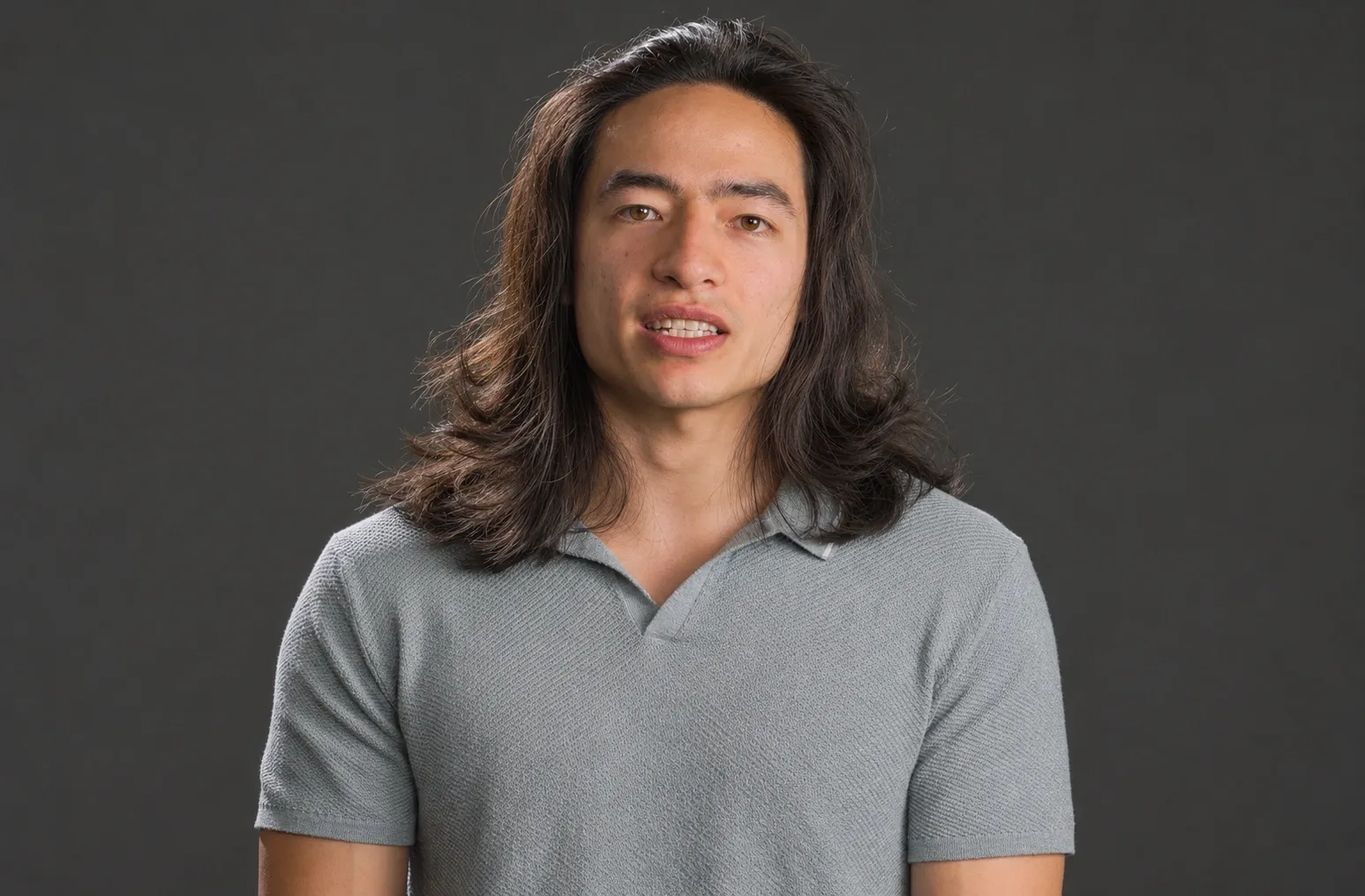
Anthropic employee Tao Lin standing against a gray studio backdropTao Lin, who works on safeguards at Anthropic, gave his personal forecast for superhuman AI in an interview for Palisade Research's frominside.ai project. (Image source: Palisade Research)

San Francisco, California — Tao Lin, an Anthropic employee who works on the company's AI safeguards, expects broadly superhuman artificial intelligence to arrive in roughly 1.3 years, or around the end of 2027, he said in a video interview released by the nonprofit Palisade Research.

The timeline is Lin's own estimate rather than a company forecast. The interview belongs to frominside.ai, a Palisade project that collects conversations in which current and former staff of frontier AI companies give their personal views on AI development.

Tao Lin, a member of technical staff at Anthropic, said the "most important thing to understand about the AI situation is that superhuman AI is going to come here very quickly." He went on: "I have timelines of something like 1.3 years to getting broadly superhuman AI."

When the interviewer pointed out that 1.3 years would fall sometime in 2027, Lin said: "Yeah. Or like end of 2027, something like that." Pressed on what the timeline was meant to measure, he said: "Timelines to AI that is as good as or better than the best expert at almost every field. So that includes programming. It also includes making movies or you know politics or literally anything."

I think that it's very likely that pretty much all humans on Earth will become permanently unemployable and will need to strictly rely on government welfare to sustain themselves and human employment will go away."


Lin told Palisade he has been at Anthropic for about a year and a half. His earlier work there covered automated alignment research and AI control, which he described as monitoring a company's internally deployed models to check that they do not, for instance, exfiltrate model weights or deceive employees.

He now works on safeguards. In his account, that team reviews the requests users send to Claude, Anthropic's model, and blocks those aimed at things such as building bioweapons or hacking.

Palisade titled the video after one of Lin's starkest claims. He said the most predictable effect of advanced AI would be that people lose their current jobs, switch briefly to other occupations and, at some later point, become completely unemployable and dependent on the state for financial support.

Asked whether he considered that very likely, Lin said: "Yeah. Yeah, I think that it's very likely that pretty much all humans on Earth will become permanently unemployable and will need to strictly rely on government welfare to sustain themselves and human employment will go away."
He does not expect that to happen on the same schedule as his capability forecast. When the interviewer asked whether it would come within the next 15 months, Lin said: "No. Well, I I expect a large gap between when AI can has a capability to replace all humans in all roles versus when it actually does. Um because of the rate of, you know, building out more robots, there aren't enough robots yet. And you need to like first become good at building robots and then you need to build the robots and then like eventually you like actually have billions of robots with which to displace physical laborers or whatever."

Data CenterThe race to superhuman AI runs on rows of servers like these. (Shutterstock)

Lin also gave rough odds on worse outcomes. He put the chance that AI would eventually "completely remove humanity from the equation" at about 20%, and the chance of an AI takeover at less than 50%. He estimated that AI able to build smarter AI entirely on its own was roughly a year away.

His prescription is a slower pace across the industry. Asked whether AI companies should stop, Lin said: "I think that the AI companies should slow down." He suggested they cut their rate of AI research to "something like one quarter of its current rate." The companies, he said, are "in a really intense race and they're cutting a lot of corners."

On his own employer, Lin said he expects Anthropic "to slow down or briefly pause" to some degree before superhuman AI arrives, though he added that the answer depends on what is meant by a pause.

He urged the public to get politically active, call their representatives, raise awareness and learn about AGI and AI safety. People in countries other than the U.S. and China, he warned, could end up largely disempowered once AI concentrated in a few countries does most of the world's labor. His message to lawmakers was similar. Lin said: "Yeah, I really recommend to politicians that AI safety will become one of the biggest issues or the biggest issue in global politics and you want to get ahead of this and you want to understand the risks, understand these issues, get staff who understand these issues and work on it."

Anthropic's published expectation is close in timing but framed differently. In a March 2025 submission to the White House Office of Science and Technology Policy, the company said it expects powerful AI systems to emerge in late 2026 or early 2027, with intellectual capabilities matching or exceeding those of Nobel Prize winners across most disciplines, including biology, computer science, mathematics and engineering.

Lin's definition reaches further, into fields such as filmmaking and politics, and he attached it to a specific date. Investors and policymakers may read such comments from inside a leading lab as a sign of how seriously short timelines are taken there, though one employee's view could differ from the company's planning.

Palisade's project site cautions that its interviewees are not a representative sample of AI company staff. They were reached through the group's networks and were disproportionately on safety teams and more concerned about risk, it said. Interviews were unscripted but edited for flow and clarity, and Palisade said it filmed 25 of them.

The comments come as Anthropic prepares for public markets. The company confidentially submitted a draft registration statement to the U.S. Securities and Exchange Commission in June for a proposed initial public offering, giving it the option to list after SEC review.