World Labs builds AI models that generate and simulate interactive three-dimensional environments, and it develops technology for robotic learning and simulation. Its first product, Marble, lets users create persistent 3D worlds from images, video or text, the company says. On November 12, four days before the deal closed, World Labs released Atlas, which it describes as its next-generation world model, along with tools and developer APIs.
AMD first announced the agreement on September 28, describing an all-stock transaction valued at approximately $8.2 billion. At the time, AMD said it was aiming to finish the deal before 2026 was out, once regulators had signed off and the usual closing conditions were met, and the transaction has now closed inside that timetable.
Because AMD is paying in its own shares, the number of shares to be issued was left open when the deal was signed. AMD's securities filing tied it to the company's volume-weighted average share price over 10 trading days shortly before closing.
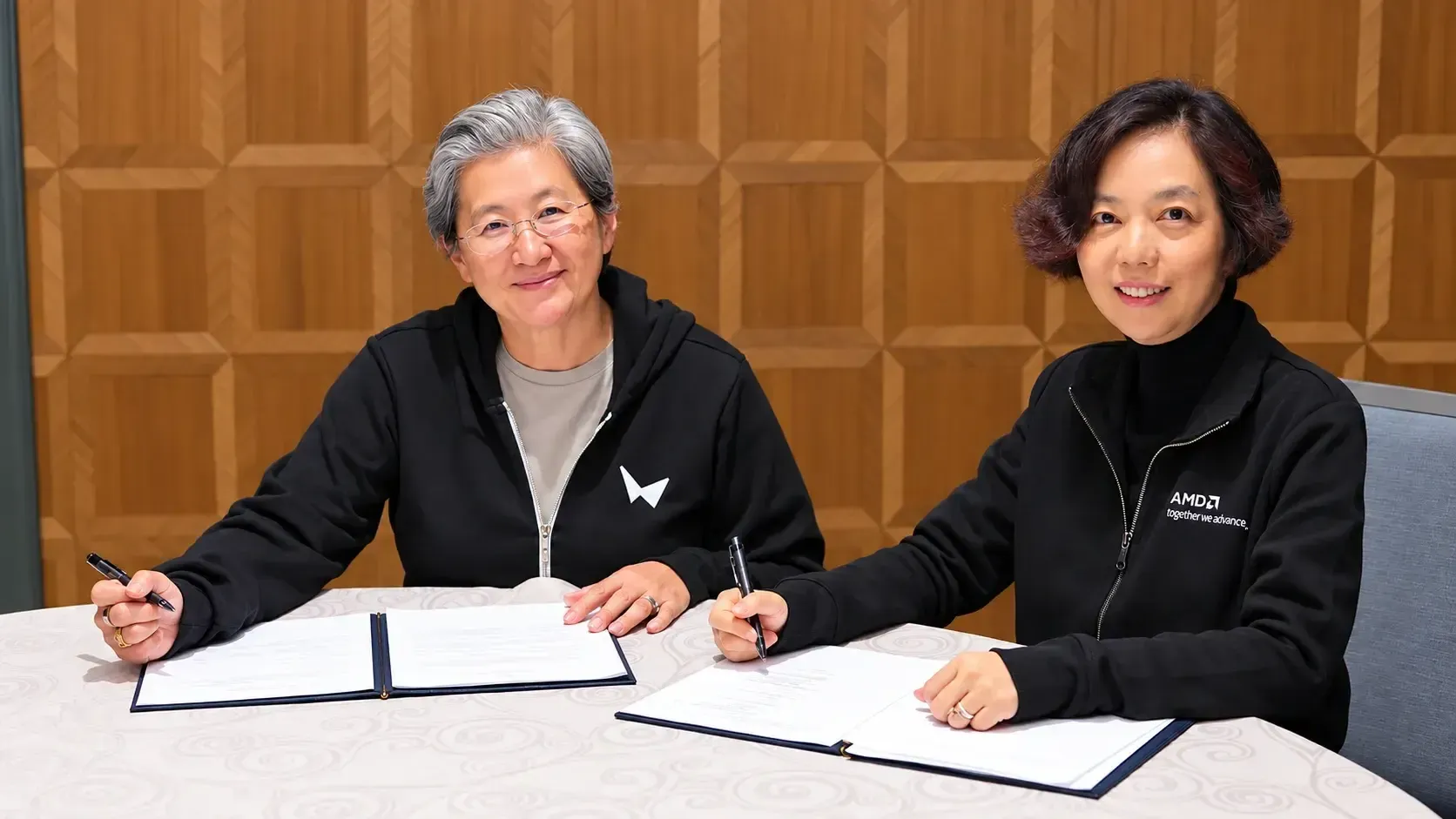
The acquisition turns a long-running partnership into ownership. World Labs said its technical work with AMD began in 2025, initially focused on optimizing how its models were trained and run for inference on AMD's graphics processors. AMD Ventures first invested in the lab's Series B round and backed it again in a later financing, and Su and Li appeared on stage together at CES 2026 in January.
That later financing was a $1 billion raise announced in February. Among the backers World Labs listed were AMD, NVIDIA, Autodesk, Sea, Emerson Collective and Fidelity Management & Research Company, which means a rival maker of AI accelerators also held a stake in the company AMD has now bought.
When it agreed the deal, AMD argued that compute demands are becoming more varied as AI moves into reasoning, robotics, simulation and physical AI. It said World Labs' model expertise would give it a clearer view of how workloads are changing and would feed into its technology roadmaps.
The deal completes during a period of fast growth for the chipmaker's data center business. AMD reported record third-quarter revenue of $13.4 billion, with Data Center segment revenue up 97% from a year earlier to a record $8.5 billion on demand for EPYC processors and the launch of Instinct MI450 Series GPUs. It also said Anthropic, Meta, Microsoft, OpenAI and Oracle Cloud Infrastructure were running models and workloads on its first Helios rackscale systems.
Owning a frontier model lab could give AMD earlier insight into what new kinds of models, including those that reason about 3D space and train robots in simulation, may demand from chips and systems. That knowledge may in turn shape the products it offers the AI developers and cloud providers already using its hardware.
Li, a Stanford University professor known for her computer vision research, led the creation of ImageNet, a large visual database used to develop and evaluate computer vision systems. She co-founded World Labs in 2024 with Justin Johnson, Ben Mildenhall and Christoph Lassner, and the lab said Johnson and Mildenhall would work with Li to continue leading the World Labs team inside AMD.