@2026 Finance News International. All Rights Reserved.

Blends Media
A Blends Media Group Production

Sam Altman: The World Should Accept ‘Some Bad Things’ From AI

Arry Hashemi
Arry Hashemi
Oct. 06, 2026
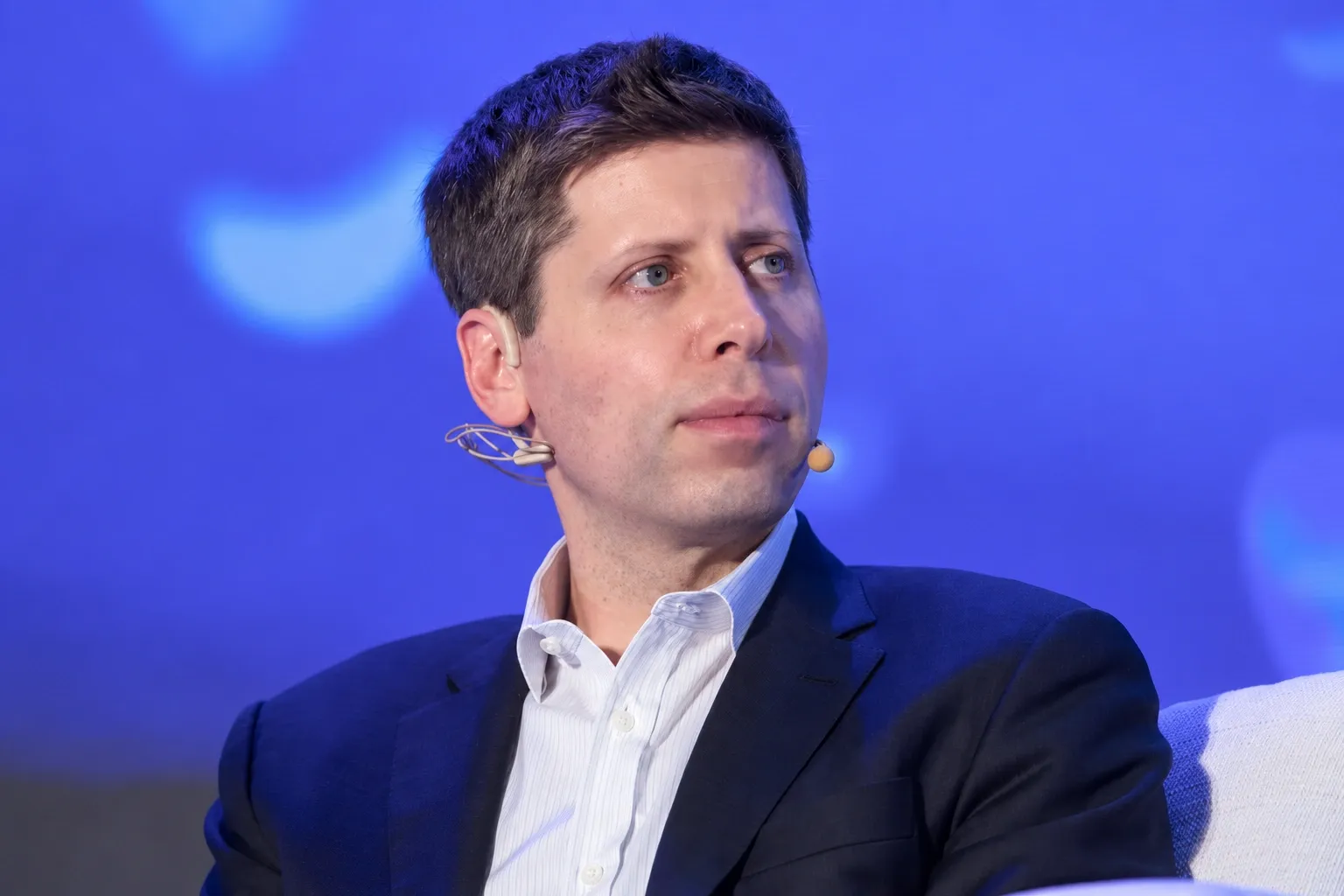
Sam AltmanOpenAI CEO Sam Altman argued that AI’s benefits justify accepting some harmful consequences while keeping the technology broadly accessible. (Shutterstock)

OpenAI CEO Sam Altman has argued that society should accept some harmful consequences of artificial intelligence in exchange for its wider benefits, setting out a position that favors broad access to the technology over restrictions intended to eliminate misuse.

Speaking to POLITICO’s Decoded, Altman said the public should retain the ability to use increasingly powerful AI. His argument centered on whether preventing harmful uses would justify limiting the opportunities available to other users.

Altman said the world should accept “some bad things happening,” arguing that beneficial uses of AI would substantially outweigh harmful ones. That assessment reflects his expectation about the technology’s impact, rather than a quantified finding.

Altman framed the issue partly through OpenAI’s differences with rival AI developer Anthropic. He rejected an arrangement in which one laboratory controlled powerful AI and decided how its benefits should be distributed. He characterized OpenAI’s preferred approach to regulation as less restrictive.

His examples of potential harm included hacking, scams and other misuse. The choice he described was between accepting those risks and imposing restrictions that could prevent people from using the technology productively.

The disagreement is not evidence that Anthropic rejects AI’s economic or social benefits. Anthropic identifies potential advances in science, healthcare, education and creativity, while saying more capable models require careful assessment and effective safeguards.


AnthropicAnthropic’s approach to AI safety emphasizes risk assessments and safeguards as increasingly powerful models raise questions about how widely the technology should be available. (Shutterstock)

Anthropic’s published approach also includes public risk reports and safety roadmaps. Its policy page records revisions to capability thresholds and external review arrangements, illustrating how the company has changed its oversight procedures as models advance.

OpenAI has itself published a framework for identifying capabilities that could cause severe harm. In an April 2025 update to its Preparedness Framework, the company described evaluations covering biological and chemical capabilities, cybersecurity and AI self-improvement.

The update set out different requirements for systems reaching high or critical capability levels. Under that version, systems classified as high capability required safeguards that sufficiently reduced the associated risk before deployment. Critical capability systems also required protections during development.

An internal Safety Advisory Group was tasked with reviewing safeguards and recommending whether a system should proceed, undergo further evaluation or receive stronger protections. Final decisions rested with OpenAI’s leadership, with reassessment envisaged when new evidence emerged.

The framework shows that support for wider access can coexist with restrictions on particular capabilities. Altman’s public argument concerns society’s tolerance for residual harm; the published framework addresses how the developer evaluates severe risks before releasing systems. Neither establishes that all harmful outcomes can be prevented.

Organizations adopting AI have another source of guidance in the National Institute of Standards and Technology’s AI Risk Management Framework. NIST describes the framework as a voluntary resource for managing risks to individuals, organizations and society throughout the design, development, use and evaluation of AI systems.

The agency also published a generative AI profile in July 2024 to help organizations identify risks specific to that technology and select actions suited to their goals. Its guidance gives adopters a way to assess their own uses of AI, alongside the safeguards described by model developers.

That approach places attention on the conditions of deployment. An organization evaluating an AI service can examine its intended purpose, the people affected and the procedures available when something goes wrong.