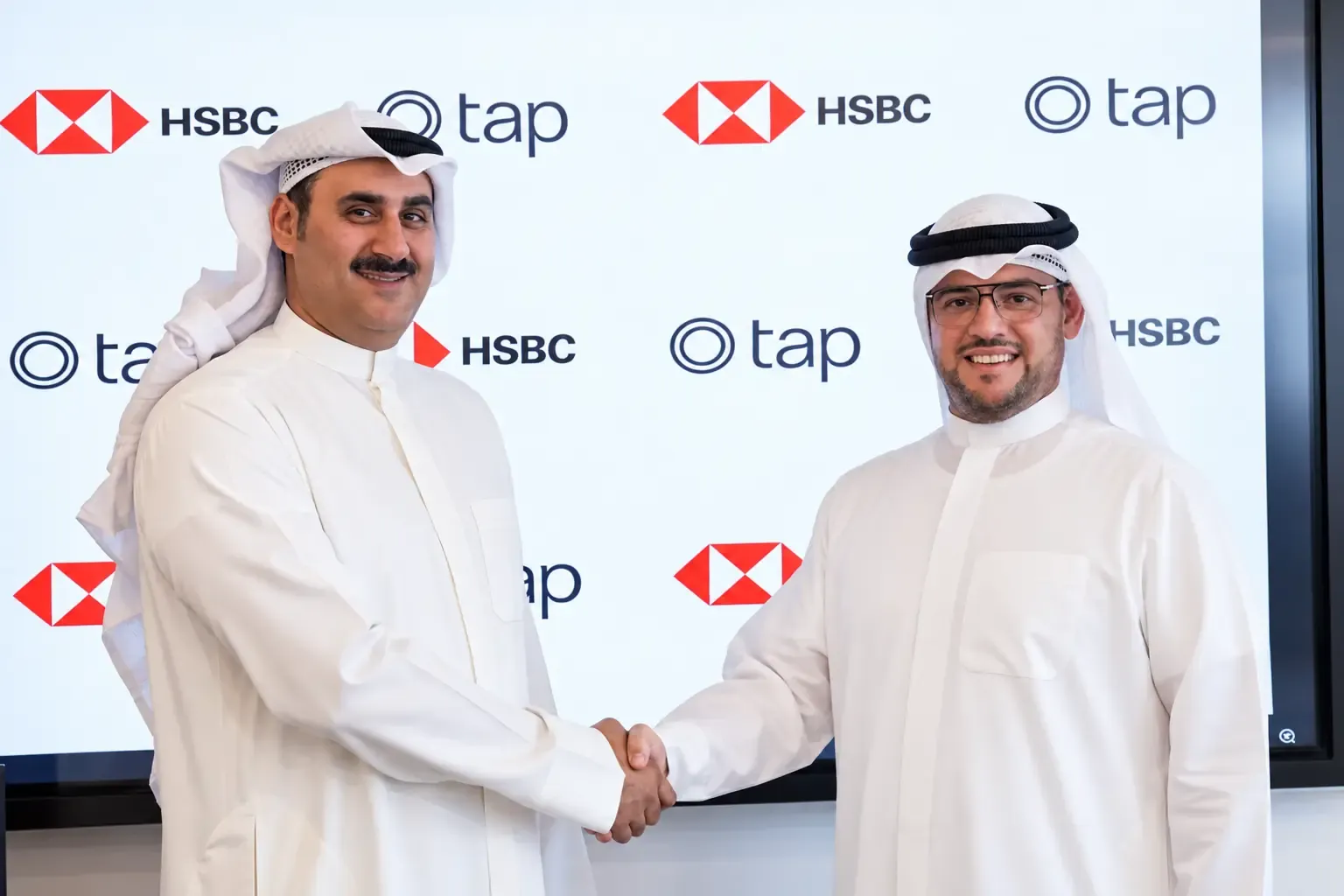
HSBC Kuwait has introduced a merchant-acquiring service for corporate customers through a partnership with Kuwait-founded financial technology company Tap Payments, adding card acceptance and integrated transaction reporting to the bank’s collection capabilities.
The service allows HSBC’s corporate clients in Kuwait to accept card payments using Tap Payments’ infrastructure. The companies said the arrangement would expand clients’ payment-collection options by adding card acceptance and reducing reliance on cash and check-based collections.
Transaction information from different collection channels will be brought together in a single interface. Businesses will be able to review payment details, monitor receivables and consolidate reporting without moving between separate systems. The intended result is a clearer view of incoming funds and fewer manual steps during reconciliation.
Settlement is also part of the proposition. Card payments accepted through Tap’s infrastructure can be incorporated into a company’s broader collections workflow, allowing finance teams to match receipts with invoices and customer accounts.
A practical concern for businesses is whether a new payment service can work with the systems they already have in place. HSBC and Tap said the service was designed to integrate with existing sales channels and information systems, reducing the need for companies to purchase new infrastructure or substantially redesign their internal processes.
Addressing a Persistent Reconciliation Problem
Accepting a digital payment is only one part of a corporate collection process. Finance teams must also identify the payer, determine which invoice has been settled and update internal records. When payment information is scattered across bank statements, gateways and manual reports, reconciliation can require substantial administrative work.
The new proposition places payment acceptance and receivables visibility within the same operating framework. That structure could be useful to companies collecting large numbers of payments through multiple channels, although the practical effect will vary according to each customer’s accounting systems, transaction volumes and level of integration.
HSBC has previously used application programming interfaces, virtual accounts and automated reporting to address similar treasury issues in Kuwait. An official HSBC case study involving Jazeera Airways described how payment data was connected with the airline’s reservation and enterprise-resource-planning systems to reduce manual reconciliation work. The Tap partnership extends HSBC Kuwait’s collection options by adding locally provided card-acquiring infrastructure.
Ahmed Al Murad, chief executive officer of HSBC Bank Middle East’s Kuwait operations, said, “Kuwait’s growing digital economy is creating strong opportunities for businesses to streamline their operations. By bringing together HSBC’s global expertise and Tap Payments’ local fintech strengths, we’re helping companies improve efficiency with simpler collections, better reporting and stronger receivables management.”
Kyle Boag, HSBC regional head of global payments solutions, added, “This partnership reflects our commitment to helping businesses embrace digital transformation through innovative solutions that simplify financial operations and enhance efficiency. Together with Tap Payments, we are providing organizations with greater visibility, control, and flexibility in managing their collections and receivables.”
Anwar Marafi, Tap Payments’ group head of business and financial institutions, commented, “Businesses in Kuwait want to modernise how they collect and manage payments without adding complexity to their operations. By combining HSBC’s global banking expertise with Tap Payments’ local payments infrastructure, this partnership gives businesses a simpler way to accept card payments, improve visibility across collections, and manage receivables more effectively. It reflects our shared commitment to helping businesses grow through payment products built for the Kuwait market.”
Kuwait’s Expanding Digital-Payments Market
The partnership arrives as electronic payments occupy a larger place in Kuwait’s financial system. Central Bank of Kuwait data show that the number of monthly transactions made through Wamdh, the country’s instant-payment service, increased from about 5.9 million in January 2025 to nearly 13.8 million in December. Wamdh is not the service being offered by HSBC and Tap, but its rising use illustrates the wider shift toward electronic transfers.
Government payment activity offers another sign of Kuwait’s wider shift toward electronic transactions. As more payments move through digital channels, businesses face growing pressure to update how they accept funds, track incoming transactions and reconcile their accounts.
Tap enters the partnership as a regulated participant in Kuwait’s payments market. The Central Bank of Kuwait’s register of electronic-payment providers lists Tap Payments as a major electronic payment service provider. The company received its central-bank license in March 2024.
HSBC operates in Kuwait primarily as a wholesale bank serving government-related entities, local corporations, multinational companies and institutional customers. The bank identifies payments and trade services as central parts of that business, making merchant acquiring a related addition rather than a move into an unrelated market.